Films People Pull a Fast One Night Beat Reading Room On TV Shop
On the Night of the Fire 1939
1939 Greenspan & Seligman Enterprises Ltd.
★★★☆☆ Notable
Film Noir · 94 minutes · Black & White

On the Night of the Fire

Directed by Brian Desmond Hurst
Year 1939
Runtime 94 min
Studio Greenspan & Seligman Enterprises Ltd.
TMDB 5.4 / 10
"A barber steals to protect his wife, and the lie grows until it owns him."

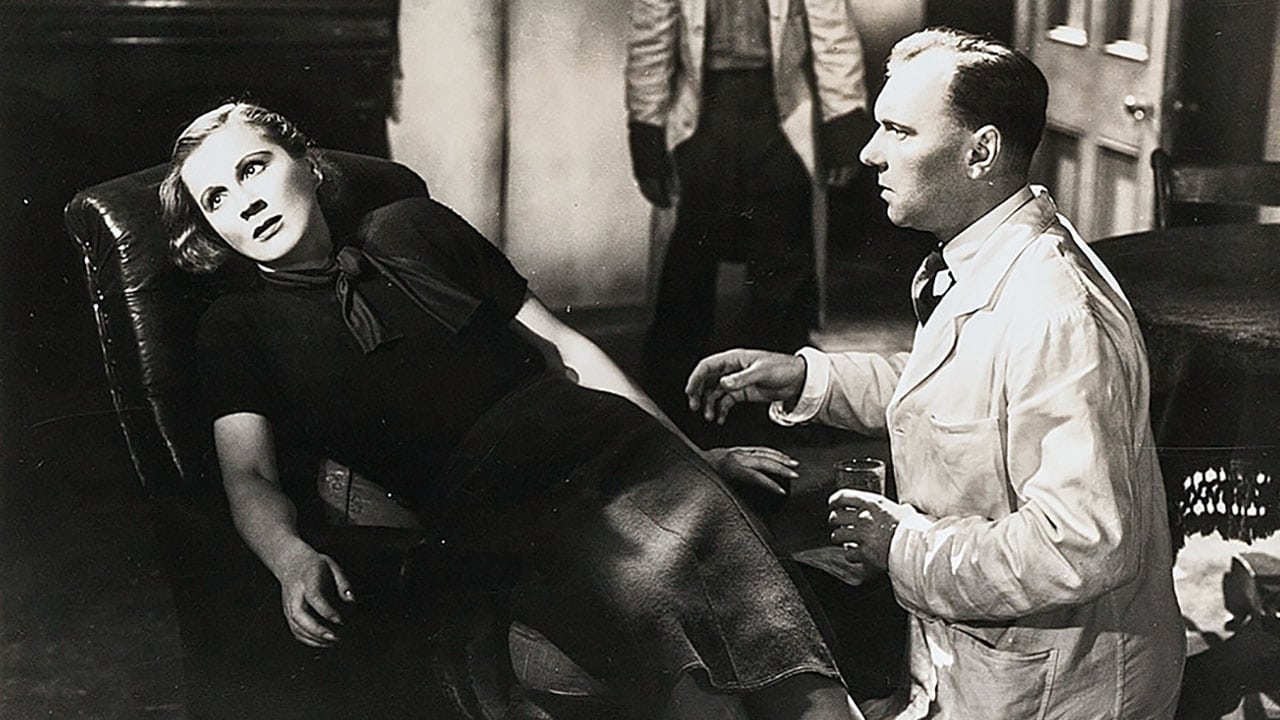
In a northern English mill town, Will Kobling is a quietly decent barber scraping by with his devoted wife Kit. When a fire destroys the local money-lender's cash, Will seizes the unguarded notes in a moment of desperation, telling himself it is an opportunity rather than a crime. The theft is small, the need real, and the rationalisation complete enough – for a night.

The money changes nothing and everything. Will's petty criminal acquaintance Jimsey Jones knows what happened, and the leverage Jimsey holds is not exercised loudly but simply allowed to exist, reshaping every conversation between the two men. When a local hard woman, Lizzie Crane, is found murdered, the investigation drags Will's secret toward the surface, forcing him into a sequence of evasions that implicates Kit as fully as himself, though she is innocent of everything except loyalty.

On the Night of the Fire belongs to the strand of British noir that treats the working-class domestic interior as its principal site of dread. There are no professional criminals here, no femmes fatales in the American mould – only ordinary people whose one bad decision metastasises under social and institutional pressure, a pattern that would come to define the British crime film of the following decade.
Classic Noir

On the Night of the Fire arrived in 1939, the same year British cinema was beginning to absorb the psychological grammar of German Expressionism through refugee talent, and the film is a direct product of that transfer. Günther Krampf's cinematography carries the weight of the Weimar tradition into an English terraced-street setting, and Miklós Rózsa's score – one of his earliest British commissions – applies a tonal pressure that the dialogue deliberately underplays. Ralph Richardson gives Will Kobling a specific working-class dignity that makes the corruption of that dignity genuinely consequential; his performance never solicits sympathy but earns it by refusing to. Diana Wynyard's Kit is, by the script's design, largely reactive, yet Wynyard keeps the character's intelligence visible at every turn. The film is not quite of the first rank – its pacing loosens in the second act, and the murder plot sits somewhat uneasily beside the theft narrative – but as an early British example of the moral-spiral structure that noir would formalise, it repays attention.

– Classic Noir
3 ★★★☆☆ Notable
Credits

The Crew

DirectorBrian Desmond Hurst
ScreenplayBrian Desmond Hurst
CinematographyGünther Krampf
MusicMiklós Rózsa
EditingTerence Fisher
Art DirectionJohn Bryan
ProducerJosef Somlo
Performances

The Cast

Close Reading

The Signature Scene

On the Night of the Fire – scene
The Barber's Back Room Counting the Stolen Notes

Krampf frames Will at a small table in a room lit by a single practical lamp, the light falling in a tight cone that leaves the walls in near-total darkness. The camera holds at mid-distance, refusing to close in sympathetically; Will's hands move across the notes with a deliberateness that the framing reads as guilt already assembling itself. A low angle on the door behind him keeps the space unstable, the threshold perpetually available to someone who might enter.

The scene's argument is that the decision has already been made before Will consciously makes it – the counting is retrospective justification, not deliberation. Krampf's refusal to light the surrounding room denies Will any context in which the act might seem reasonable, and the composition's stillness suggests not peace but suspension, the moment before consequence begins its forward motion.

Visual Language

The Cinematography

🎞️
Günther Krampf – Director of Photography

Günther Krampf, who had lit Pandora's Box for Pabst a decade earlier, brings to On the Night of the Fire a disciplined chiaroscuro that never becomes decorative. Working largely on studio-constructed street and interior sets, Krampf uses hard-edged practical sources – windows, bare bulbs, firelight – to locate characters within moral as well as physical space. Shadows are not atmosphere; they are information, indicating who is concealed from whom and what knowledge is being withheld. His lens choices favour a slightly compressed middle focal length that flattens the domestic interiors without distorting them, giving the terraced rooms a claustrophobic density appropriate to the story's argument about entrapment. The exterior night sequences, shot on constructed sets dressed with wet cobblestones to maximise reflected light, achieve a texture recognisably kin to the German street films of the late silent era without direct quotation. Throughout, the cinematography operates in service of a moral logic: as Will's situation worsens, the frames darken and tighten, the available light source always slightly out of reach.

In the Catalogue

Themes & Motifs

Availability

Where to Watch

Also in the Directory

See Also