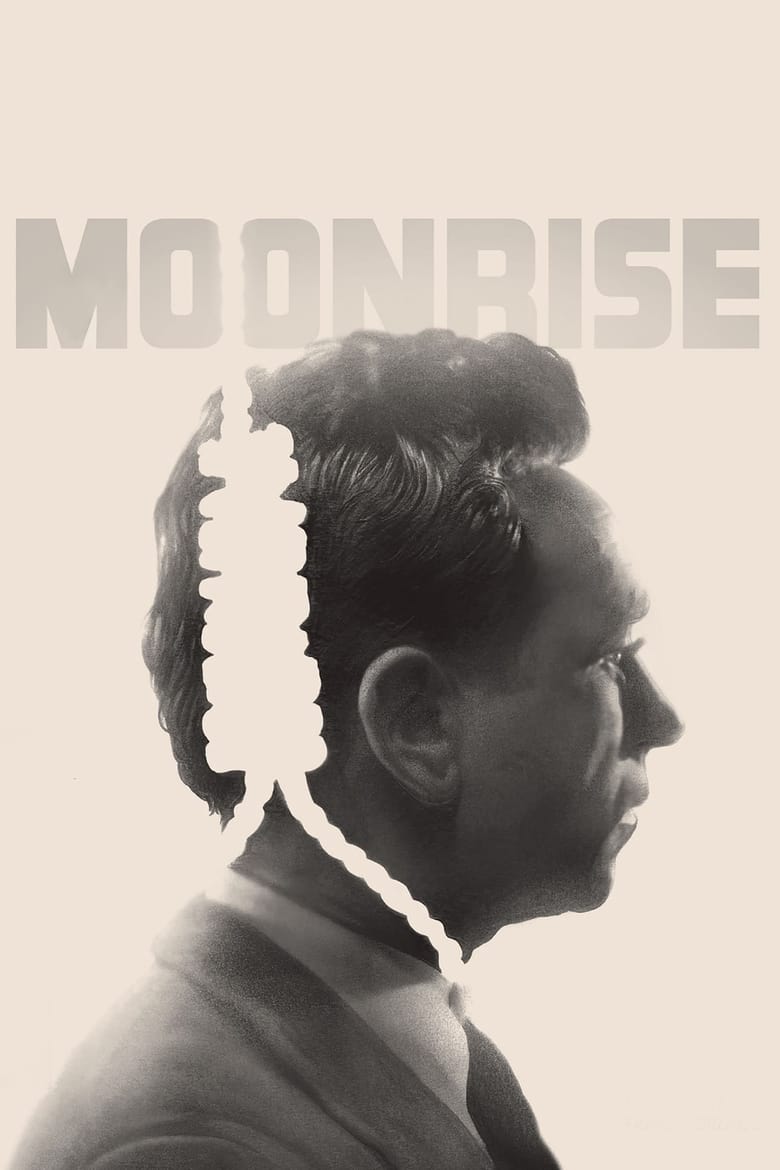
Danny Hawkins (Dane Clark) grows up in a small Southern town beneath the long shadow of his father's execution for murder. The stigma shapes him into a bitter, coiled young man, convinced that his nature is fixed by blood. When a confrontation with a local bully turns fatal, Danny finds himself with a body to hide and a secret that begins to corrode everything around him.
As Danny attempts to construct an ordinary life – courting the gentle Gilly Johnson (Gail Russell) and finding unexpected kinship with the elderly Grandma (Ethel Barrymore) and the dignified swamp-dweller Mose (Rex Ingram) – the weight of concealment warps his relationships. The town's amiable deputy, Clem Otis (Allyn Joslyn), circles closer, and Danny's paranoia sharpens into something that threatens to become the very violence he fears in himself. Allegiances among those who shelter or challenge him are never stable.
Moonrise occupies an unusual position in American noir: it carries the genre's fatalism but inflects it with a genuine concern for psychological determinism and social compassion. Rather than the urban corruption that drives most noir, Borzage locates his story in bayou country and rural carnival grounds, where the darkness is atmospheric and internal in equal measure.
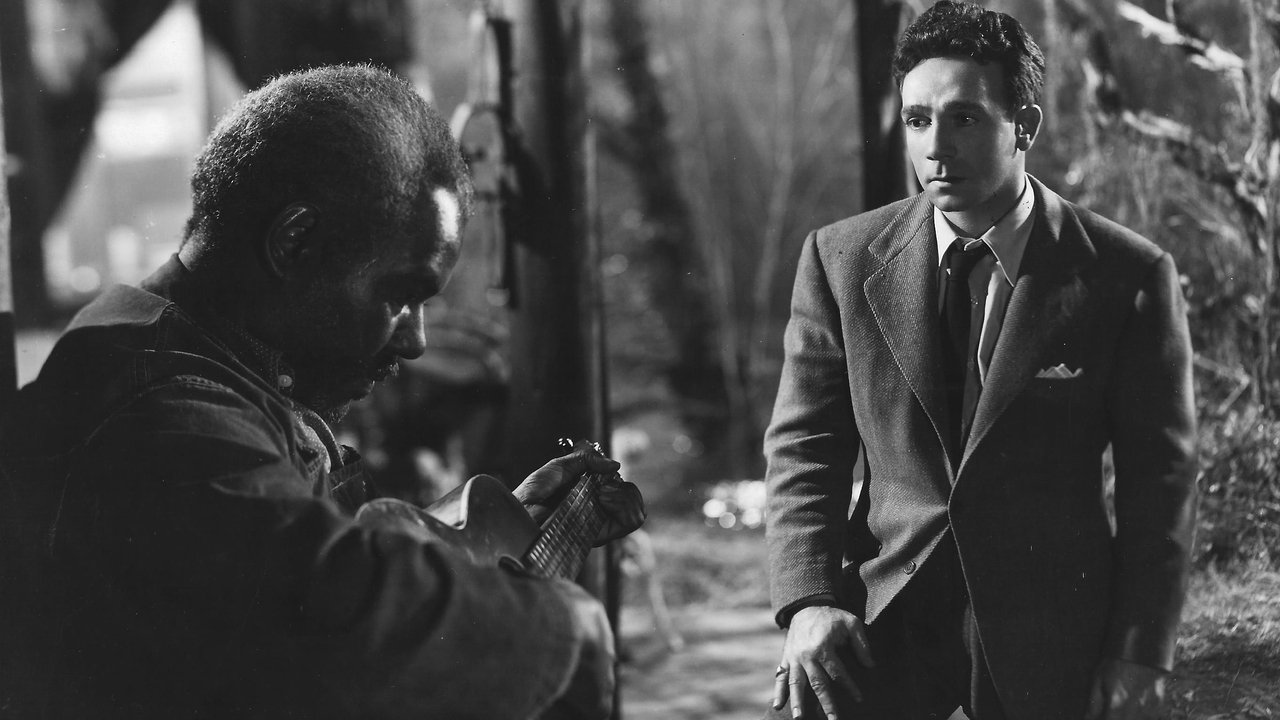
Frank Borzage was not a director naturally associated with noir, and Moonrise benefits from that displacement. His instinct toward spiritual redemption pulls against the genre's gravitational demand for punishment, producing a film that is genuinely in tension with itself. Dane Clark gives one of the more controlled performances of his career, calibrating Danny's self-loathing so that it reads as damage rather than melodrama. The film's treatment of Rex Ingram's Mose is notable for 1948 – the character is granted interior dignity without being sentimentalized into mere wisdom-dispenser. What Moonrise ultimately argues is that inherited guilt is a social construction as much as a psychological wound, a position that sits uneasily but honestly within the fatalist machinery of noir. Republic Pictures was not the studio one expected to produce work of this seriousness, which makes the film's survival in the critical conversation all the more instructive about the distributed, unpredictable nature of postwar American cinema.
– Classic Noir
Inside the carnival's funhouse, John L. Russell's camera moves through a corridor of distorting mirrors with deliberate disorientation. The light source is harsh and artificial – carnival bulbs that flatten faces and multiply Danny's reflection into grotesque variants of himself. Borzage frames the sequence so that no reflection is quite stable, the composition constantly decomposing and reassembling as Danny moves through the space.
The scene externalizes the film's central argument: Danny does not know which version of himself is true. The distorted reflections are not a stylistic flourish but a diagram of his psychology – a man who has absorbed so many other people's definitions of him that his own image has become illegible. The funhouse becomes the noir labyrinth made literal, a closed system from which clarity, rather than escape, is the only exit worth seeking.
John L. Russell, who would later shoot Psycho for Hitchcock, brings to Moonrise a visual intelligence calibrated to enclosed psychological space. Working primarily on studio sets dressed to suggest rural Southern atmosphere, Russell uses deep shadow not as noir decoration but as moral environment – the darkness in which Danny moves is the darkness he carries. His lens choices favor moderate focal lengths that keep characters in uneasy proximity to their surroundings, never isolating them cleanly from the world that produced them. The swamp sequences achieve a practical depth through layered practical lighting and careful attention to reflective water surfaces, which serve to double and complicate figures within the frame. Russell's lighting setups consistently deny Danny a clean light source, instead catching him in spill and bounce that suggests a man who cannot find a clear position. The result is a film that uses cinematography to sustain moral ambiguity without ever resolving it into simple shadow-play.
When available, Criterion's presentation offers the most carefully sourced print of this Republic Pictures title, making it the preferred option for serious viewing.
Archive.orgFreeA public domain print circulates here; image quality is variable but the film is complete and freely accessible without registration.
TubiFreeTubi has carried Moonrise in its classic film library – confirm current availability, as catalogue rotation applies.