Films People Pull a Fast One Night Beat Reading Room On TV Shop
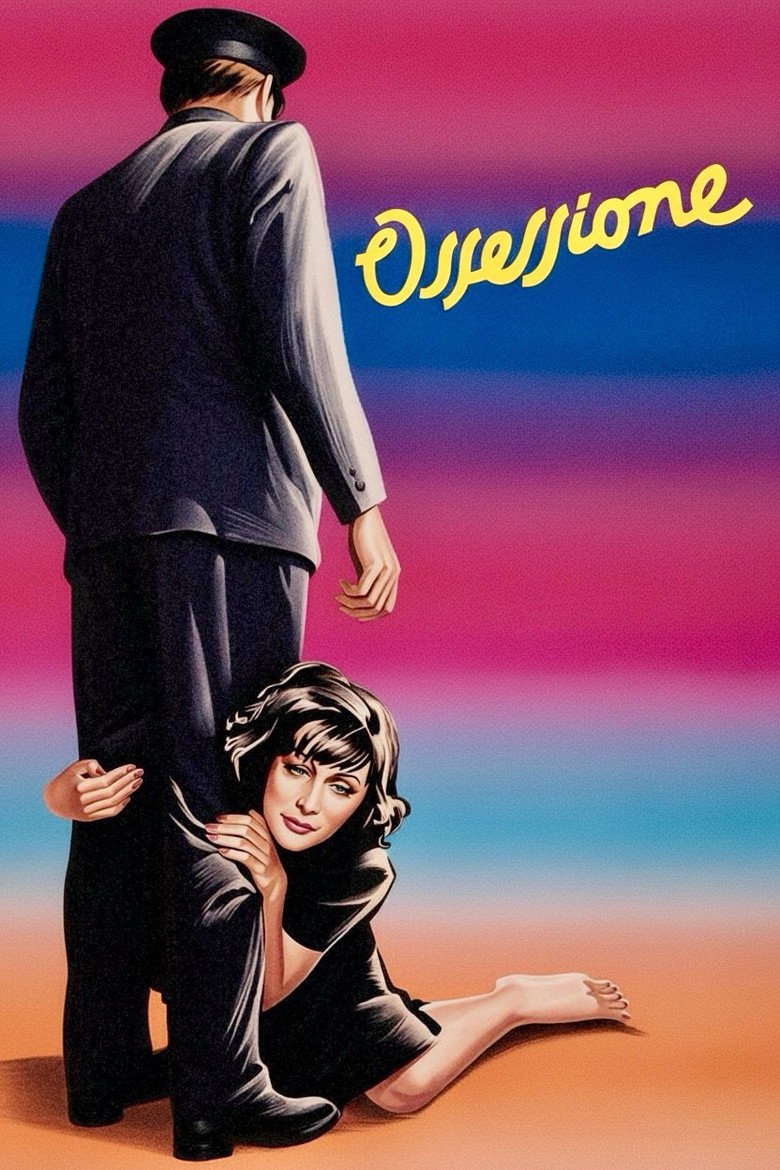
Obsession 1944
1944 Industrie Cinematografiche Italiane (ICI)
★★★★☆ Recommended
Film Noir · 140 minutes · Black & White

Obsession

Directed by Luchino Visconti
Year 1944
Runtime 140 min
Studio Industrie Cinematografiche Italiane (ICI)
TMDB 7.5 / 10
"Desire arrives on the road and stays long enough to ruin everything."

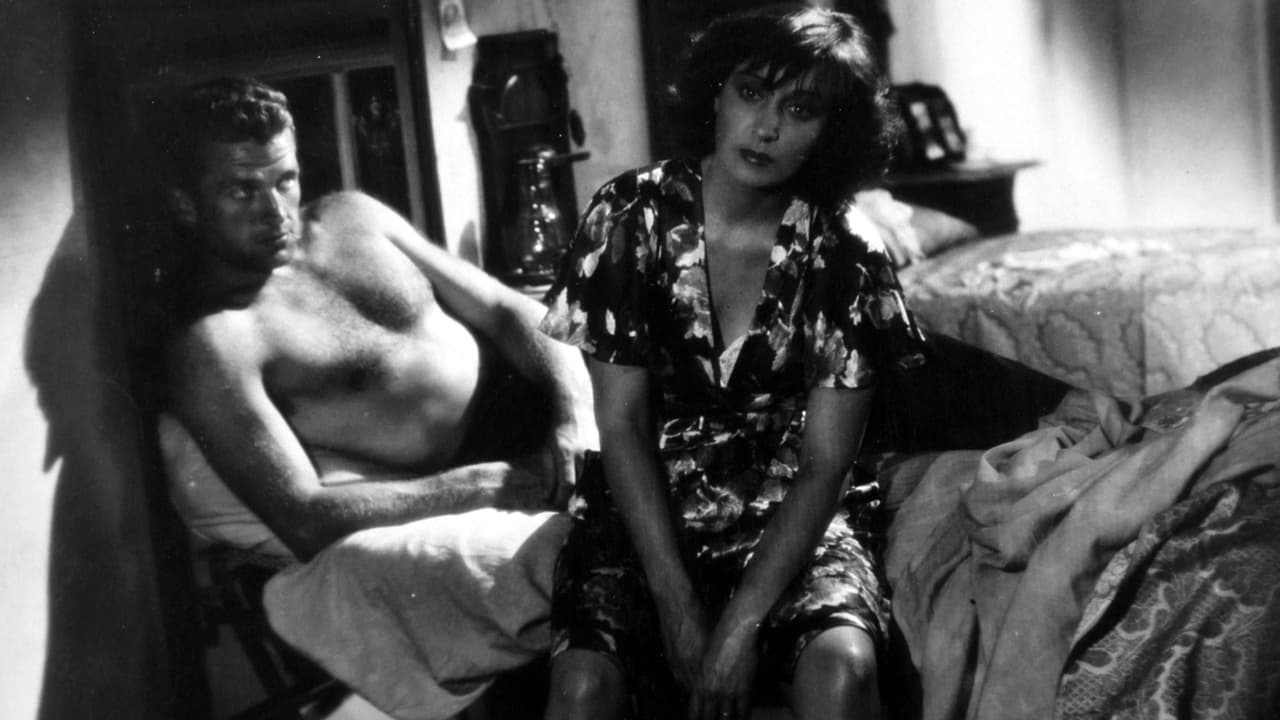
A drifter named Gino Costa arrives hungry and unannounced at a roadside trattoria along the Po Valley, where he is taken in by the heavyset, jovial innkeeper Giuseppe Bragana and his wife Giovanna. The two make an immediate and wordless calculation about each other. Giovanna is trapped – by the marriage, by the flat landscape, by a life that has closed around her – and Gino represents the only exit she can imagine.

The affair between Gino and Giovanna hardens quickly into conspiracy. Giuseppe stands between them not as a villain but as an obstacle, which is in some ways worse: his good humor and blindness make the betrayal uglier. Gino's loyalties are further complicated by his friendship with a wandering figure known only as The Spaniard, whose understanding of Gino's restlessness creates a competing pull, and by a young woman named Anita who offers him a life without consequence. He cannot commit to escape, and he cannot commit to crime without reservation.

Adapted without authorization from James M. Cain's The Postman Always Rings Twice, Visconti's film transposes Cain's Depression-era California to the flatlands of wartime Italy and finds in that geography a moral landscape as airless as any in American noir. Where Hollywood would later impose narrative symmetry and Production Code resolution on the same source material, Ossessione moves toward its conclusion with a documentary weight – fate operating not as punishment but as physics.
Classic Noir

Ossessione arrives in 1943 as something genuinely unusual: a film that reads American crime fiction through a neorealist sensibility before Italian neorealism had fully named itself. Visconti shot on location in Ferrara and along the Po, and that choice is not incidental – the flat, fog-prone landscape becomes an argument about the impossibility of escape. The film was suppressed by Mussolini's government almost immediately after release, reportedly for its moral frankness and its unflattering portrait of provincial Italian life, which gave it the additional distinction of being contraband. What Visconti achieves is a noir that refuses the genre's usual geometry: there is no investigator, no femme fatale operating at a cool remove, no system of justice that closes the frame. What remains is appetite, error, and the slow gravitational pull of consequence. The performances by Clara Calamai and Massimo Girotti carry genuine erotic weight without glamour, which was not something Hollywood could have produced under the same censorship conditions in 1943.

– Classic Noir
4 ★★★★☆ Recommended
Credits

The Crew

DirectorLuchino Visconti
ScreenplayLuchino Visconti
CinematographyDomenico Scala
MusicGiuseppe Rosati
EditingMario Serandrei
Art DirectionGino Franzi
CostumesMaria De Matteis
ProducerLibero Solaroli
Performances

The Cast

Close Reading

The Signature Scene

Obsession – scene
The Roadside Trattoria – First Meeting Hunger Mistaken for Fate

Gino is introduced through the trattoria's low doorway, the frame catching him mid-motion – not arriving so much as already present. Domenico Scala's camera stays close to the objects of the room: a wine glass, a hand on a counter, Giovanna's profile in the heat of the kitchen. The natural light from the doorway divides the interior into zones of exposure and shadow without theatrical emphasis. The lens lingers on surfaces – tile, fabric, skin – in a way that gives the scene a physical density the dialogue does not need to carry.

The scene establishes that this is not a film about romantic obsession in any idealized sense but about two people recognizing in each other a shared willingness toward danger. Giovanna does not seduce Gino and Gino does not pursue Giovanna: they simply stop pretending the other is a stranger. That recognition, rendered without close-up reaction shots or swelling score, is the film's central moral event – everything that follows is already contained in it.

Visual Language

The Cinematography

🎞️
Domenico Scala – Director of Photography

Domenico Scala's cinematography on Ossessione is inseparable from the neorealist methodology Visconti was developing: location shooting in Ferrara, Ancona, and along the Po delta meant that light sources were negotiated rather than engineered. Scala works with available and near-available light throughout, using the overcast luminosity of the Po Valley to flatten the image in ways that drain the romantic potential from what might otherwise be picturesque material. Interiors rely on practicals and single-source setups that produce a genuine chiaroscuro rather than a studio approximation of it. Shadow in this film does not operate as expressionist commentary – it is simply where light does not reach, which is a different moral register entirely. The camera's tendency to hold medium shots and resist the clarifying close-up forces the viewer to read the characters within their environment rather than in isolation from it, which is precisely the film's argument: these people are not exceptional, and the landscape that contains them will outlast whatever they do inside it.

In the Catalogue

Themes & Motifs

Availability

Where to Watch

Also in the Directory

See Also