Films People Pull a Fast One Night Beat Reading Room On TV Shop
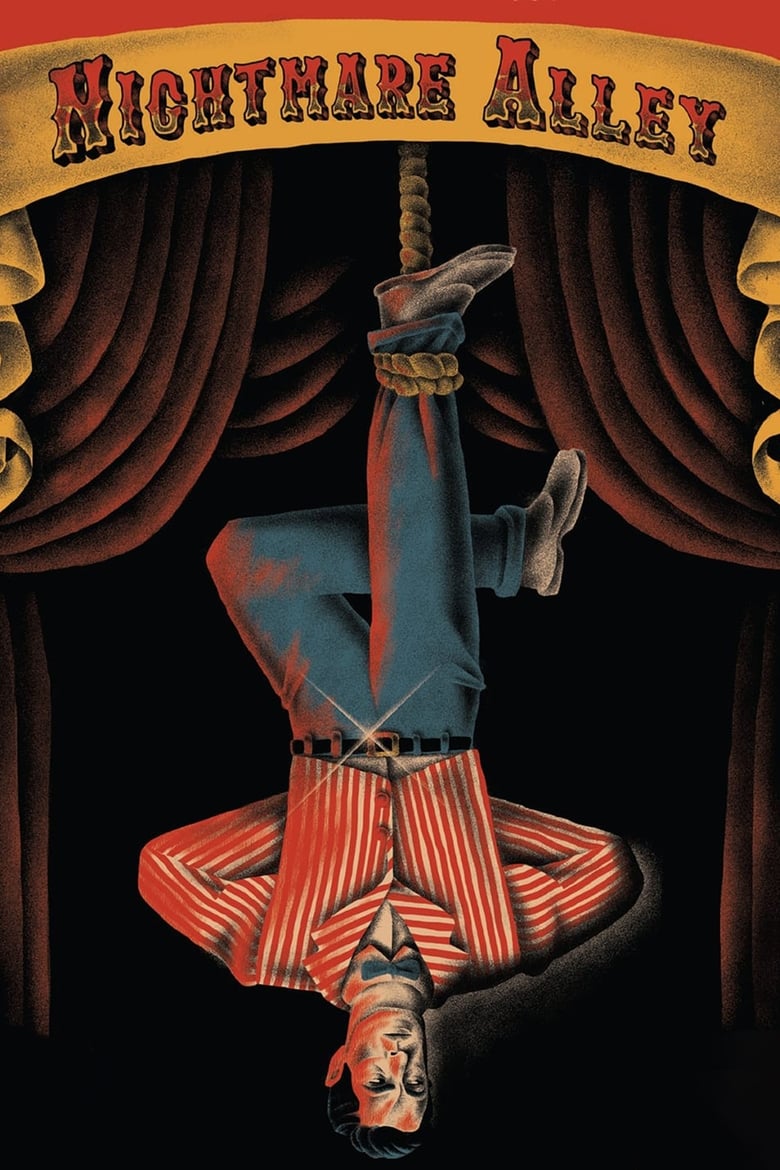
Nightmare Alley 1947
1947 20th Century Fox
★★★★☆ Recommended
Film Noir · 111 minutes · Black & White

Nightmare Alley

Directed by Edmund Goulding
Year 1947
Runtime 111 min
Studio 20th Century Fox
TMDB 7.2 / 10
"A carnival man climbs as far as the con will take him, then discovers the distance down."

Stanton Carlisle arrives at a traveling carnival with nothing but charm and ambition. He attaches himself to Zeena Krumbein, an aging mentalist whose alcoholic husband Pete once held the secrets to a legendary cold-reading code. Stan absorbs everything – the code, the techniques, the psychology of the mark – while keeping his true intentions carefully concealed from everyone around him, including the guileless young performer Molly, who falls for him.

Stan parlays the stolen code into a high-society mentalist act in Chicago, marrying Molly and targeting wealthy, emotionally vulnerable patrons. His most dangerous entanglement comes through Lilith Ritter, a composed and calculating psychologist who trades confidential patient files for a cut of the grift. Together they pursue Ezra Grindle, a guilt-ridden industrialist whose grief makes him an ideal subject. But Lilith plays her own game, and Stan's confidence in his ability to read people proves to be the one illusion he cannot afford.

Nightmare Alley occupies an unusual position in postwar American noir: it dispenses with crime in the conventional sense and examines instead the mechanics of self-deception and social manipulation. Based on William Lindsay Gresham's 1946 novel, the film tracks the arc of a man who mistakes cunning for intelligence and theatre for truth. It is a confidence film in both senses – a story about cons, and about the confidence a man places in his own mythology until the evidence against it becomes impossible to ignore.
Classic Noir

Nightmare Alley arrived in 1947 as one of the more psychologically specific films the noir cycle produced. Where most entries in the genre position fate or circumstance as the corrupting force, Edmund Goulding's film insists that Stan Carlisle engineers his own ruin with full awareness and considerable skill. Tyrone Power, cast against the matinee image Fox had carefully constructed for him, brings a controlled hollowness to the role that serves the material precisely – Stan's charm is legible as performance from the first scene, which is exactly the point. Helen Walker's Lilith Ritter is the film's structural mirror: where Stan reads people for money, Lilith does so professionally and without sentiment, making her the one figure he cannot ultimately outmaneuver. The film's carny milieu, drawn faithfully from Gresham's source novel, provides a vernacular for the American class system – the geek at the bottom, the mentalist at the top, and the distance between them measured in nothing more durable than nerve. That it was a commercial disappointment on release and has only accumulated serious critical attention over decades says something about what the era was willing to see in itself.

– Classic Noir
4 ★★★★☆ Recommended
Credits

The Crew

DirectorEdmund Goulding
ScreenplayJules Furthman
CinematographyLee Garmes
MusicCyril J. Mockridge
EditingBarbara McLean
Art DirectionLyle R. Wheeler
CostumesBonnie Cashin
ProducerGeorge Jessel
Performances

The Cast

Close Reading

The Signature Scene

Nightmare Alley – scene
The Hotel Suite Confrontation Lilith Turns the Glass

Lee Garmes lights the scene with the precision of a still life arranged to unsettle. Lilith sits in the dominant plane, the desk lamp casting a contained pool that falls across her hands and the files between them while Stan occupies the softer, shallower focus of the room's edge. The camera holds on medium shots rather than cutting to close-ups, a choice that keeps both figures in frame and preserves the geometry of their contest. When Garmes does move closer, it is to Lilith's face – composed, almost clinical – rather than Stan's.

The scene makes explicit what the film has been arguing obliquely since their first meeting: that Stan has encountered the one person whose skill at reading others exceeds his own and who feels no obligation to pretend otherwise. His entire social strategy depends on being the most perceptive person in any room. Here he is not, and the camera's spatial choices encode that displacement before a word of the reversal is spoken. It is the film's thesis in miniature – competence without conscience does not protect you from someone more competent and equally without conscience.

Visual Language

The Cinematography

🎞️
Lee Garmes – Director of Photography

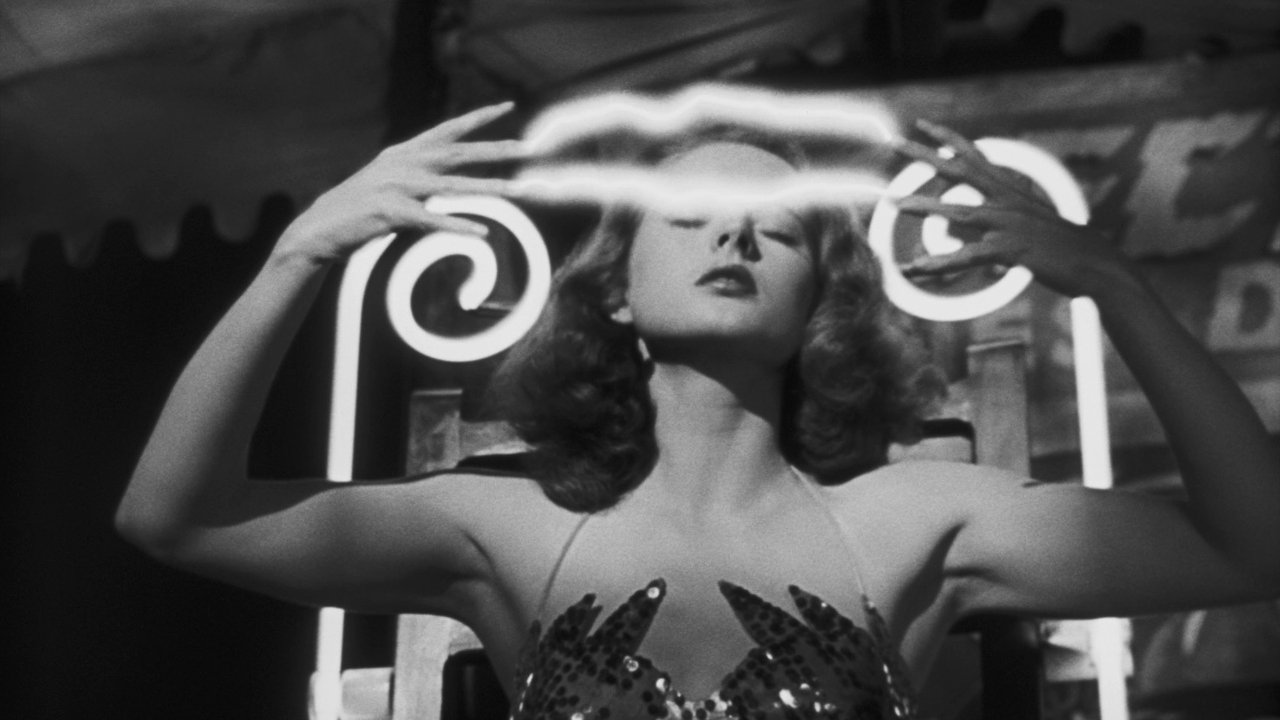
Lee Garmes, whose career stretched from Shanghai Express to mid-century studio work, brings a disciplined command of tonal contrast to Nightmare Alley that serves its moral architecture without underlining it. Working in high-contrast black and white on Fox studio sets dressed to suggest both carnival grime and Chicago luxury, Garmes constructs two distinct visual registers that gradually erode each other. The carnival sequences use raking side light and deep shadow pools to establish a world where surfaces are unreliable – faces emerge from darkness and retreat back into it. The Chicago hotel and office interiors are sharper, more evenly lit, but Garmes plants small zones of shadow that refuse to fully resolve. His lens choices favor middle focal lengths that keep spatial relationships honest and deny the viewer the distortion that would signal expressionism; the corruption here is realist, systemic, internal. The result is cinematography that does not announce itself but rather accumulates – each composition a quiet argument about who holds the light and who stands in the dark.

In the Catalogue

Themes & Motifs

Availability

Where to Watch

Also in the Directory

See Also