Films People Pull a Fast One Night Beat Reading Room On TV Shop
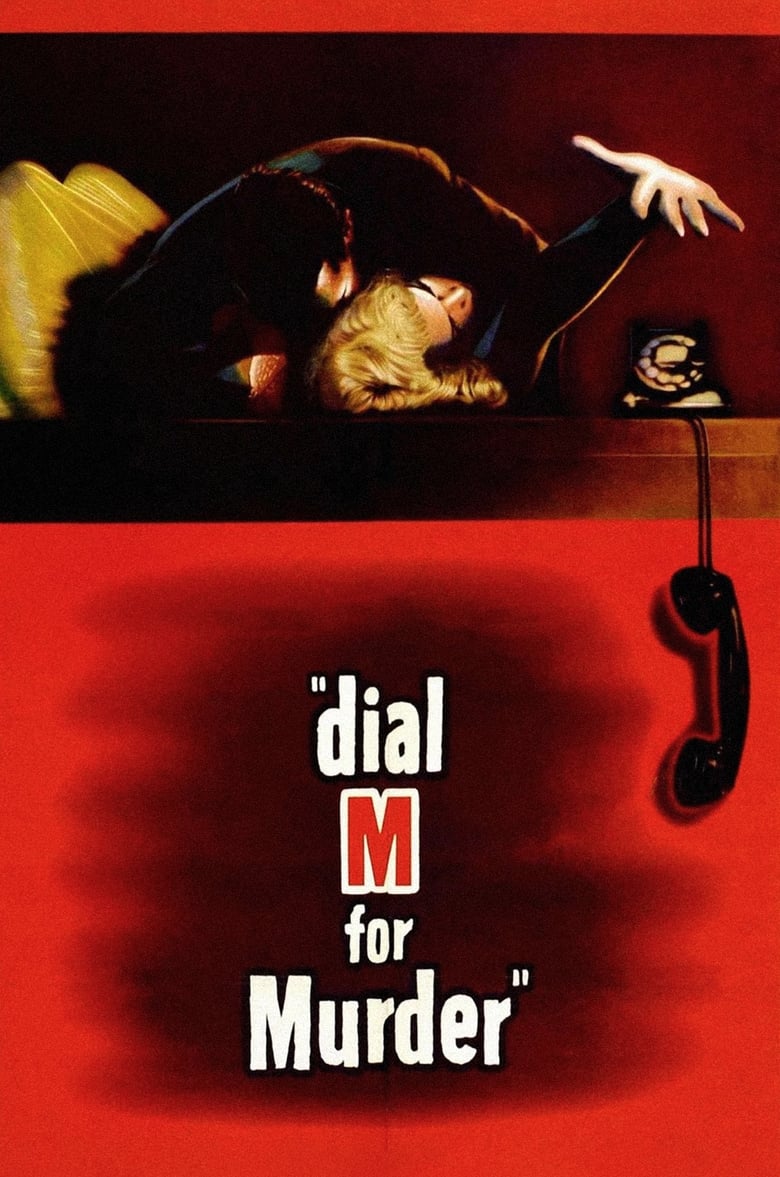
Murder 1954
1954 Warner Bros. Pictures
★★★☆☆ Notable
Film Noir · 105 minutes · Black & White

Murder

Directed by Alfred Hitchcock
Year 1954
Runtime 105 min
Studio Warner Bros. Pictures
TMDB 8.0 / 10
"A perfect crime unravels not through justice, but through the weight of small, overlooked details."

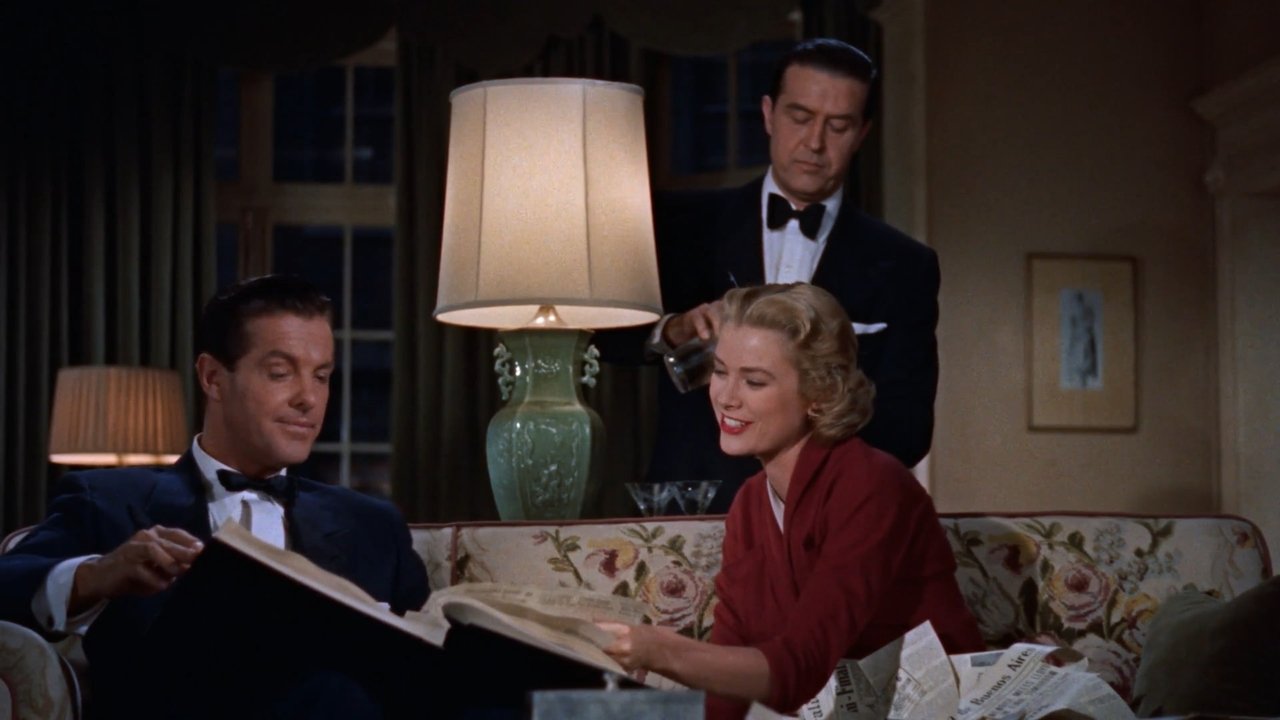
Tony Wendice is a former tennis professional who has married Margot for her money and now suspects she intends to leave him for American crime writer Mark Halliday. Rather than accept disgrace, Tony engineers a meticulous murder plot, blackmailing an old acquaintance, Charles Swann, into strangling Margot in their Maida Vale flat while Tony establishes an alibi at a restaurant dinner. The plan is precise, rehearsed, and built on Tony's cold confidence that intelligence alone can defeat circumstance.

The scheme collapses when Margot, against all calculation, survives – and is then tried and convicted for the murder of her would-be killer. Tony, now controlling the narrative from outside suspicion, maneuvers each new development with a lawyer's patience, adjusting his lies to absorb each contradiction. Mark Halliday grows certain of Tony's guilt but cannot locate the mechanism of proof. The investigation centers increasingly on Chief Inspector Hubbard, whose methodical intelligence quietly outpaces both the amateur detective and the professional criminal.

Dial M for Murder – released in the United States as Murder in 1954 – belongs to that strand of noir in which the crime is domestic and the trap is built from intimacy rather than urban menace. The film's tension derives not from the question of what happened but from who will see through whom first, placing it within a tradition of procedural noir where moral clarity exists but legal clarity is withheld until the last possible moment.
Classic Noir

Adapted from Frederick Knott's stage play, the film does not attempt to disguise its theatrical origins, and therein lies both its limitation and its particular interest to the noir student. The single-apartment setting enforces an almost suffocating proximity between characters whose relationships are defined entirely by concealment. Ray Milland plays Tony Wendice with a calibrated pleasantness that is more chilling than any overt menace; the character's evil is bureaucratic, procedural, and entirely free of passion, which positions the film as a study in rational criminality rather than the psychosexual violence that drives much American noir of the period. Grace Kelly's Margot is not the genre's customary femme fatale but a woman reduced to object status by the very institution meant to protect her. John Williams's Hubbard represents an unusually humane version of institutional authority. The film sits at the intersection of noir psychology and the locked-room procedural, and its most lasting contribution to the genre is its argument that the perfect crime is defeated not by moral force but by a misplaced latchkey.

– Classic Noir
3 ★★★☆☆ Notable
Credits

The Crew

DirectorAlfred Hitchcock
ScreenplayFrederick Knott
CinematographyRobert Burks
MusicDimitri Tiomkin
EditingRudi Fehr
Art DirectionEdward Carrere
CostumesMoss Mabry
ProducerAlfred Hitchcock
Performances

The Cast

Close Reading

The Signature Scene

Murder – scene
The Strangulation Attempt Hands Reach Through Darkness

Hitchcock shoots the attack on Margot from a position that initially privileges the intruder's point of view, the camera low and close as Swann crosses the darkened flat toward the sleeping woman. When Margot is seized, the frame suddenly reorganizes around her struggle – her hands groping across the desk, fingers closing on the scissors with the desperate randomness of reflex rather than intention. The overhead light source creates a hard pool of illumination over the desk surface, so that the instrument of her survival emerges from brightness while the violence pressing down on her comes from shadow. Hitchcock holds the composition long enough to make the geometry of the struggle feel architectural: two forces working against each other within the strict geometry of a small, bourgeois room.

The scene carries the film's central argument in concentrated form. Margot survives not through agency or foreknowledge but through accident, and the scissors she uses are the same domestic object that will later be misidentified as evidence of premeditation. Survival, the scene proposes, does not confer innocence in the eyes of law or society; it merely creates a new set of facts to be interpreted by those with the power to do so. The moment reframes every subsequent scene: what looks like justice being done is in fact a machinery indifferent to the truth of what happened in that room.

Visual Language

The Cinematography

🎞️
Robert Burks – Director of Photography

Robert Burks, who photographed nine Hitchcock features during this period, works here within severe spatial constraints that the production – shot on Warner Bros. soundstages with a set built to the proportions of the original stage play – does nothing to disguise. Burks compensates through a disciplined management of depth: foreground objects, particularly the telephone and the desk, are kept in sharp focus and returned to repeatedly as compositional anchors, so that the apartment reads as a space defined by its furniture rather than its walls. Lighting setups favor practical sources – table lamps, a single overhead – which Burks uses to segment the room into zones of knowledge and ignorance. Shadows fall across faces at moments of deception and lift during scenes of procedural revelation, a moral grammar that operates below conscious notice. Originally photographed in 3-D for the film's initial release, the compositions retain a pronounced layering of planes that rewards attention even in flat projection, with Burks placing figures at staggered distances to sustain a sense of spatial entrapment that reinforces Tony Wendice's careful orchestration of everyone around him.

In the Catalogue

Themes & Motifs

Availability

Where to Watch

Also in the Directory

See Also