Marilyn (1963) is a documentary tribute assembled by 20th Century Fox in the months following Marilyn Monroe's death in August 1962. Narrated by Rock Hudson, whose voice carries a rehearsed solemnity appropriate to the occasion, the film draws entirely on archive footage culled from Monroe's Fox filmography, tracing the arc of a career that began in bit parts and ascended to something the studio was still struggling to define at the time of her death.
The film does not pursue biography in any searching sense. It presents Monroe as the studio wished her remembered: luminous, compliant, eternally performing. Clips featuring Lauren Bacall, Jane Russell, Anne Baxter, Cyd Charisse, Mitzi Gaynor, and Betty Grable appear as context and counterpoint, placing Monroe within the Fox constellation of women even as the editing consistently returns her to the center. The effect is less portrait than controlled mythology, the studio curating its own loss.
As a document of Hollywood's relationship with its own manufactured icons, the film occupies uneasy territory – part elegy, part commercial inventory. It sits outside the noir canon proper, yet its subject matter resonates with noir's persistent obsessions: the woman constructed by the male gaze, the performer who cannot escape the role assigned to her, the story that ends before it can be honestly told.
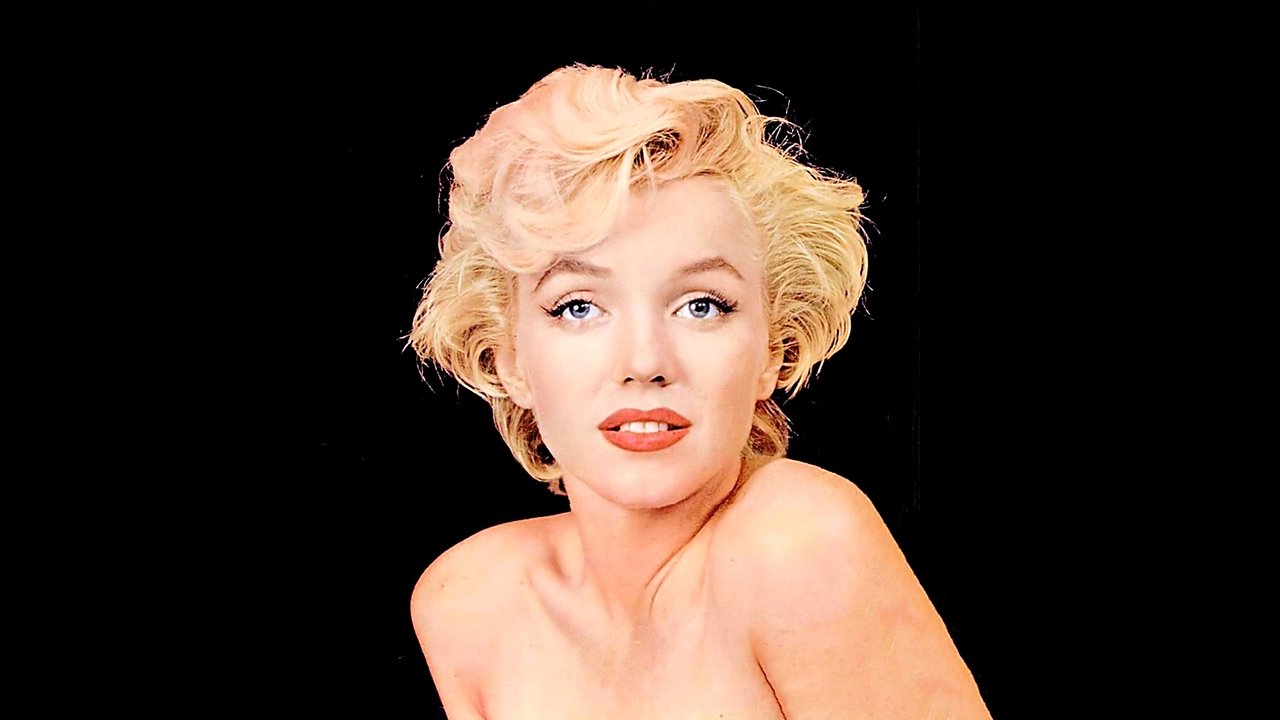
Marilyn (1963) is not a noir film, but it is a film that noir's critical vocabulary illuminates more usefully than any other. The studio-controlled tribute is itself an act of framing – in both the cinematic and the criminal sense. Fox owned Monroe's image in death as it had negotiated for it in life, and this documentary is the instrument of that ownership. Hudson's narration never questions; the editing never dissents. What the film reveals, almost despite itself, is the mechanism by which a major studio transformed a working actress into an abstraction. Viewed from a serious critical distance, the footage assembled here documents not Monroe's freedom but her containment – the way the camera served institutional interest rather than individual truth. For students of the period, the film is indispensable precisely because of what it withholds. Its silences are more instructive than its selections, and its very existence confirms the noir premise that the official version of any story is the one most in need of interrogation.
– Classic Noir
The film's most quietly disquieting passage arrives in its closing minutes, when the compilation of Monroe footage slows to allow a sustained hold on her face – the camera neither cutting nor advancing, simply resting on an image already fixed in time. The light on Monroe in the source footage is the high-key, catch-light-heavy illumination of 1950s Fox production design, engineered to eliminate shadow from her features. In this context, that deliberate brightness reads differently: a face with nowhere to hide, lit so thoroughly that privacy becomes impossible.
The sustained image underscores what the film cannot bring itself to say directly – that the woman being commemorated was also the woman being reproduced for commercial continuity. The dissolve to black that follows is the film's single honest gesture, an acknowledgment that the footage has run out and that whatever lies beyond it belongs to a life the studio never had access to.
The cinematographer for Marilyn (1963) is not credited in surviving production records, a lacuna that is itself revealing: a documentary of this kind was assembled in the cutting room rather than originated on a set, and its visual character derives from the accumulated work of Fox contract cinematographers across Monroe's career – among them Joseph LaShelle, Milton Krasner, and Leon Shamroy – rather than from any single guiding intelligence. The dominant visual register is that of 1950s CinemaScope Technicolor, with its wide-gauge flattery, saturated palette, and institutional avoidance of shadow. There are no low-angle threat compositions here, no chiaroscuro corridors, none of the visual grammar by which noir encodes moral ambiguity. That absence is the film's defining cinematographic argument: Monroe was photographed, throughout her Fox years, in a language designed to foreclose ambiguity. The compilation makes that language visible in aggregate, and the aggregate is damning in ways the film does not intend.
Tubi has carried this title periodically; availability shifts, but it is the most reliably free option for classic Fox catalogue titles of this era.
Archive.orgFreePublic domain or rights-lapsed versions of the documentary have appeared here; verify the upload's completeness before relying on it.
TCMSubscription / CableTCM broadcasts Fox documentary and archival titles with regularity and typically presents them without cuts or commercial interruption.