Films People Pull a Fast One Night Beat Reading Room On TV Shop
Manhandled 1949
1949 Paramount Pictures
★★★☆☆ Notable
Film Noir · 97 minutes · Black & White

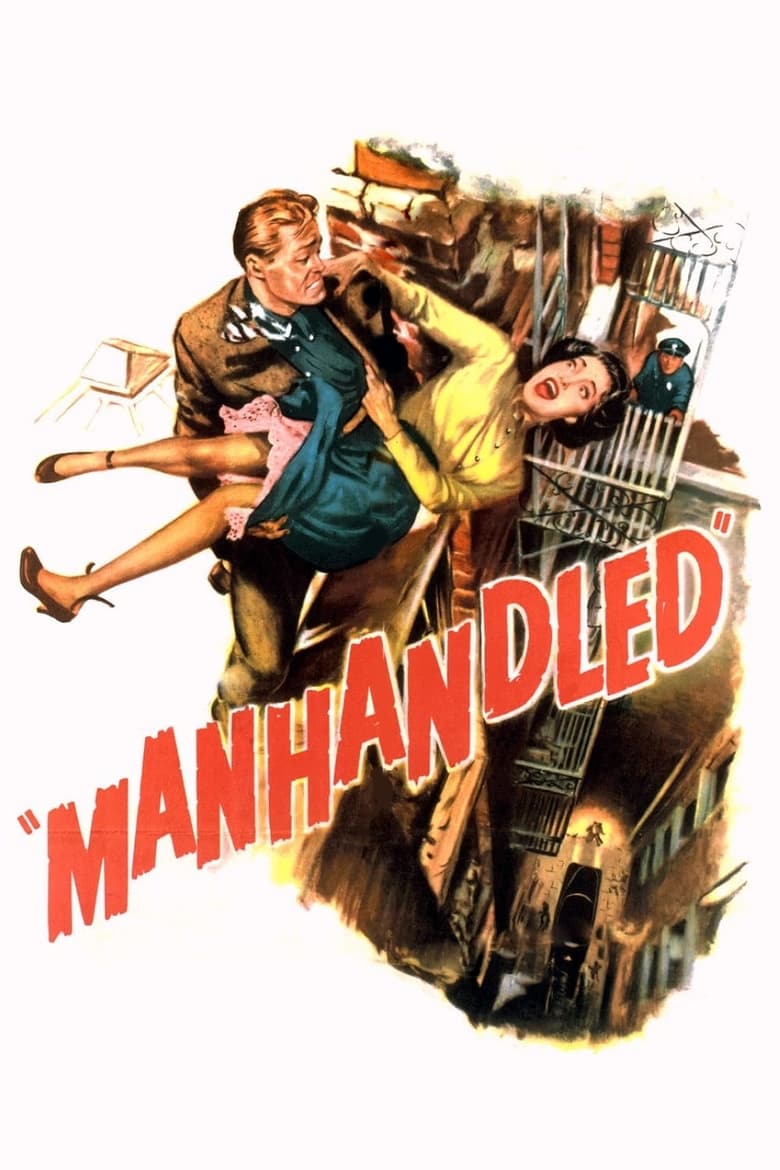
Manhandled

Directed by Lewis R. Foster
Year 1949
Runtime 97 min
Studio Paramount Pictures
TMDB 5.2 / 10
"A stolen jewel, a dead man's wife, and a secretary who knows too much."

Merl Kramer works as a secretary to Dr. Redman, a psychiatrist whose patients include the wealthy Ruth Bennet, a woman carrying on a secret affair with the slick opportunist Karl Benson. When Ruth's husband Alton is found dead and a valuable jewel goes missing, Merl finds herself drawn into a web of suspicion she neither sought nor fully understands. Private investigator Joe Cooper, hired to look into the Bennet household, is one of the few people she might trust – though trust, in this world, is a currency easily forged.

Benson emerges as the film's dominant pressure point: manipulative, calculating, and willing to use Merl's proximity to Dr. Redman's confidential case files as leverage. The psychiatrist's sessions, rendered through flashback and recovered memory, blur the line between what witnesses claim to remember and what they have been coached to say. Allegiances between Ruth, Benson, and the smooth socialite Guy Bayard shift with each new revelation, and Merl's position moves from peripheral observer to central suspect with alarming speed.

Manhandled works within the late-1940s cycle of psychologically inflected noirs that treat memory and professional confidence as instruments of crime. Its plot mechanics lean on the insurance fraud and jewel theft formula common to the period, but the film's real tension lies in how ordinary professional life – a secretary's desk, a doctor's waiting room – becomes the staging ground for murder and deception. Cooper's dogged pursuit of the truth anchors the procedural register while Merl's vulnerability keeps the film's emotional stakes immediate.
Classic Noir

Manhandled occupies a modest but legitimate place in the late-Paramount noir cycle, arriving in 1949 when the studio's output was leaning increasingly toward polished formula rather than genuine darkness. Lewis R. Foster directs with professional economy rather than distinction, and the film benefits considerably from its cast: Dan Duryea does what Duryea does with practiced efficiency, locating the specific cruelty underneath Benson's charm without overplaying it, and Dorothy Lamour – cast against the tropical image that had defined her commercial value – brings a credible wariness to Merl that the script does not always earn. Sterling Hayden is straightforward and grounded as Cooper, serving the procedural logic more than any psychological complexity. What the film reveals about its era is its uneasy fascination with psychiatric knowledge as a tool of manipulation rather than healing – a motif running through several noirs of this period that reflects postwar ambivalence about professional expertise and the reliability of subjective memory. It is not a film that reinvents the genre, but it assembles its materials with enough conviction to reward attention.

– Classic Noir
3 ★★★☆☆ Notable
Credits

The Crew

DirectorLewis R. Foster
ScreenplayWhitman Chambers
CinematographyErnest Laszlo
MusicDarrell Calker
EditingHoward A. Smith
Art DirectionLewis H. Creber
CostumesEdith Head
ProducerWilliam H. Pine
Performances

The Cast

Close Reading

The Signature Scene

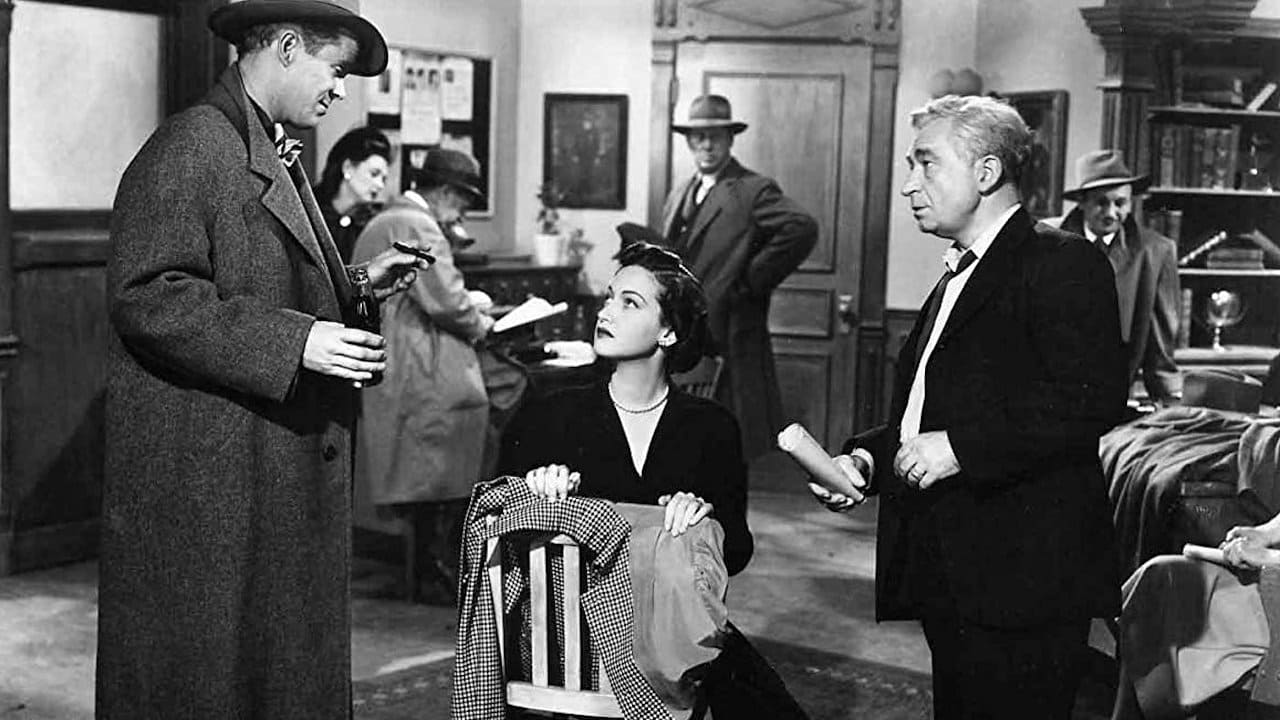
Manhandled – scene
The Psychiatrist's Office Memory Reconstructed Under Lamplight

Ernest Laszlo frames the flashback sequences inside Dr. Redman's office with a pronounced compression of space: the camera sits low and slightly wide, making the ceiling press down on figures already confined by the geometry of armchairs and desk edges. Light falls from a single practical source augmented by a fill so subtle it barely registers, leaving the peripheral areas of the frame in a soft, unresolved shadow that refuses to declare itself as either darkness or illumination. When a witness recounts events, Laszlo cuts between the present face – uncertain, performing – and a reconstructed past rendered with slightly harder contrast, as though memory were not softer than reality but sharper, more edited, more suspect.

The visual logic of these scenes is the film's central argument: what appears retrieved is in fact constructed. The psychiatrist's office, which should be a space of revelation, becomes instead a place where narrative is shaped to purpose. Merl's growing awareness that the sessions she has helped facilitate have been weaponized positions her not as an innocent bystander but as an unwilling collaborator in her own jeopardy – a position the film regards with cold clarity rather than melodramatic sympathy.

Visual Language

The Cinematography

🎞️
Ernest Laszlo – Director of Photography

Ernest Laszlo brings to Manhandled the controlled studio noir grammar he was developing through this period before his work on more celebrated projects in the 1950s. Shooting on Paramount soundstages with occasional location inserts, Laszlo employs a mid-range focal length that keeps interiors slightly claustrophobic without resorting to the extreme wide-angle distortion that lesser cinematographers used as shorthand for psychological pressure. His shadow work is architectural rather than decorative: venetian blind patterns are used sparingly and with geometric purpose, and the contrast between the bright, socially legible spaces – drawing rooms, office lobbies – and the darker transitional spaces where threats materialize is managed with consistent moral logic. Faces are lit to reveal rather than romanticize, and Lamour in particular is photographed with a directness that strips away glamour and serves the character's exposure. The film's visual language is not flamboyant, but its restraint is itself a position.

In the Catalogue

Themes & Motifs

Availability

Where to Watch

Also in the Directory

See Also