Films People Pull a Fast One Night Beat Reading Room On TV Shop
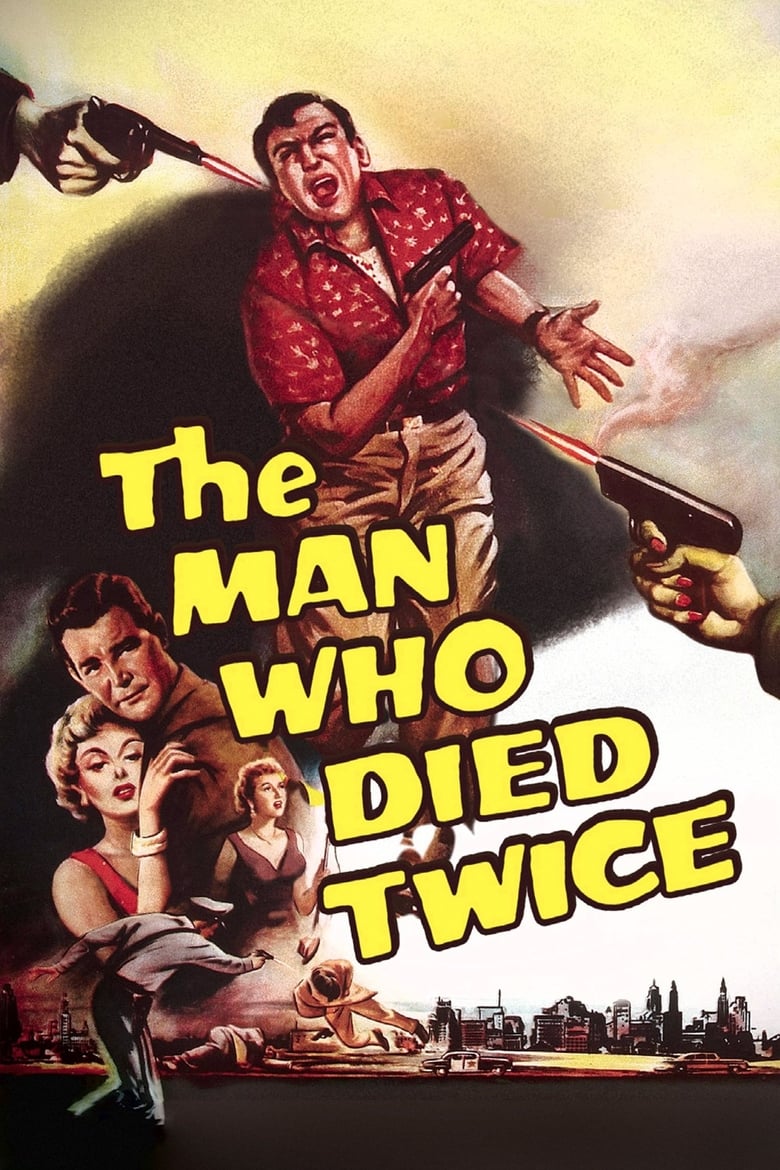
Man Who Died Twice 1958
1958 Ventura Pictures Corporation
★★★☆☆ Notable
Film Noir · 70 minutes · Black & White

Man Who Died Twice

Directed by Joseph Kane
Year 1958
Runtime 70 min
Studio Ventura Pictures Corporation
TMDB 5.9 / 10
"A man who vanishes once rarely gets the chance to disappear again."

William 'Bill' Brennon is a man with a past he has not fully shed. When he is presumed dead under circumstances that invite as many questions as they answer, his wife Lynn finds herself caught between grief and suspicion, navigating a world where the line between mourning and motive is deliberately blurred. Captain Andy Hampton of the police department begins to pull at the threads, and what unravels suggests that Brennon's death may have been as calculated as his life.

The investigation draws in a rough constellation of interested parties: the brutish enforcer Rax, the cold operator Hart, and the syndicate figure Santoni, each with a claim on what Brennon knew or owed. Lynn, far from a passive widow, becomes a figure of contested loyalty – her allegiances tested by men who want to use her and a law enforcement apparatus that is not certain she is innocent. T.J. Brennon, Bill's brother, adds a further layer of obligation and suspicion to an already compromised family picture.

Working within the compressed economy of a seventy-minute B-picture, Man Who Died Twice constructs a modest but functional noir architecture around the idea that a false death is merely a deferred reckoning. The film belongs to that late-cycle strain of American noir in which syndicate pressure and domestic instability intersect, and in which the protagonist's fate feels less like tragedy than like an overdue accounting.
Classic Noir

Man Who Died Twice arrives near the end of noir's classical period, produced by the small Ventura Pictures Corporation and directed by Joseph Kane, a veteran of Republic Pictures whose background lay principally in westerns. That lineage is not irrelevant: Kane brings to the film a directness of staging and a willingness to let plot mechanics carry moral weight rather than stylistic embellishment. Rod Cameron, physically imposing and emotionally guarded, suits the material well – his Bill Brennon is a man whose self-concealment reads as guilt long before the script confirms it. Vera Ralston, whose career at Republic had been defined by her off-screen relationship with studio head Herbert Yates, turns in controlled work as Lynn, suggesting a woman who has long understood that survival requires performance. The film does not innovate within the genre, but it demonstrates how thoroughly noir conventions had been absorbed into the B-picture economy by 1958 – functional, unsentimental, and clear-eyed about the cost of alliances made in bad faith.

– Classic Noir
3 ★★★☆☆ Notable
Credits

The Crew

DirectorJoseph Kane
ScreenplayRichard C. Sarafian
CinematographyJack A. Marta
EditingFrederic Knudtson
ProducerRudy Ralston
Performances

The Cast

Close Reading

The Signature Scene

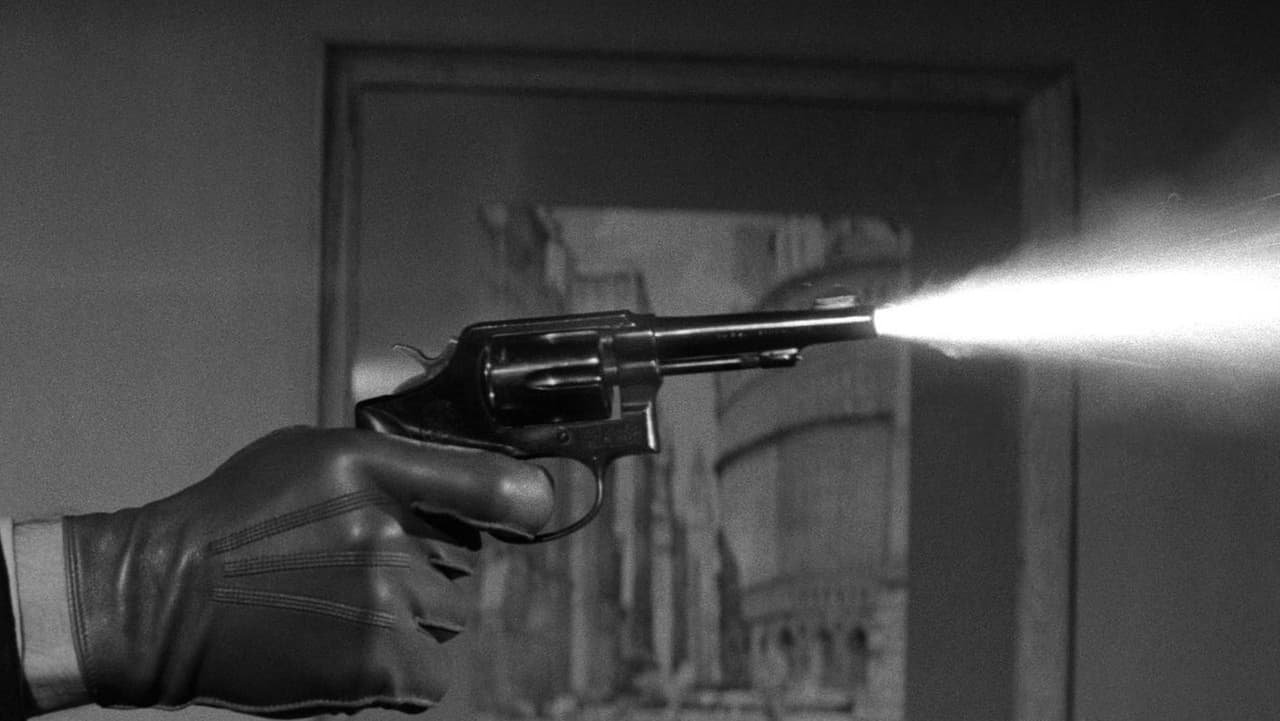
Man Who Died Twice – scene
The Confrontation at the Warehouse Light Cutting Across Rax

Jack A. Marta positions the camera low, allowing the warehouse's structural geometry – beams, stacked crates, a single overhead source – to divide the frame into unequal zones of visibility. Rax occupies the lit half; his interlocutor is partially swallowed by shadow. The effect is less expressionistic than procedural: Marta uses available industrial architecture to impose a moral diagram on what is, at its surface, a scene of physical intimidation.

What the scene clarifies is the film's central argument about power: that size and violence are not the same as control. Rax is large and present; he commands space. But the scene's blocking reveals that he is also a tool, aimed by men who remain in the dark. The framing says what the dialogue does not – that the most dangerous figure in the room is the one the camera refuses to fully illuminate.

Visual Language

The Cinematography

🎞️
Jack A. Marta – Director of Photography

Jack A. Marta, who spent the bulk of his career at Republic Pictures, brings to Man Who Died Twice the disciplined low-budget visual grammar he refined across dozens of productions. Working within the constraints of studio interiors and limited location access, Marta relies on hard side-lighting and deep shadow fill to establish moral atmosphere without expressive excess. His lens choices favor moderate focal lengths that keep interiors legible while compressing background figures into flat planes of grey – a technique that subtly denies characters the spatial freedom the narrative also denies them. Where exterior shots appear, Marta uses available light pragmatically, letting the flatness of late-1950s Los Angeles stand in for a world that has lost its capacity to surprise. The cinematography does not reach for the operatic chiaroscuro of the genre's peak years, but it maintains a consistent tonal logic: in this film, clarity is dangerous, and the safest men are those the camera cannot quite bring into focus.

In the Catalogue

Themes & Motifs

Availability

Where to Watch

Also in the Directory

See Also