Films People Pull a Fast One Night Beat Reading Room On TV Shop
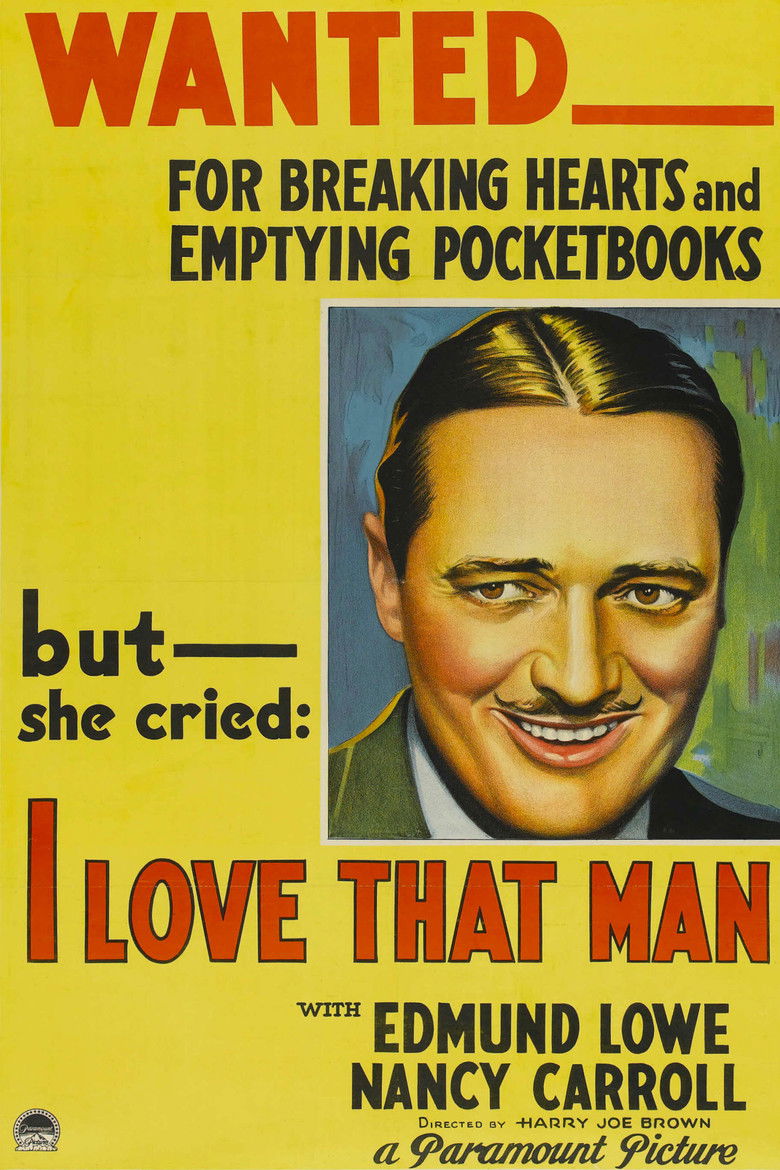
Man I Love 1933
1933 Paramount Pictures
★★★☆☆ Notable
Film Noir · 74 minutes · Black & White

Man I Love

Directed by Harry Joe Brown
Year 1933
Runtime 74 min
Studio Paramount Pictures
TMDB 10.0 / 10
"A man with two names runs out of places to hide."

Brains Stanley (Edmund Lowe), a slick racketeer operating under the alias Roger Winthrop, moves through the criminal underworld with the calculated ease of a man who has survived by keeping everyone at arm's length. When he becomes entangled with Grace Clark (Nancy Carroll), a woman sharp enough to see through his cultivated surfaces, the careful distance he maintains between his two lives begins to close. Around him orbit the familiar figures of the rackets: Driller (Robert Armstrong), blunt and loyal; Labels Castell (Lew Cody), whose loyalty is a more provisional thing; and Mousey (Warren Hymer), the small-time hanger-on whose insignificance makes him useful.

Grace represents a complication Brains has not planned for. Her refusal to be managed or deceived forces him into a position where sentiment and survival pull against each other. Labels Castell, whose interests align with no one's for long, introduces the element of treachery that reorganizes the film's loyalties entirely. Ethel, known as Giggles (Dorothy Burgess), occupies the margins where desire and danger are indistinguishable, and her presence sharpens the sense that every relationship in the film operates as a form of negotiation with risk.

The Man I Love belongs to the early cycle of pre-Code crime pictures in which the genre's moral architecture had not yet calcified into formula. The film examines what it costs a man to sustain a double identity, and whether the self underneath the alias can be recovered once it has been long enough discarded. Its world is one of provisional allegiances, where the only currency that holds value is knowing more about the other person than they know about you.
Classic Noir

Released in 1933 under Harry Joe Brown's direction, The Man I Love arrives at the moment when Hollywood crime cinema was finding its vocabulary. Edmund Lowe brings a particular kind of intelligence to Brains Stanley – not the brutish magnetism of a Cagney or the reptilian cool of later noir figures, but something more studied, a man performing competence so long it has become genuine. Nancy Carroll matches him without deferring to him, and their scenes together carry the specific tension of two people who are each trying to read the other's hand. The film's pre-Code status matters here: the racketeer is not obligated to fall, and the woman is not required to suffer for her choices. What the film ultimately reveals about its era is the instability of the respectable surface – the ease with which Roger Winthrop can be constructed and the difficulty of determining whether Brains Stanley beneath him is any more real. Milton Krasner's photography keeps the visual atmosphere appropriately contracted, resisting the open spaces where reassurance might creep in.

– Classic Noir
3 ★★★☆☆ Notable
Credits

The Crew

DirectorHarry Joe Brown
ScreenplayCasey Robinson
CinematographyMilton Krasner
EditingJoseph Kane
ProducerCharles R. Rogers
Performances

The Cast

Close Reading

The Signature Scene

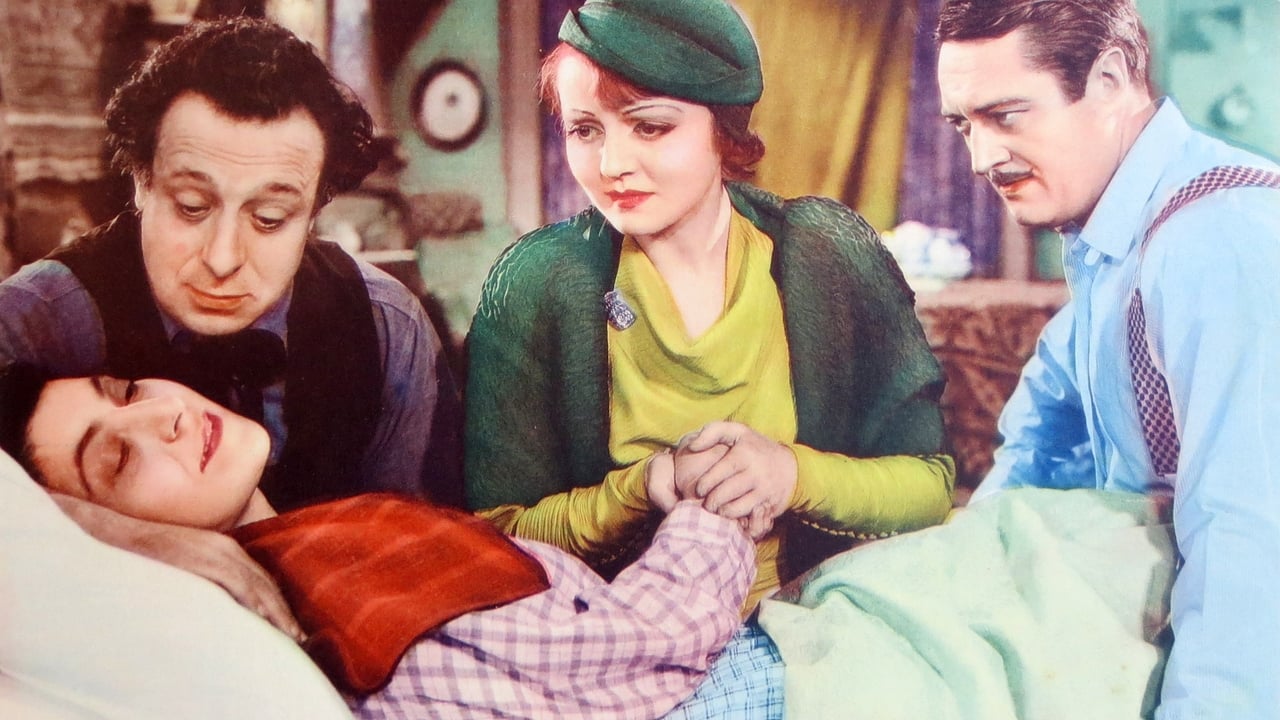
Man I Love – scene
The Backroom Confrontation Two Names, One Room

Krasner positions his camera at a slight remove, framing Lowe across a table cluttered with the props of the rackets – papers, glasses, the paraphernalia of deals conducted in private. The light falls from a single overhead source, carving the room into quadrants of clarity and shadow. Carroll enters the frame from the left edge, and the camera holds rather than follows her, so that she must cross into the light to face him. The composition gives both figures roughly equal spatial weight while denying them equal illumination.

What the scene argues is that the man who calls himself Roger Winthrop cannot sustain that fiction in close proximity to someone who is not afraid of him. Grace does not confront him with evidence or accusation; she simply refuses the performance, and in refusing it she makes the gap between his two selves visible on screen. The scene's stillness is its point – no movement is needed when the pressure is already structural.

Visual Language

The Cinematography

🎞️
Milton Krasner – Director of Photography

Milton Krasner, who would go on to photograph some of the decade's most precisely lit studio work, brings to The Man I Love a restrained but purposeful visual grammar. Working within Paramount's studio infrastructure, Krasner favors tight interior setups where the lighting architecture does the work that location texture might otherwise provide. Shadow is deployed not decoratively but functionally: it marks the spaces where identity becomes uncertain, where Brains Stanley ends and Roger Winthrop begins. The cinematography avoids the expressionist extremes that would define the genre's later high period, preferring instead a controlled naturalism that makes the occasional deep shadow more pointed when it arrives. Key scenes are composed to restrict the frame, keeping characters in proximity to walls and furniture in ways that suggest constraint without requiring the dialogue to name it. The visual language serves the film's central argument – that respectability is a lighting condition, something that holds only so long as the source remains undisturbed.

In the Catalogue

Themes & Motifs

Availability

Where to Watch

Also in the Directory

See Also