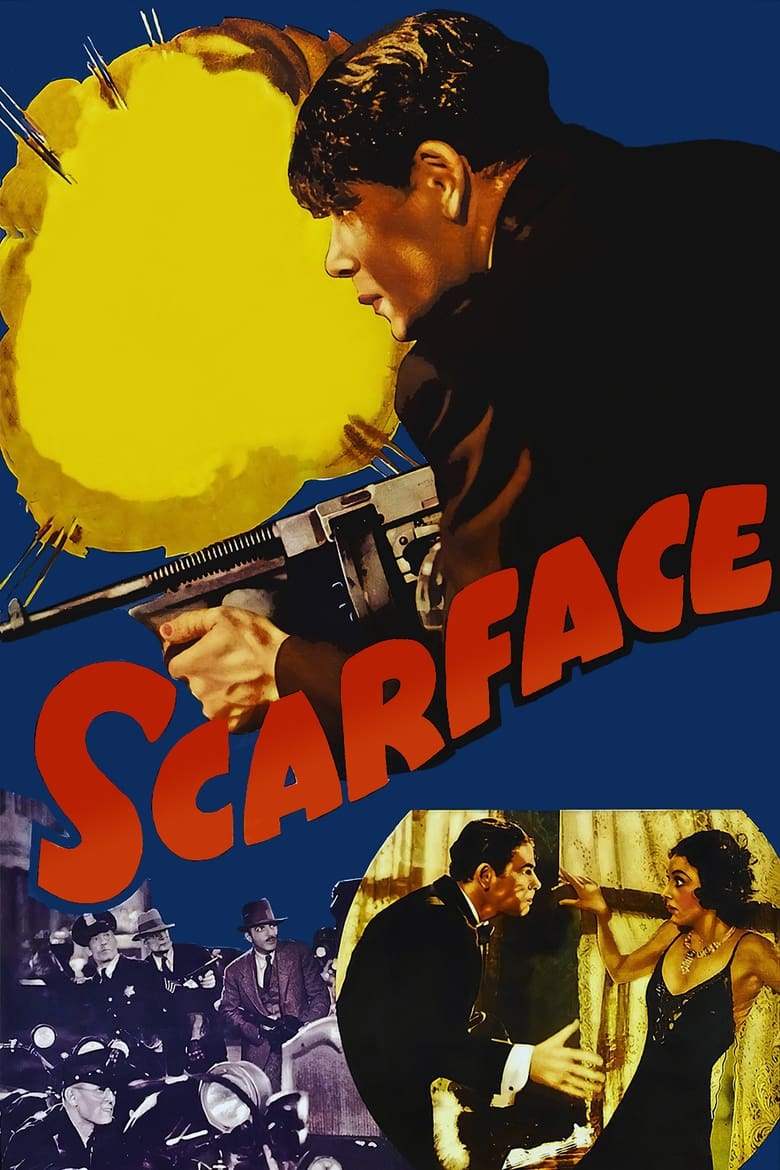
Chicago, the early 1930s. Antonio 'Tony' Camonte is a blunt instrument in the employ of South Side boss Johnny Lovo – ambitious, impulsive, and barely contained by the hierarchy above him. When Lovo sends Tony to neutralize a rival, Tony executes the job with a theatrical relish that announces something more than loyalty: a man who has decided that the men who give orders are simply men who got there first. Around him orbit his sister Cesca, whose independence he monitors with a possessiveness that unsettles everyone who notices it, and Poppy, Lovo's girlfriend, who recognizes in Tony a cruder but more vital version of the power she already lives beside.
Tony begins absorbing territory, eliminating competitors with a coin-flipping lieutenant named Guino Rinaldo at his side and a near-illiterate secretary named Angelo absorbing the collateral noise. His encroachment on the North Side – against Lovo's explicit instructions – draws the attention of Inspector Guarino and brings him into collision with Gaffney, the North Side's blunt counter-force. Alliances curdle. Lovo, frightened by what he created, begins working against his own enforcer. Tony's fixation on Cesca, meanwhile, hardens into something the film refuses to name cleanly, and when her private life intersects with Tony's professional one, the consequences are irreversible.
Scarface positions itself at the collision between immigrant ambition and American appetite, treating the gangster not as a monster imported from outside the social order but as its logical expression. Hawks frames Tony's rise and the machinery around it – the newspapers arguing over how much to cover such men, the politicians conferring in the background – as a systemic condition, not an aberration. The film's final movement strips away everything Tony has accumulated and returns him to something close to what he was: dangerous, cornered, and alone.
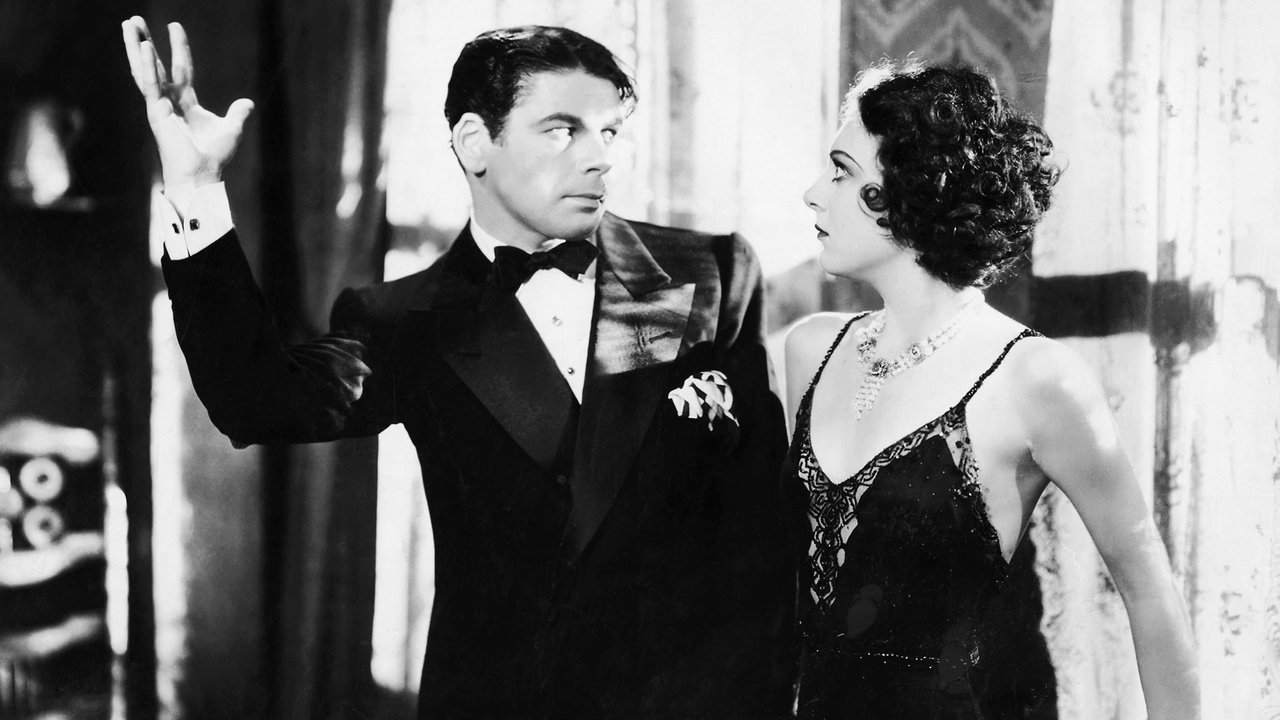
Scarface arrives two years before the Production Code enforcement that would discipline Hollywood's gangster cycle into moral tidiness, and it uses that window with precision. Howard Hawks and producer Howard Hughes pushed against censors throughout production, and the friction shows in the film's texture: the violence is casual rather than operatic, Tony's incestuous possessiveness toward Cesca is left to accumulate through behavior rather than statement, and the pro-forma condemnation inserted at the frame's edges reads as exactly what it is – appeasement. Paul Muni's performance is worth examining on its own terms, a physical, externalized portrayal that refuses sympathy while sustaining attention. The film's X motif – deaths marked by crossing lines in the frame, from shadows to structural beams – gives Lee Garmes's cinematography an almost programmatic quality, turning the visual language into a ledger of violence. What Scarface reveals about its era is less the reality of Prohibition-era crime than Hollywood's ambivalent fascination with the men who filled that particular power vacuum.
– Classic Noir
Hawks and Garmes stage the killing of rival boss Gaffney in a bowling alley, a location chosen less for atmosphere than for the geometric possibilities it offers. The lane recedes into darkness behind the target, the overhead lighting isolating the action in a narrow corridor while the rest of the space falls away. As Gaffney bowls, the camera holds steady on the pins at the far end; when the ball strikes, the pins scatter – and the cut to the body follows with the logic of a completed motion, cause and effect compressed into a single editorial beat. A shadow crosses the frame at the moment of death, reinforcing the X motif Garmes has threaded through the film: intersecting lines that appear wherever a life ends.
The scene's restraint is its argument. Hawks shows almost nothing of the killing itself, trusting the geometry to carry the meaning – which is that death in this world arrives as a matter of routine, absorbed into the background noise of an ordinary Tuesday evening. Gaffney is not given a close-up of recognition or fear. He simply ceases to be present in the frame. This is what the film insists upon throughout: that Tony's violence is not dramatic in any tragic sense but administrative, a means of reorganizing who controls what, and that the men who die in that process are interchangeable entries in a ledger.
Lee Garmes, who had already distinguished himself on Josef von Sternberg's Morocco, brings to Scarface a disciplined approach to low-key lighting that resists the expressionist excess the material might have invited. Working primarily on studio sets that simulate Chicago's streets and interiors, Garmes uses hard sources – practical lamps, windows – to motivate shadows that fall across walls and floors at angles calculated to intersect. This is the X motif made architectural: crosses formed not by camera tricks but by the natural geometry of light sources placed in opposition. The effect is a visual taxonomy of fatality. Garmes also exploits the contrast between the bright, exposed surfaces of tony apartments and nightclubs – spaces of ambition and display – against the compressed, shadow-heavy corridors where violence occurs. The moral logic is spatial: what is seen is what is desired; what is hidden is what it costs. Lens choices keep the imagery crisp and unromantic, resisting any invitation to aestheticize the violence it records.
The Criterion Channel's presentation is the most reliable source for a clean, properly framed transfer of the film, with contextual programming that situates it within the pre-Code cycle.
TubiFreeTubi carries Scarface in a watchable public-domain print at no cost, though transfer quality varies and the version available may differ from restoration elements used elsewhere.
Archive.orgFreeArchive.org hosts multiple public-domain uploads of varying provenance; useful for access but not the preferred option if a subscription service is available.