Films People Pull a Fast One Night Beat Reading Room On TV Shop
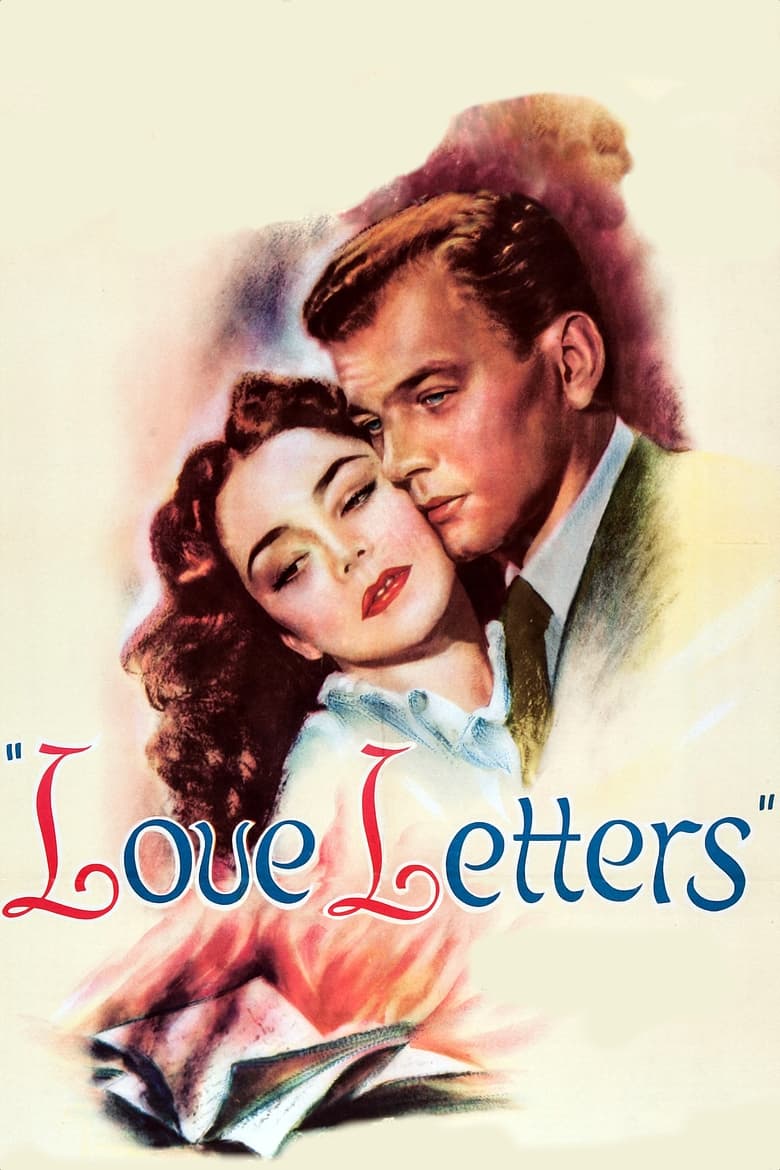
Love Letters 1945
1945 Paramount Pictures
★★★☆☆ Notable
Film Noir · 101 minutes · Black & White

Love Letters

Directed by William Dieterle
Year 1945
Runtime 101 min
Studio Paramount Pictures
TMDB 6.6 / 10
"A man's words built a life for a woman who cannot remember losing it."

In the final months of World War II, British army officer Allen Quinton ghostwrites passionate love letters on behalf of his shallow, manipulative comrade Roger Morland, addressed to Morland's fiancée back in England. The letters are genuine expressions of feeling that Morland himself could never produce, and when Allen eventually meets the woman who received them, he finds she has been tried for Morland's murder and acquitted – but has emerged from the ordeal with no memory of who she is or what she has done. She calls herself Singleton, a name chosen for its blankness.

Allen, now a civilian, encounters Singleton in the English countryside and falls in love with her, knowing that he is, in some sense, the author of the self she believes she once had. Around them moves a circle of people who knew her before: Beatrice Remington, a cold and proprietary guardian who holds secrets; Dilly Carson, a loyal friend navigating divided loyalties; and Helen Wentworth, whose connection to Morland adds another layer of concealed motive. As fragments of the past resurface, the question of what Singleton did – and whether she is capable of knowing it – becomes inseparable from the question of what Allen truly loves.

Love Letters occupies an unusual position in the noir landscape: a romantic melodrama structured around noir's defining anxieties – amnesia, identity, violence suppressed beneath surface gentility. The film uses the love letter as both literal plot device and psychological metaphor, asking how desire constructed through language survives contact with reality. Where the genre typically uses memory loss to strand a protagonist in danger, here it becomes a form of enforced innocence, and the danger is moral rather than physical.
Classic Noir

Love Letters arrives in 1945 as wartime Hollywood was beginning to process the psychological dislocations that would fully define postwar noir. Adapted by Ayn Rand from Christopher Massie's novel, the screenplay is more interested in romantic idealism than in hard-edged crime mechanics, yet the film's underlying architecture – a murder, a trial, suppressed identity, a man who loves a woman partly of his own construction – is unmistakably noir. William Dieterle directs with the studied control he brought to melodrama throughout the decade, allowing the material's darker implications to accumulate beneath the love story rather than overwhelm it. Jennifer Jones performs Singleton's blankness as a genuine condition rather than an affectation, and Joseph Cotten, a year after his work in Shadow of a Doubt, again plays a man whose decency is complicated by what he knows and chooses not to say. The film never quite resolves the tension between its generic instincts and its studio-romantic obligations, but that unresolved tension is part of what makes it worth examining.

– Classic Noir
3 ★★★☆☆ Notable
Credits

The Crew

DirectorWilliam Dieterle
ScreenplayAyn Rand
CinematographyLee Garmes
MusicVictor Young
EditingAnne Bauchens
Art DirectionRoland Anderson
CostumesEdith Head
ProducerHal B. Wallis
Performances

The Cast

Close Reading

The Signature Scene

Love Letters – scene
The Ruined Garden Letters Read in Shadow

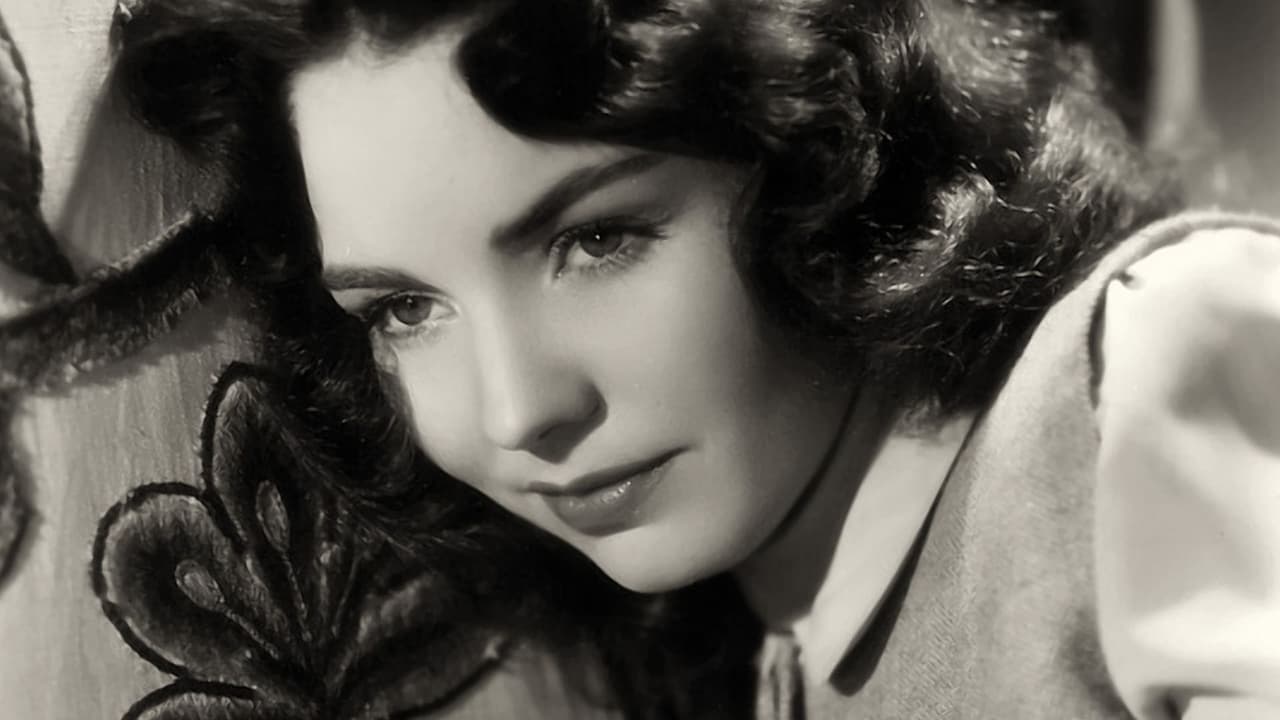
Lee Garmes frames the scene in a walled garden gone to seed, the light falling at a low angle that carves deep shadow across the stone and overgrown paths. The camera holds a medium shot of Singleton as she listens to the letters read aloud, her face positioned so that one side remains in near-darkness. There is no cutting away to reaction shots; Garmes allows the frame to sit with her stillness, the shadow line bisecting her face functioning as a visual argument about a divided self.

The scene concentrates the film's central problem: Singleton is hearing words that were written about her but not to her, by a man now present but then unknown to her. Her response – composed, remote, quietly undone – establishes that the amnesia is not simply a plot mechanism but a condition that the film takes seriously as a way of examining how identity persists or fails when memory is absent. Allen watches her absorb the letters and understands, perhaps before she does, that he is watching someone encounter a version of themselves they cannot claim.

Visual Language

The Cinematography

🎞️
Lee Garmes – Director of Photography

Lee Garmes, whose work on Shanghai Express and Scarface had already established his authority with shadow and contour, brings to Love Letters a cinematography rooted in controlled chiaroscuro rather than the expressionist excess the material might have invited. Shooting on studio sets dressed to suggest English country interiors and gardens, Garmes uses soft key lights positioned to create graduated shadow rather than hard pools, a choice that keeps the film atmospherically interior without pushing it into overt menace. His lens choices favor moderate focal lengths that flatten depth slightly, keeping characters in a world that feels closed and self-contained. The effect reinforces the film's moral logic: nothing here is fully illuminated, neither the past nor the people in it. Garmes allows faces to drift in and out of clarity within single shots, a technique that serves Jennifer Jones's performance particularly well, preserving the ambiguity of a character who may not fully know herself.

In the Catalogue

Themes & Motifs

Availability

Where to Watch

Also in the Directory

See Also