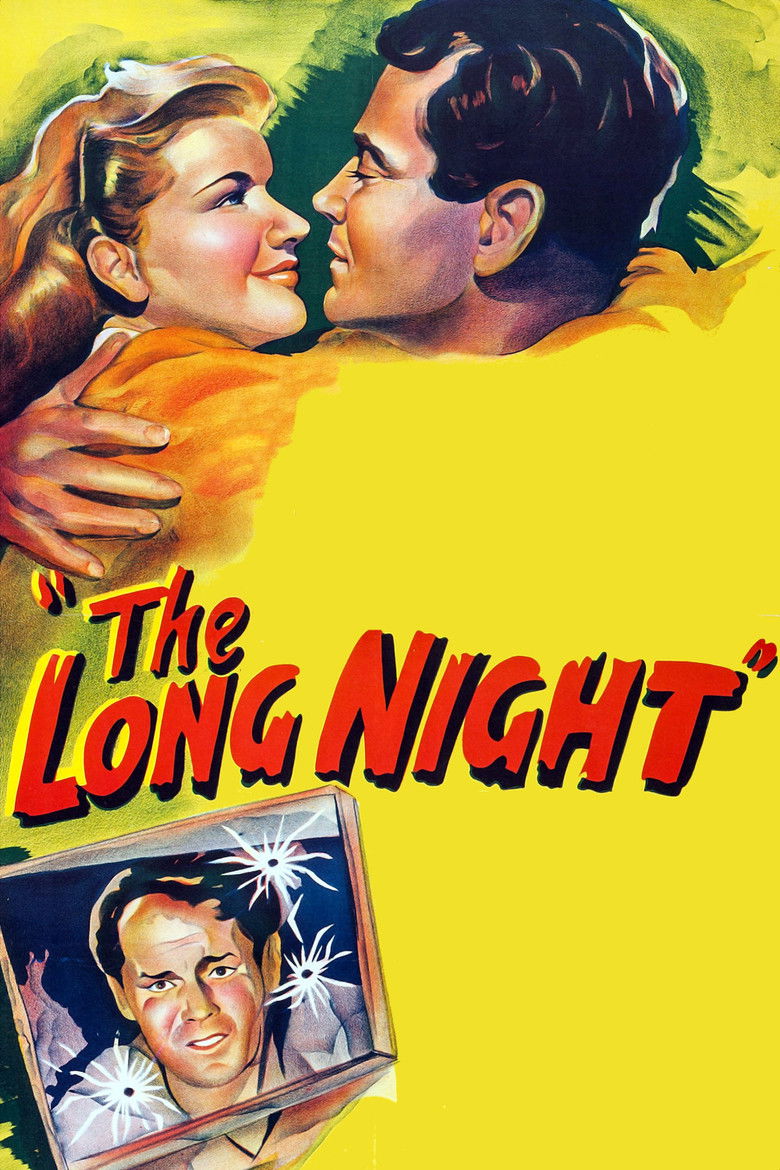
In a small Pennsylvania mill town, Joe Adams – a veteran and factory worker played by Henry Fonda – barricades himself in a rooming house after shooting Maximilian the Great, a traveling magician and con man. The police surround the building. As the standoff stretches through the night, the town gathers in the street below, and the narrative begins to move in two directions at once: outward, through the crowd and the authorities, and inward, through a series of flashbacks that reconstruct how Joe arrived at this moment.
The flashbacks reveal Jo Ann, a young woman Joe loves, and Charlene, the older, harder woman in Maximilian's orbit who has her own claims on the magician and her own designs on the men around her. Maximilian emerges as a manipulator who trades on illusion professionally and personally – his relationship with Jo Ann is coercive, and his hold over Charlene is one of mutual dependency and damage. Joe's act of violence, seen in full context, complicates the question of guilt in ways the law is not equipped to address. Frank Dunlap, a local man played by Elisha Cook Jr., becomes an unlikely intermediary between the besieged room and the street.
The Long Night is structured as a noir siege, using the confined space of the rooming house and the opened-out space of the flashback to explore how a community processes violence and how a man's private history is misread by a public hungry for simple judgment. The film draws on the French source material – Marcel Carné's Le Jour se lève – while grounding itself in postwar American anxiety about returned soldiers, class immobility, and the distance between justice and the law.
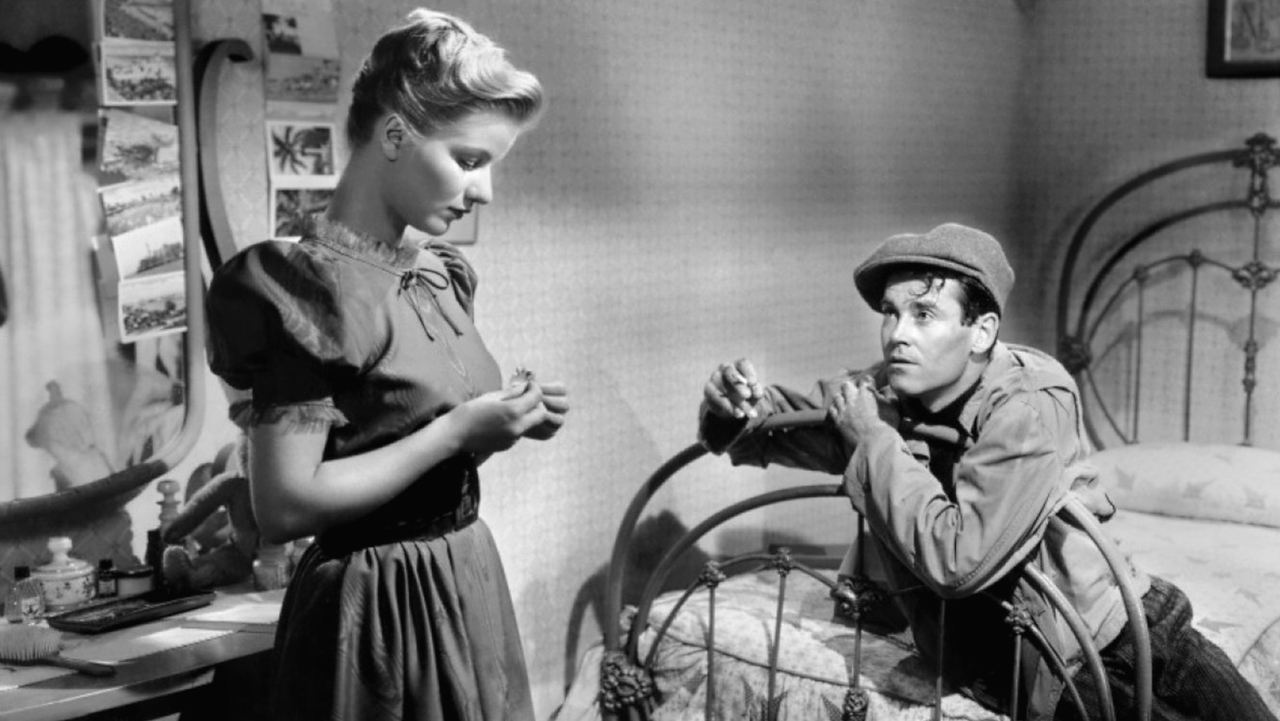
The Long Night arrived in 1947 carrying a burden few films survive: it is a remake of Le Jour se lève, and Carné's 1939 film has never been easy to dislodge from critical memory. Litvak's version was for years dismissed on those terms alone. Reassessed on its own ground, it holds more than its reputation suggests. Henry Fonda brings a quality of compressed grief to Joe Adams that suits the material – his stillness inside the surrounded room reads as exhaustion rather than defiance, which is the right register for a film about a man who has already made the irrevocable choice. Vincent Price, then not yet fully identified with horror, is precisely calibrated as Maximilian: charming in a way that is inseparable from predation. The film's weakness is structural – the flashbacks occasionally lose narrative pressure, and the ending, adjusted from Carné's for American production requirements, blunts the moral logic that gives the story its shape. What remains is a serious examination of how guilt is constructed in public, and how class determines whose version of events survives.
– Classic Noir
Sol Polito positions the camera low and slightly back, so that the window frame cuts the upper third of the image and Joe's silhouette is caught between the interior dark and the diffuse light rising from the street below. The crowd noise is audible but not seen from this angle; the effect is of a man observed from a direction he cannot watch. Shadow from the window muntins falls in a loose grid across Fonda's shoulders and the floor, a visual motif that stops short of the obvious cage analogy and instead suggests something more provisional – a structure that could shift with the light.
The composition argues that Joe's isolation is not merely physical. He is separated from the community below by the fact of the act, but also by the impossibility of explanation – the flashback structure has told the audience what the crowd does not know, and the scene exploits that gap without sentimentality. His posture at the window is neither defiant nor defeated; it is simply the posture of a man who has run out of available futures and is waiting for the one that remains.
Sol Polito, whose work on Warner Bros. productions through the 1930s and 1940s gave him an unusually precise understanding of how to use studio architecture as moral geography, brings that discipline to The Long Night. The film is shot almost entirely on constructed sets, and Polito uses that control to manage the relationship between the besieged room and the street below with a consistency that location work would likely have disrupted. His lighting in the interior sequences favors a single hard source – window light, a bare bulb – that carves the frame into distinct zones of knowability. The flashback sequences open the palette slightly without abandoning the logic: Maximilian's spaces are lit with a smoothness that reads as performance, while Joe and Jo Ann's scenes together carry more contrast, more unresolved shadow. The lens choices stay in a range that flattens depth just enough to make the room feel not so much small as inescapable. The cinematography consistently serves the film's central argument that visibility does not equal understanding.
TCM remains the most reliable broadcast home for The Long Night and occasionally streams it through the Max bundle; check schedules, as availability rotates.
Archive.orgFreeThe Long Night has circulated in the public domain and versions of uncertain provenance appear on Archive.org; transfer quality varies and the best available print is preferable for evaluating Polito's photography.
TubiFree with AdsTubi has carried the film intermittently as part of its classic noir catalog; availability is subject to change and the print sourced is typically the standard public domain transfer.