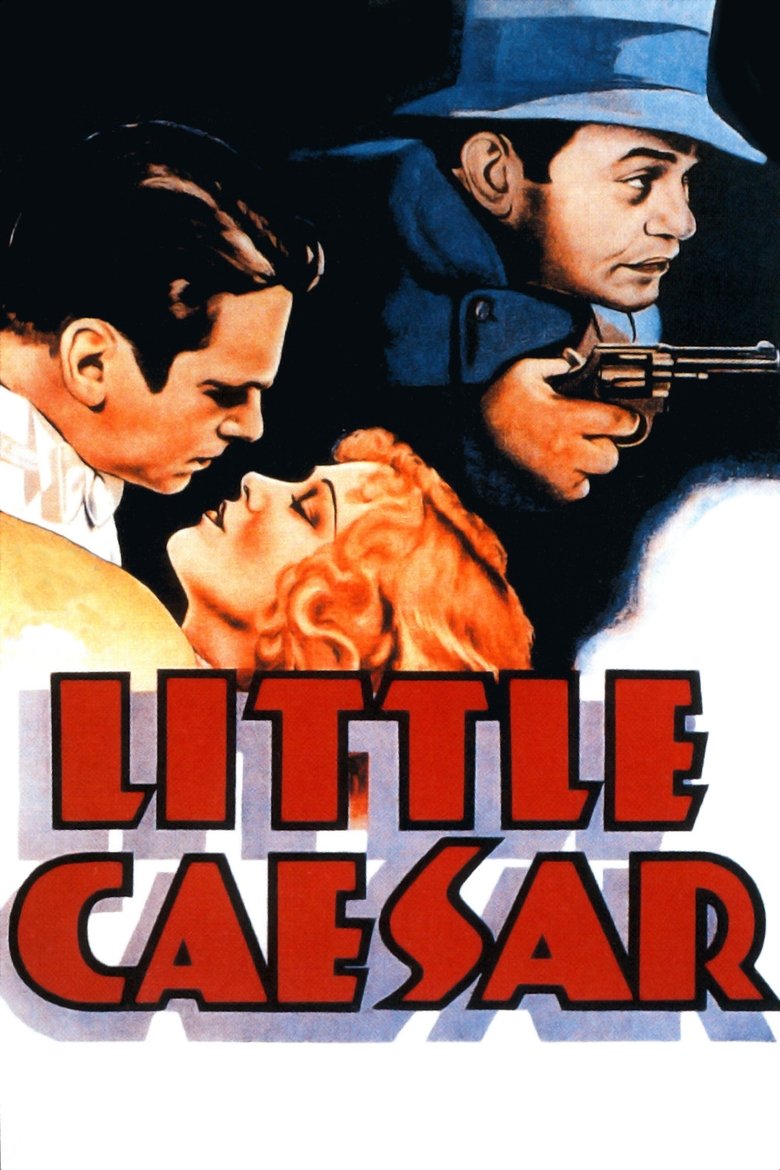
Caesar Enrico Bandello – Rico – is a small-time hood from the provinces with an outsized appetite for power. Arriving in Chicago with his partner Joe Massara, Rico attaches himself to Sam Vettori's gang and begins his ascent through a criminal hierarchy that rewards audacity and punishes sentiment. Joe, by contrast, wants out: he has a dancing career ahead of him and a woman, Olga Stassoff, who gives him reason enough to leave the rackets behind.
Rico's rise accelerates after a New Year's Eve robbery goes violently wrong, and he maneuvers Vettori aside to take command of the operation. His ambitions push further still – toward the territory of Pete Montana and the shadowy authority of Big Boy – but the closer Rico gets to the summit, the more he relies on fear rather than loyalty. His friendship with Joe becomes the one fissure in his armor: he cannot bring himself to eliminate the man who represents everything he has refused to want, yet he cannot tolerate Joe's defection either.
Little Caesar occupies the founding position in the American gangster cycle, arriving just as sound cinema was learning to weaponize dialogue and gunfire in equal measure. The film frames its protagonist not as a romantic outlaw but as a case study in naked ambition, tracing the logic of the criminal enterprise with a directness that made censors and audiences alike uncomfortable – and that would set the template for the genre's defining preoccupation with the wages of ego.
Little Caesar arrived in January 1931 and effectively inaugurated the sound-era gangster film as a viable and morally serious genre. Mervyn LeRoy's direction is functional rather than expressive – the film's true engine is Edward G. Robinson's performance, which refuses the period's theatrical conventions and delivers Rico as a man whose self-belief is indistinguishable from pathology. What the film achieves, beyond its considerable cultural influence, is a portrait of ambition stripped of glamour: Rico wants power not for what it buys but as an end in itself, and the screenplay is disciplined enough to sustain that reading throughout. The pre-Code environment permits a frankness about violence and corruption that the Production Code would shortly suppress, and the film reads now as a document of its industrial moment as much as its social one – a studio system testing what sound and subject matter could do together. Its weaknesses are real: the subsidiary characters are thin, and the romantic subplot involving Joe and Olga generates less tension than the film requires. But Robinson's central performance remains the measure against which subsequent screen gangsters are still calibrated.
– Classic Noir
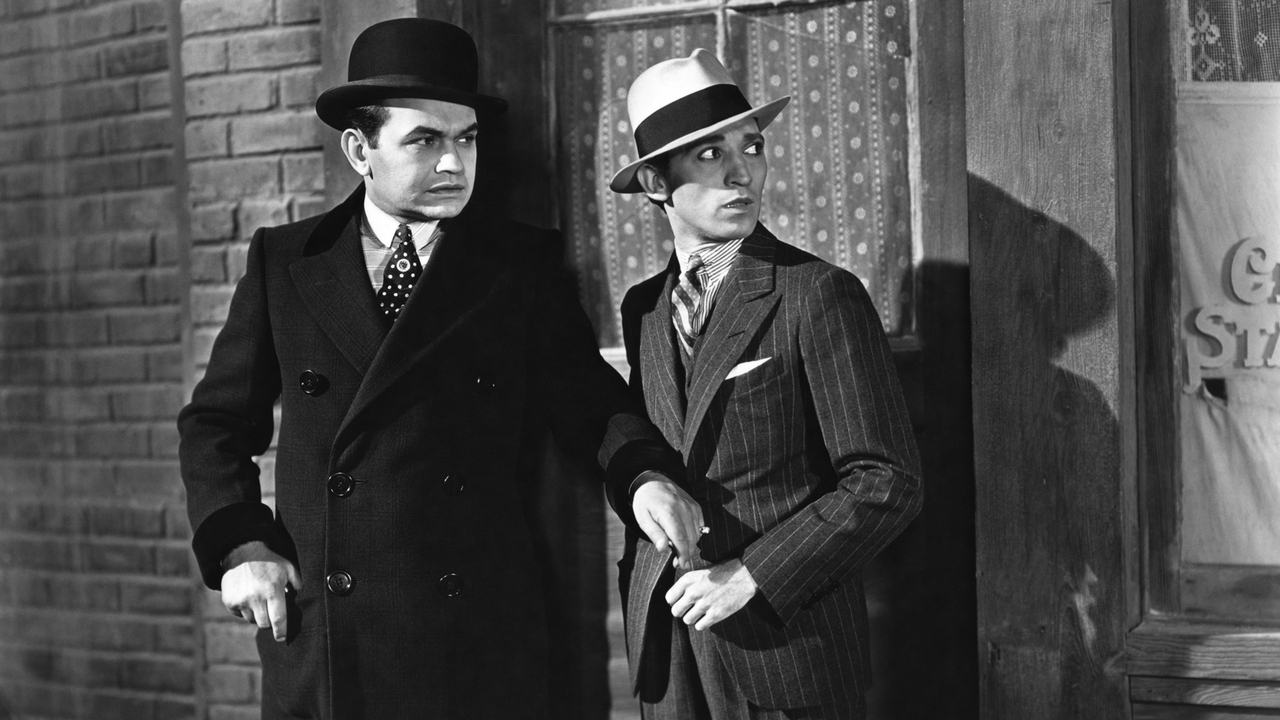
Tony Gaudio lights the scene in concentrated pools, leaving the margins of the frame in shadow so that Rico fills the doorway as a figure cut from darkness rather than standing within a room. The camera holds at mid-distance, refusing the close-up that would humanize the moment; the composition places Joe and Olga physically below Rico's eyeline, the geometry of the frame doing the work of hierarchy before a word is spoken. When Rico speaks, the light catches only the upper half of Robinson's face, the jaw and throat disappearing into the background.
The scene distills the film's central argument: Rico's inability to kill Joe is not mercy but weakness, the single point where his ruthlessness encounters something it cannot process. His departure – without pulling the trigger – registers not as restraint but as a man encountering the limits of his own nature. It is the hinge on which the film's final act turns, and Gaudio's refusal to sentimentalize the lighting ensures that what might read as tenderness reads instead as a flaw in an otherwise complete machine.
Tony Gaudio's cinematography on Little Caesar belongs to the transitional moment when Hollywood was still absorbing the technical constraints of early sound recording while attempting to preserve the visual ambition of late silent cinema. Gaudio shoots almost entirely on studio-built sets, which gives him full control over the lighting architecture: hard key lights carve Rico's face into something close to a mask, while fill is often withheld entirely, producing the deep shadows that the film's moral logic demands. There is little of the elaborate chiaroscuro that would define the genre's mature visual style in the 1940s – the shadow work here is blunter, more theatrical – but the underlying grammar is already in place. Gaudio uses shallow focus to isolate Robinson from his surroundings, reinforcing the character's solipsism, and his coverage of crowd scenes in nightclubs and gang headquarters is precise enough to establish social geography without sacrificing pace. The visual language serves the film's argument that this world is windowless and self-enclosed.
Little Caesar is part of the Warner Bros. pre-Code library available on Max, generally in a clean transfer sourced from the studio's archive.
TCMBroadcast/StreamingTCM screens the film periodically as part of its pre-Code and gangster programming blocks; check the schedule for broadcast dates.
Archive.orgFreeA public-domain-era print is available on Archive.org at no cost, though picture and sound quality vary considerably across available uploads.