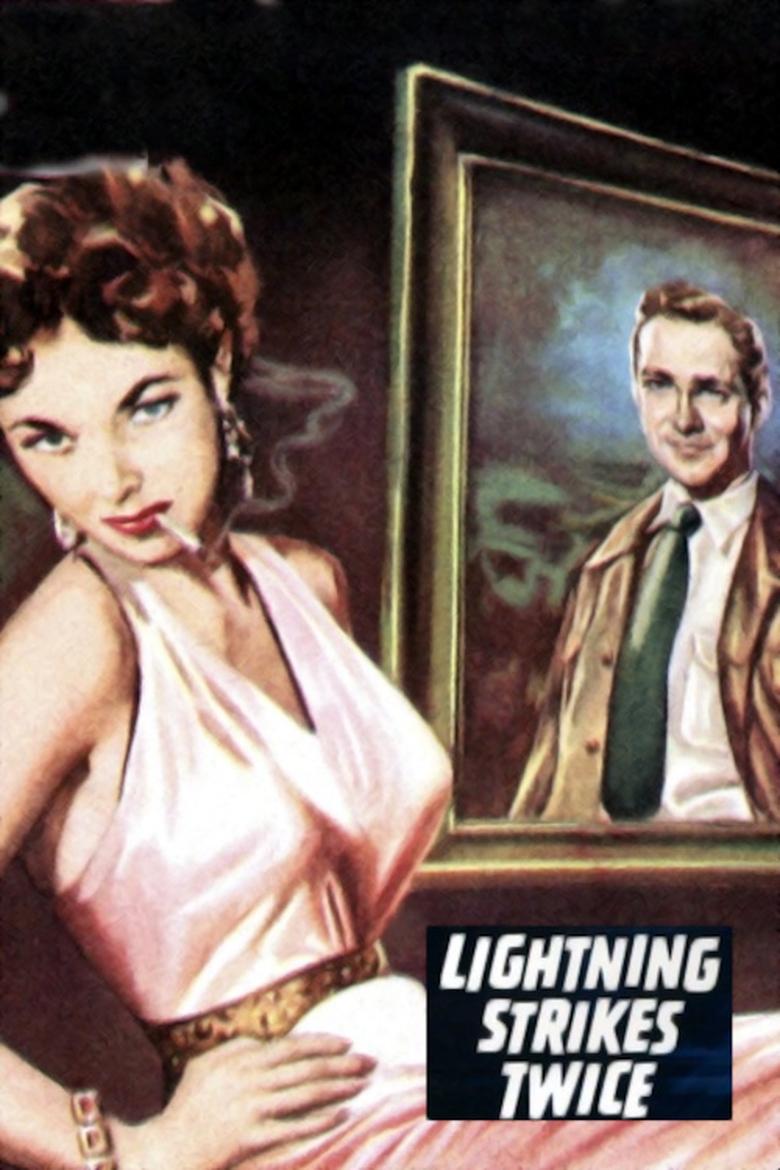
Shelley Carnes, a stage actress recovering from illness at a New Mexico ranch, becomes entangled with Richard Trevelyan, a man recently acquitted of murdering his wife after a hung jury. Richard has retreated to his remote ranch to rebuild his reputation and his sense of self, but the community around him remains divided – some convinced of his guilt, others willing to extend a cautious trust. Shelley arrives as a stranger with no stake in the local verdict, and her gradual attraction to Richard sets the film's central tension in motion.
The antagonism sharpens through Liza McStringer, a ranch hand whose obsessive attachment to Richard operates somewhere between devotion and menace. Zachary Scott's Harvey Fortescue Turner circles the situation with the practiced ease of a man who profits from other people's instability, while J.D. Nolan and his wife Myra represent the respectable community's suspicion made domestic and persistent. Shelley is forced to measure her own judgment against a chorus of doubt, and as she commits more deeply to Richard, the question of whether she is reading the situation clearly or being manipulated becomes genuinely open.
Lightning Strikes Twice sits at the intersection of the romantic thriller and the psychological noir, less concerned with crime procedure than with the corrosive effect of unresolved guilt on everyone who orbits it. The film uses its sun-scorched Southwest landscape to invert noir's usual urban nightscape, staging its paranoia in open terrain where there is nowhere to hide and shadows are cast by geology rather than architecture.
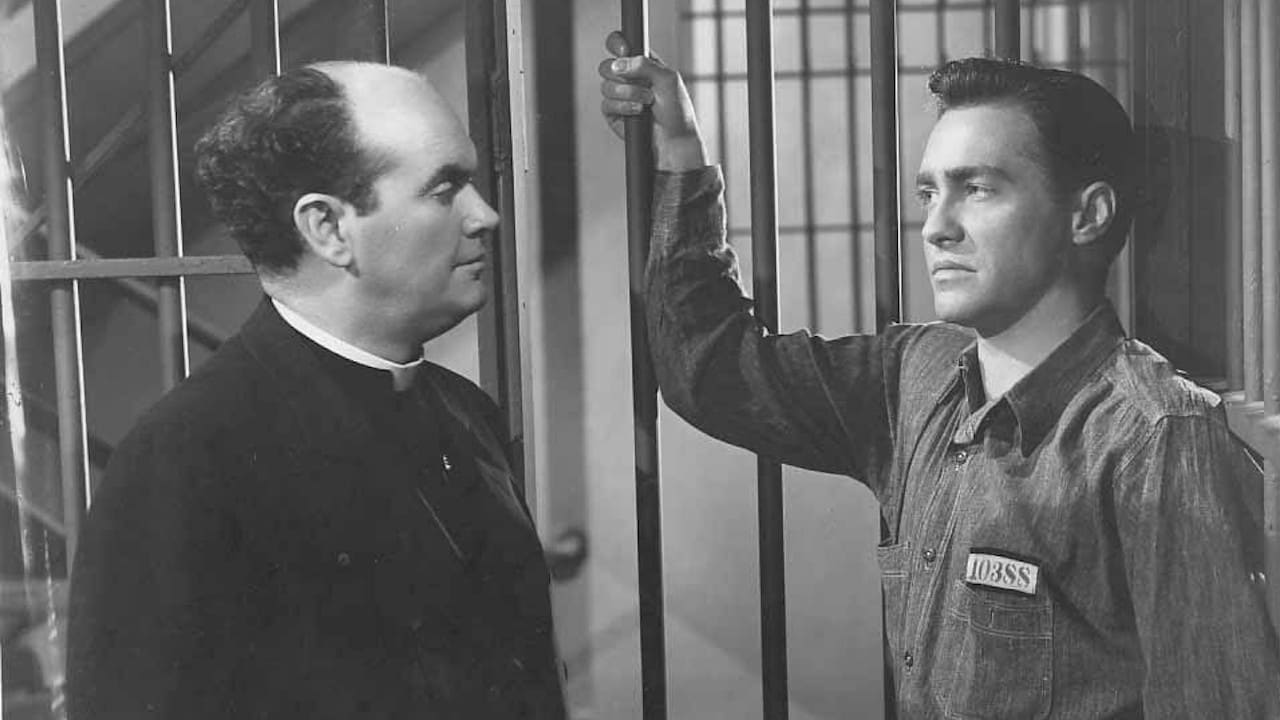
King Vidor is not a director typically placed at the center of the noir canon, and Lightning Strikes Twice does little to demand that reclassification – yet it merits serious attention as a specimen of studio noir at its most formally composed and psychologically ambivalent. Ruth Roman carries the film with a watchfulness that suits the material; her Shelley is neither naive nor foolhardy, and the script tests that intelligence against circumstances designed to overwhelm it. Richard Todd, still finding his footing in Hollywood after his Oscar-nominated debut in The Hasty Heart, plays Trevelyan as a man whose innocence, if real, has been so thoroughly corroded by suspicion that it no longer reads as innocence at all. Mercedes McCambridge's Liza is the film's most unsettling presence – a figure of thwarted passion who belongs to a darker picture than the one surrounding her. What the film reveals about its era is the postwar anxiety over institutional judgment: the jury could not decide, the community will not forgive, and private trust becomes the only available arbiter.
– Classic Noir
Sidney Hickox frames Mercedes McCambridge in a low-angle medium shot that places her against the last light bleeding out of the New Mexico sky, her figure caught between the warm interior lamp spilling through the doorway behind her and the cold blue of the failing exterior. The camera holds rather than moves, and the stillness of the composition forces the viewer to read her face – the set of the jaw, the quality of stillness that registers as restraint rather than calm. Shadow cuts across the lower half of the frame, leaving McCambridge's eyes in the one zone of available light.
The scene does not stage a confrontation in any conventional sense; nothing is said that could be introduced as evidence. What it establishes is the film's central moral geometry: that proximity to a man of uncertain guilt has corrupted everyone around him in different registers, and that Liza's corruption is the most complete because it was voluntary. Her position at the threshold – neither inside nor outside – is the image the film has been building toward, a literalization of the suspension between complicity and innocence that defines the picture's argument.
Sidney Hickox, whose work on To Have and Have Not and White Heat demonstrated a facility for finding darkness inside ostensibly well-lit spaces, brings an unusual discipline to Lightning Strikes Twice. Where noir habitually retreats to urban interiors and wet pavement, Hickox is asked to generate unease under the flat glare of New Mexico exteriors – a problem he addresses through compositional asymmetry and the careful management of transitional light, the hours of dawn and dusk when the Southwest landscape produces its own hard shadows. Interior sequences lean on motivated sources: a single lamp, a window catching afternoon sun at an oblique angle, firelight that illuminates one side of a face and leaves the other in gradation. The lens work is conservative by design, avoiding expressionist distortion in favor of an oppressive normalcy that makes the psychological dread harder to locate and therefore harder to dismiss. The cinematography serves the film's moral logic precisely: nothing looks wrong, and that is the problem.
TCM remains the most reliable broadcaster for Warner Bros. catalog titles of this period; check schedules or the TCM hub within Max for availability.
MaxSubscriptionAs a Warner Bros. production, Lightning Strikes Twice may surface in the Max library; availability shifts, so confirm before subscribing solely for this title.
Archive.orgFree StreamingPublic domain or donated prints of lesser-circulated studio noirs occasionally appear here; quality varies and availability is not guaranteed for this title.