Films People Pull a Fast One Night Beat Reading Room On TV Shop
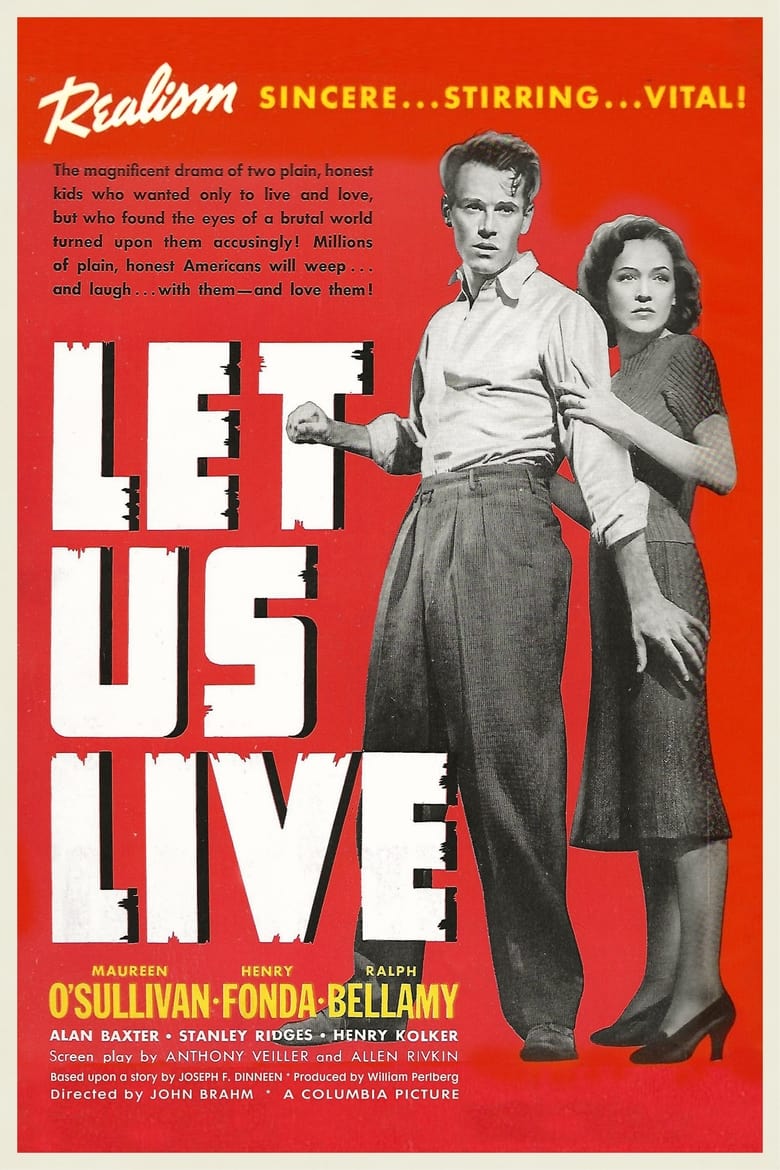
Let Us Live 1939
1939 Columbia Pictures
★★★☆☆ Notable
Film Noir · 65 minutes · Black & White

Let Us Live

Directed by John Brahm
Year 1939
Runtime 65 min
Studio Columbia Pictures
TMDB 6.8 / 10
"Two men wait in a cell for a crime they did not commit while the truth moves at the pace of bureaucracy."

In a mid-sized American city, Brick Tennant, a cab driver, and his friend Joe Linden live ordinary, unremarkable lives on the margins of working-class respectability. Brick is engaged to Mary Roberts, a young woman whose faith in him is the steadying center of his world. When a cab matching Brick's is misidentified at the scene of a robbery and murder, both men are swept into a police lineup, identified by eyewitnesses, and convicted on evidence that is circumstantial at every point. The machinery of the law, once set in motion, shows little interest in reversing itself.

Mary refuses to accept the verdict. She turns to Lieutenant Everett, a prosecutor who handled the case, pressing him to look again at the evidence and the witnesses. Everett is not corrupt – he believed the case – but Mary's persistence introduces doubt where there had been institutional certainty. Meanwhile the real killers remain at large, and the clock moves toward Brick and Joe's scheduled execution. The film distributes its tension not through action but through the grinding procedural logic of a system that equates conviction with guilt.

Let Us Live belongs to the wrong-man cycle that runs through the American crime film of the late 1930s and early 1940s, a cycle driven by anxieties about institutional failure and the fragility of individual identity before state power. It shares its moral architecture with the social problem picture while anticipating the fatalistic atmosphere of classical noir: the innocent man trapped not by villainy but by coincidence, mistaken perception, and the indifference of process.
Classic Noir

Let Us Live arrives in 1939 at a threshold moment for the American crime film, before the genre had fully absorbed the German expressionist visual vocabulary that would define noir in the following decade, yet already saturated with the period's pervasive skepticism about legal institutions. John Brahm, a German émigré director who would later bring a more overtly stylized sensibility to pictures like The Lodger and Hangover Square, here works in a comparatively restrained register, letting the procedural machinery generate pressure rather than reaching for expressionist distortion. Henry Fonda's casting is significant: he had already played Tom Joad's innocent-man-destroyed archetype in popular consciousness, and his physical stillness reads as the stillness of a man who cannot comprehend the forces aligned against him. Ralph Bellamy's lieutenant is the film's most psychologically interesting figure – a decent man whose decency is nearly insufficient. The film does not condemn the law so much as expose its structural indifference to the individual life. At sixty-five minutes it is compact to the point of severity, and that economy serves its argument.

– Classic Noir
3 ★★★☆☆ Notable
Credits

The Crew

DirectorJohn Brahm
ScreenplayAllen Rivkin
CinematographyLucien Ballard
MusicKarol Rathaus
EditingAl Clark
Art DirectionLionel Banks
ProducerWilliam Perlberg
Performances

The Cast

Close Reading

The Signature Scene

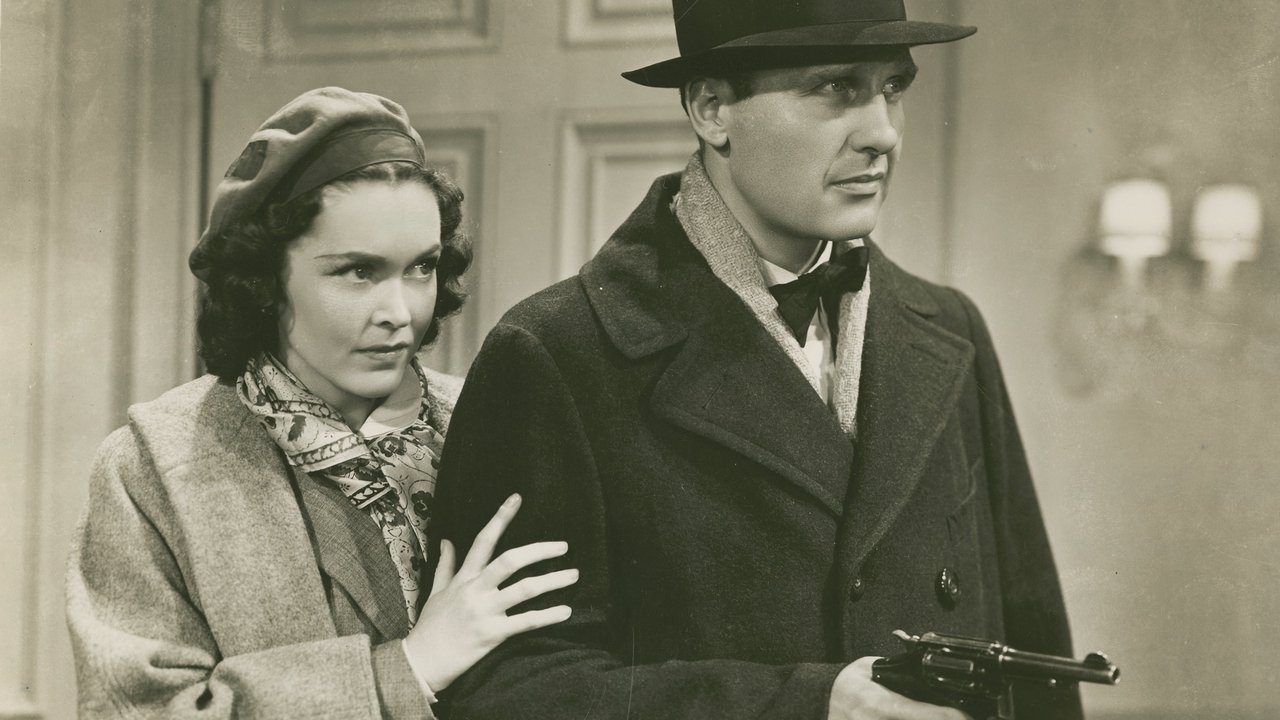
Let Us Live – scene
The Prison Visiting Room Glass Between Two Lives

Lucien Ballard frames the visiting room exchange between Mary and Brick in a shallow space divided by wire-reinforced glass, a visual partition that the camera refuses to dissolve. The light falls from a single high source, chalky and institutional, leaving the lower portions of both faces in soft shadow. Ballard keeps the two figures in separate compositions rather than cutting to a shared two-shot, so the glass is not merely a prop but a structural element of the frame itself – the separation is architectural, not incidental. Mary's side is marginally brighter; Brick's side presses toward gray.

The scene makes the film's central argument in visual terms: the state has imposed a boundary between these two people that ordinary feeling cannot cross. Mary's presence and resolve are fully legible, and so is their ineffectiveness in the immediate moment. Brick's stillness reads here not as passivity but as the specific paralysis of a man who understands that his fate is being decided in rooms he cannot enter. The glass does what bars would do more melodramatically – it renders the innocent man untouchable by the people who believe in him.

Visual Language

The Cinematography

🎞️
Lucien Ballard – Director of Photography

Lucien Ballard, who would later develop a lean, sun-scoured visual style in Westerns and crime films across four decades, works here in a mode shaped by the constraints of the late-studio programmers: tight schedules, limited locations, and the expectation of functional rather than expressive photography. Within those constraints he makes productive use of hard institutional light – overhead fixtures, bare bulbs, the flat illumination of courtrooms and corridors – that strips the frame of shadow play in the picture's procedural passages while reserving low-key chiaroscuro for the moments of private desperation. The result is a visual grammar that distinguishes public space from private anguish: the law is bathed in cold, even light that leaves nowhere to hide, while the emotional scenes between Fonda and O'Sullivan are allowed the modulation of partial shadow. The film is almost entirely studio-bound, and Ballard uses that controlled environment to enforce a sense of enclosure that mirrors the protagonists' legal and existential position.

In the Catalogue

Themes & Motifs

Availability

Where to Watch

Also in the Directory

See Also