Films People Pull a Fast One Night Beat Reading Room On TV Shop
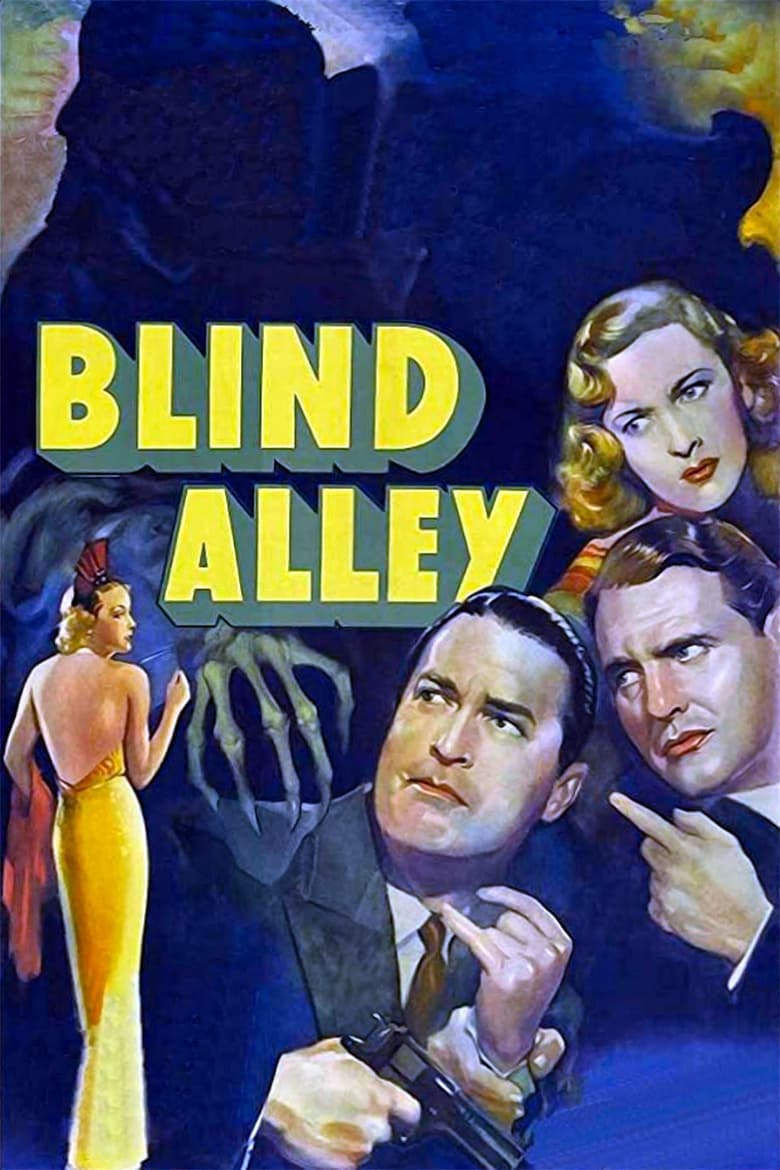
Blind Alley 1939
1939 Columbia Pictures
★★★☆☆ Notable
Film Noir · 69 minutes · Black & White

Blind Alley

Directed by Charles Vidor
Year 1939
Runtime 69 min
Studio Columbia Pictures
TMDB 6.0 / 10
"A killer takes a psychiatrist hostage, and the mind becomes the only weapon left."

When escaped convict Hal Wilson and his small, desperate crew invade the lakeside home of Dr. Shelby, a university psychology professor, they are looking for nothing more than a temporary refuge and a quick route to freedom. Wilson is a wanted murderer – cold, controlled, and accustomed to using violence as a first language. The household, which includes Shelby's wife Doris, a pair of weekend guests, and assorted domestic staff, is immediately transformed into a contained world of fear and enforced compliance.

Dr. Shelby, perceiving in Wilson a man driven by something deeper than simple criminality, begins to probe the killer's psychology with careful, almost clinical patience. Wilson is haunted by a recurring nightmare he cannot interpret, and Shelby recognizes in it the architecture of a defining trauma. As Shelby works to understand Wilson, the power dynamic between captor and captive begins to shift in ways neither man fully anticipates. Loyalties among the hostages waver under pressure, and Mary, Wilson's own companion, watches the relationship between the two men with gathering unease.

Blind Alley arrives at the point where crime drama and psychological study begin to share the same territory. Adapted from James Warwick's stage play, the film is less concerned with the mechanics of escape than with the question of what shapes a man capable of violence – and whether that knowledge, once surfaced, carries any power to alter fate. It sits near the early edge of what would become a sustained noir interest in criminality as symptom rather than simply as act.
Classic Noir

Blind Alley occupies a specific and underexamined position in the prehistory of American noir. Released in 1939, before the genre had fully consolidated its visual grammar, it imports from the stage a structural framework that would recur throughout the cycle: the criminal mind examined under something resembling clinical conditions. Chester Morris plays Wilson with a coiled restraint that resists melodrama, and Ralph Bellamy's Shelby is credibly precise rather than heroically wise. What the film achieves is a provisional argument – that violence originates in compulsion, not character, and that the unconscious is a more reliable prison than any cell. This was not a new idea in 1939, but the film applies it with enough seriousness to distinguish it from pure programmer material. Charles Vidor maintains control of the confined space without allowing it to feel merely theatrical, and Lucien Ballard's lighting keeps the domestic interiors charged with ambient threat. The film is a document of an era beginning to absorb Freudian thought into popular narrative, and it rewards attention on precisely those terms.

– Classic Noir
3 ★★★☆☆ Notable
Credits

The Crew

DirectorCharles Vidor
ScreenplayMichael Blankfort
CinematographyLucien Ballard
MusicKarol Rathaus
EditingOtto Meyer
Art DirectionLionel Banks
ProducerJack Fier
Performances

The Cast

Close Reading

The Signature Scene

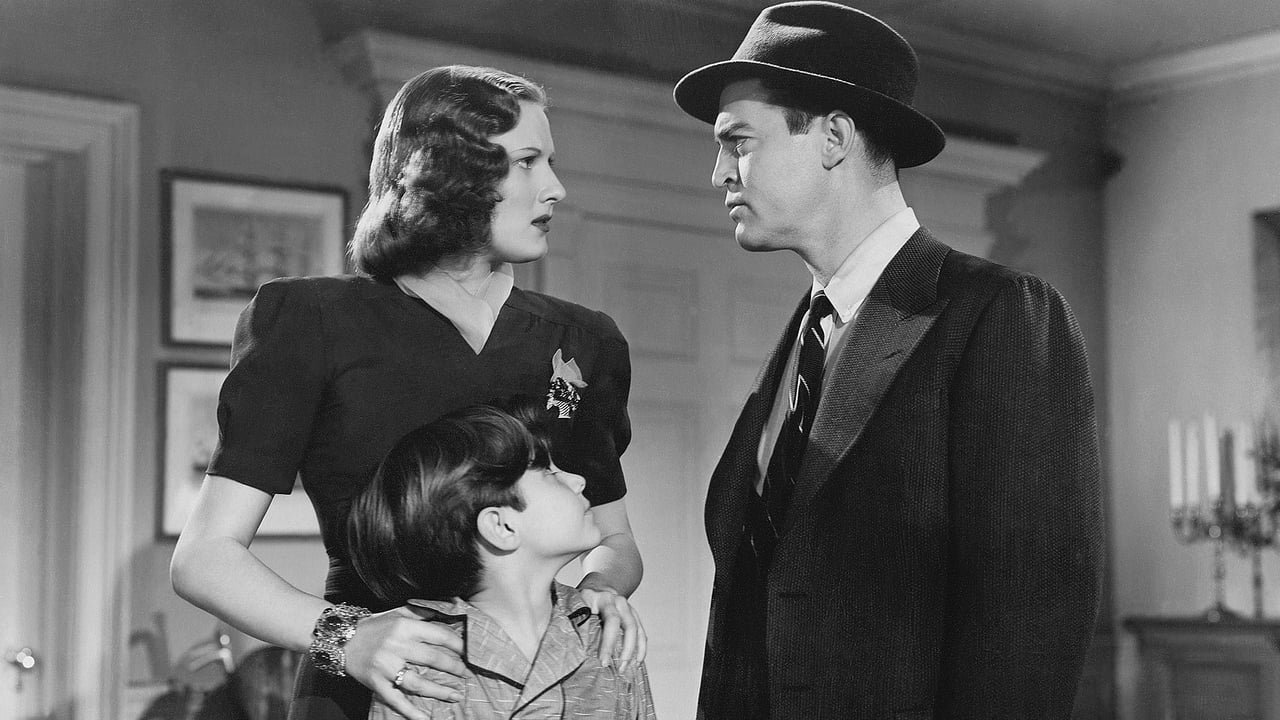
Blind Alley – scene
The Dream Recounted Light on a Fractured Mind

Shelby sits across from Wilson in the low-lit study, the single desk lamp casting a hard pool of light between them while the surrounding room recedes into flat darkness. Ballard holds the frame tight, cutting between close two-shots that emphasize proximity and reluctant intimacy. Wilson's face is half-shadowed throughout, a compositional choice that places him literally between the illuminated and the obscured. When Wilson begins to describe the dream – the open field, the pursuing figure, the paralysis – the camera does not move. The stillness amplifies the discomfort.

What the scene argues is that the most dangerous confrontation in the film is not physical but interpretive. Wilson has survived by maintaining opacity, and the act of narrating his own unconscious to another man constitutes a genuine vulnerability that no hostage situation has forced from him. The dream sequence locates the film's central tension not in whether the captives will escape, but in whether self-knowledge, once forced into language, can be contained again – and what happens when it cannot.

Visual Language

The Cinematography

🎞️
Lucien Ballard – Director of Photography

Lucien Ballard, working here early in a career that would extend through decades of American genre filmmaking, approaches Blind Alley as a problem of controlled enclosure. The film's confined, largely interior setting demands a lighting strategy that can sustain psychological tension across a single location without repetition. Ballard uses selective key lighting to fracture the domestic space into zones of relative safety and shadow, so that movement through the house carries implicit moral information. The windows function as thresholds rather than sources – light enters obliquely, at angles that flatten faces and harden contours rather than illuminate them in any comforting sense. There is no wasted softness in the cinematography. Ballard appears to make a deliberate choice to deny the interior the warmth it would naturally suggest, treating the family home as already contaminated by the presence of violence. The lens work remains close to conventional studio practice of the period, but the tonal discipline is consistent enough to give the film a coherent visual argument that reinforces the screenplay's psychological premises.

In the Catalogue

Themes & Motifs

Availability

Where to Watch

Also in the Directory

See Also