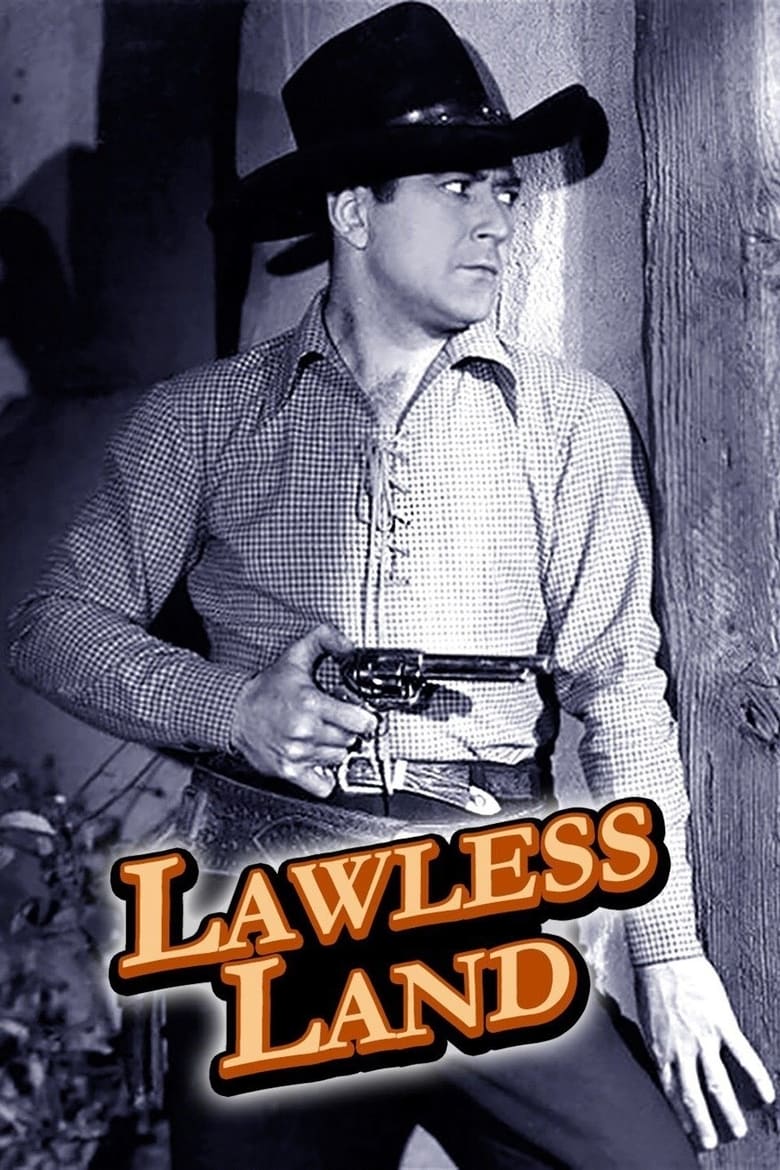
Texas Ranger Jeff Hayden rides into a dust-choked border town where a cattle-rustling operation has been bleeding ranchers dry and corrupting local commerce. The town's legitimate face is thin: storekeeper Lafe Spooner tries to keep honest accounts, and young Letty Winston is caught between loyalty to the community and the coercive influence of men with money and guns. Hayden arrives without announcing his credentials, intending to move quietly before the syndicate controlling the valley has time to close ranks.
The operation is run by Clay Wheeler, a man who maintains the appearance of civic standing while directing his henchman Ortego to enforce compliance through intimidation and, when necessary, murder. Wheeler's hold on the town is reinforced by his influence over saloon owner Bill and a sheriff, Jim, whose neutrality shades into complicity. As Hayden gets closer to the network's structure, his cover begins to fray, and Letty finds herself in the crosshairs of Wheeler's suspicion, complicating Hayden's timetable and testing the limits of his authority.
Lawless operates within the B-Western frame but borrows the procedural instincts and moral atmosphere of the crime films beginning to take shape in the same period. The corrupt town run by a respectable villain, the lawman working from the inside, the woman positioned at the intersection of danger and conscience – these are the structural bones that noir would later assemble with greater shadow and fatalism. At sixty minutes, the film makes its argument economically, and what it lacks in visual elaboration it compensates for in narrative compression.
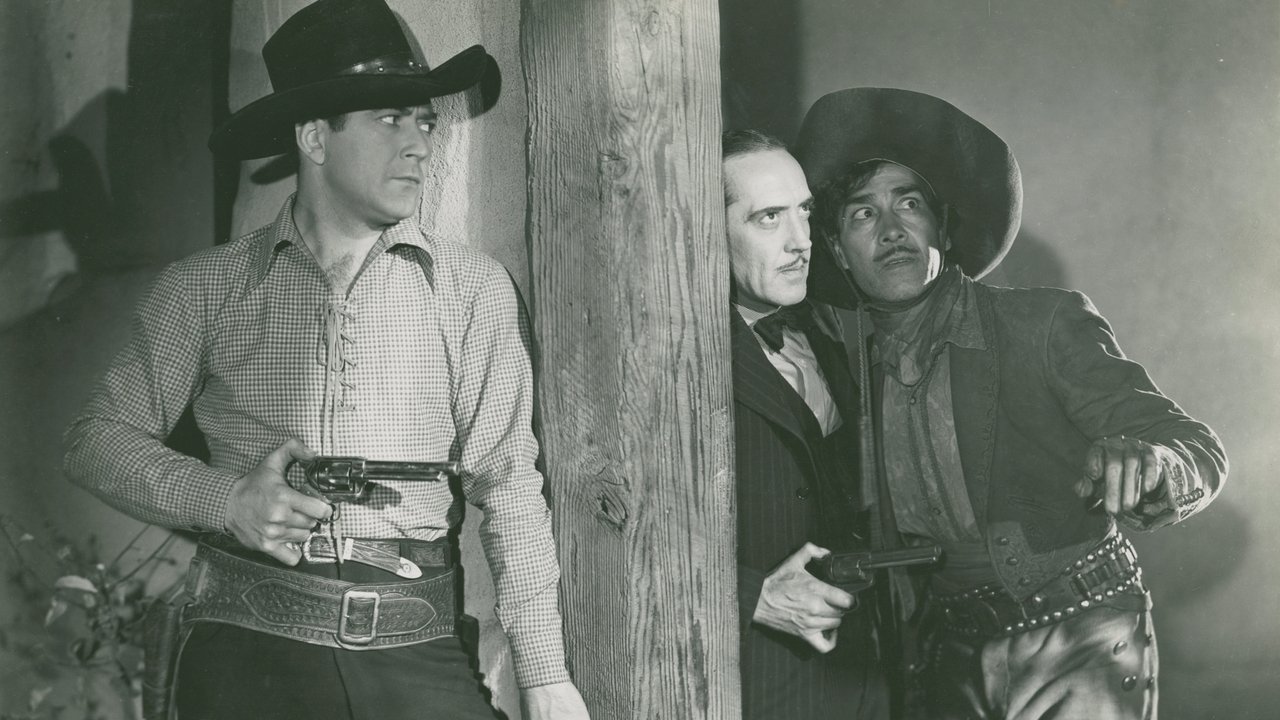
Lawless belongs to the lower tier of Supreme Pictures' B-Western output, but its interest for the genre historian lies in the degree to which it anticipates the noir procedural rather than simply recycling frontier conventions. Albert Ray, a director who spent most of his career in the margins of Poverty Row production, organizes the film around a corruption schema that would become foundational to American crime cinema: the respectable villain, the captured institution, the outsider who must work through disguise before the law can act openly. Ted Adams' Wheeler is less the mustache-twirling outlaw of the serial Western than an early prototype of the businessman-criminal that figures like Raymond Burr and Richard Boone would sharpen a decade later. The film does not transcend its budget or its sixty-minute mandate, but it registers the genre moment accurately – a point in American popular cinema when the Western and the crime film were trading narrative DNA, and the moral geography of the frontier was beginning to merge with the moral geography of the city.
– Classic Noir
The scene is staged in the narrow interior of Spooner's store, natural light replaced by flat studio illumination that flattens faces and offers no refuge in shadow. The camera holds at mid-distance, keeping both Wheeler and Spooner in frame while Ortego occupies the background threshold – neither inside nor outside, a figure of latent violence held at the edge of the composition. The blocking gives Wheeler the center of the frame throughout, and Spooner is gradually crowded toward the counter, the geometry of the shot mapping power without commentary.
What the scene establishes is less a single confrontation than a demonstration of how coercion functions as routine. Wheeler does not threaten overtly; he enumerates, in reasonable tones, the costs of non-cooperation. The film's argument about lawlessness is made here more plainly than in any gunfight: the absence of law is not chaos but a different order, one maintained by men who have learned to speak the language of civic life while dismantling its substance.
The cinematographer on Lawless goes uncredited in surviving records, a condition common to Supreme Pictures productions of the period, where Poverty Row economics compressed both shooting schedules and attribution practices. Working within those constraints, the visual approach is functional rather than expressive: flat two-point lighting that keeps faces legible, compositional choices that prioritize narrative clarity over atmospheric texture. Location shooting is minimal; the border town exists largely as a studio construction, and the film makes little attempt to use landscape as moral metaphor in the manner of the better Western cinematography of the era. What shadow work there is tends to appear in the interior scenes, where doorways and window frames create incidental geometry that briefly organizes the moral hierarchy of a shot. The lens work stays at conventional focal lengths throughout, with no evident attempt to distort or deepen space. As a visual document, Lawless is instructive precisely because of its economy – it shows the baseline grammar from which more ambitious noir cinematography would depart.
Lawless is in the public domain and available as a full streaming download from the Internet Archive, typically in a clean print adequate for study purposes.
TubiFreeSupreme Pictures B-Westerns of this period appear intermittently on Tubi; availability should be confirmed at time of viewing.
Amazon Prime VideoSubscriptionPublic-domain prints of Poverty Row Westerns cycle through Prime Video's catalog; confirm current availability before seeking.