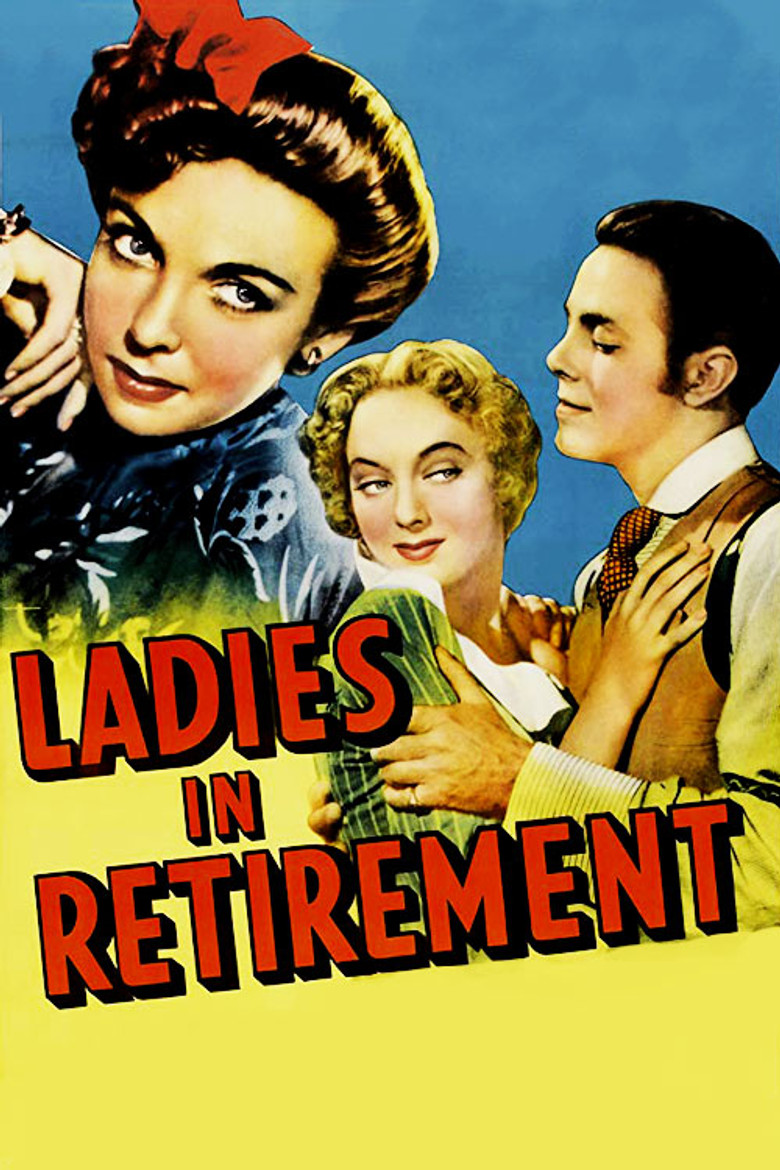
Ellen Creed works as housekeeper to Leonora Fiske, a retired actress living in comfortable isolation in a remote Essex marshland convent turned country house. When Ellen's two sisters – the childlike, unstable Emily and the equally fragile Louisa – are threatened with commitment to an asylum, Ellen persuades Leonora to let them stay on. Into this uneasy domestic arrangement arrives Albert Feather, Ellen's charming and opportunistic nephew, who quickly reads the household's tensions for his own advantage.
Albert discovers that Leonora keeps a substantial sum of money hidden in the house, and his presence sharpens the desperation already coiling through Ellen's carefully maintained composure. The arrival of the sisters has strained Leonora's tolerance past its limit, and when Leonora moves to expel them, Ellen is forced to a decision she cannot take back. What follows is less a crime of passion than a crime of suffocating necessity, and Albert – who witnessed enough to understand exactly what Ellen has done – becomes the true instrument of the film's menace.
Ladies in Retirement occupies an unusual position in early American noir, drawing its source from a 1939 British stage play and relocating psychological Gothic to the Columbia studio lot. The film's closed world – isolated house, threatened women, a secret accumulating weight beneath every domestic surface – anticipates the domestic noir strain that would intensify through the decade. Its concern is less with detection than with the slow moral erosion that follows when protection and crime become indistinguishable from one another.
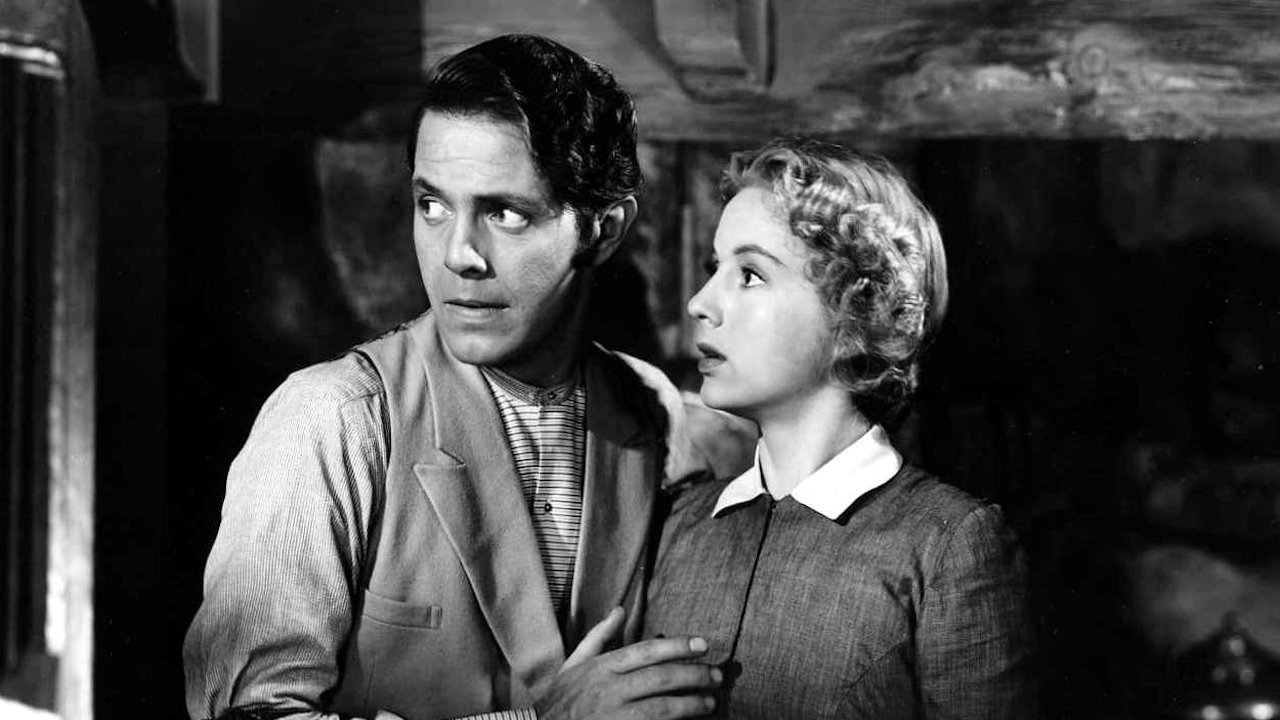
Ladies in Retirement arrives at the edge of noir's classical period, before the genre had fully named itself, and it carries that transitional ambiguity as both limitation and asset. Charles Vidor keeps the film's stage origins visible – the action is largely confined to a single location, and the dialogue carries the weight that a proscenium demands – but George Barnes's photography presses against those walls with enough shadow and spatial unease to lift the material into something more than filmed theater. Ida Lupino, two years before she would begin consolidating her reputation in harder genre territory, delivers the film's center of gravity: a performance built from controlled suppression rather than display, in which Ellen's love for her sisters reads as genuine even as it warrants and executes crime. Elsa Lanchester's Emily is the film's most disturbing presence, not because she is dangerous but because she is entirely innocent of the catastrophe forming around her. Louis Hayward's Albert functions as the noir element the stage play lacked – the outside world's corruption given a face and an appetite. The film's argument, quietly made, is that domesticity and violence share the same root.
– Classic Noir
Barnes frames Lupino in medium shot against the fireplace, the light source low and warm but deliberately insufficient, leaving the upper half of her face in graduated shadow. The camera holds still while Lupino moves only slightly – a turn of the head, a settling of the shoulders – so that the light catches differently with each small shift, alternating between revealing her expression and swallowing it. The room behind her is deep in darkness, the furniture reduced to suggested shapes. The composition places her between the fire's warmth and the surrounding black, a visual statement of threshold that the editing does not interrupt.
The scene works because Barnes and Vidor resist the impulse to clarify. Ellen at the hearth is neither confessing nor concealing in any overt way; she is simply present with what she has done, and the film refuses to adjudicate. The firelight is domestic and ordinary, the shadow noir and absolute, and Lupino inhabits both simultaneously. It is the film's argument made in light: that the interior world of a woman who has committed murder for love does not resolve itself into legible guilt, and that the camera's job is to hold that irresolution rather than release it.
George Barnes was among the most versatile cinematographers working in Hollywood during this period – capable of glamour photography, horror atmosphere, and the calibrated shadow work that noir would soon systematize – and Ladies in Retirement draws on all three registers at once. Shot entirely on Columbia studio sets, the film turns confinement into a formal principle: Barnes uses the bounded interiors not as limitation but as control, staging light sources so that windows, fireplaces, and single practical lamps do almost all the moral work. His lens choices favor the slightly longer focal lengths that compress space and flatten the depth between characters, reinforcing the sense of a world in which escape is geometrically impossible. The marshland exteriors – limited but purposeful – are shot with a flat, overcast diffusion that makes the house seem to absorb rather than reflect light. Shadow falls in distinct planes rather than gradients, giving the interiors an architectural weight that keeps the Gothic source legible while the narrative moves toward something harder and more contemporary.
Criterion's streaming presentation is the most reliable source for a clean, correctly framed transfer of this Columbia title, with context from their classic Hollywood programming.
TCMSubscriptionTCM periodically broadcasts Ladies in Retirement as part of themed programming around Ida Lupino or early noir; check schedules, as availability shifts.
Archive.orgFreeA public domain version circulates on Archive.org, though print quality varies and this option is best treated as a fallback rather than a primary viewing experience.