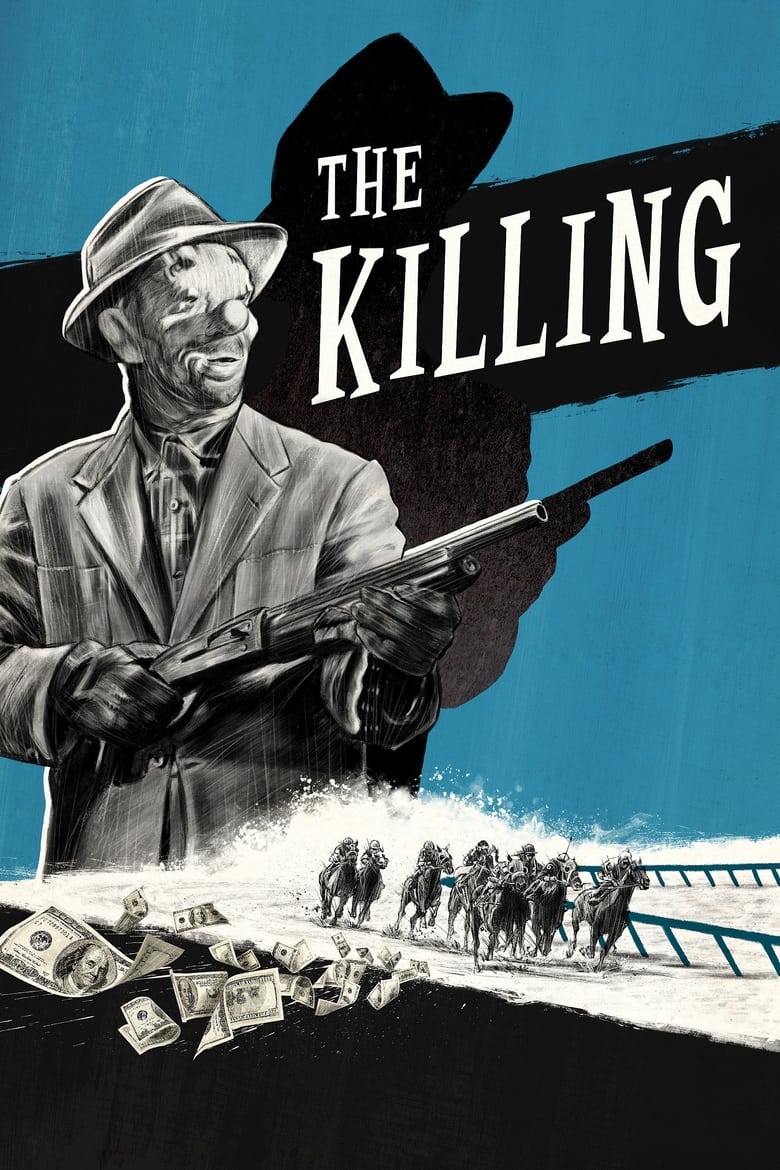
Ex-convict Johnny Clay assembles a small crew of desperate men to rob two million dollars from the cashier's cage of a busy racetrack on a Saturday afternoon. Each participant is assigned a precise role timed to the minute: a corrupt beat cop, a bartender with a sick wife, a chess-playing hired gun, a disgruntled track employee, and a meek cage teller named George Peatty whose need for his wife's approval has already made him the plan's weakest link. Johnny believes the operation is airtight. The film makes clear, from its opening frames, that it is not.
George has confided in his wife Sherry, a calculating woman who has been feeding information to her lover Val Cannon. Val intends to intercept the money after the robbery, eliminating the crew and taking everything. The film tracks these parallel betrayals with a fractured chronology, returning repeatedly to the same afternoon from different vantage points, each pass revealing what another character was doing while someone else was visible in the previous scene. The structure turns the heist into a puzzle whose pieces fit together only to form an image of inevitable collapse.
The Killing belongs to a strain of American crime cinema that treats procedural precision as a form of dramatic irony: the more carefully a plan is drawn, the more clearly the film can trace the exact moment it begins to fail. Kubrick uses the robbery not as spectacle but as an argument about contingency, staging the racetrack sequences with documentary detachment while the domestic scenes among the crew carry a suffocating domestic tension that the thriller framework barely contains.
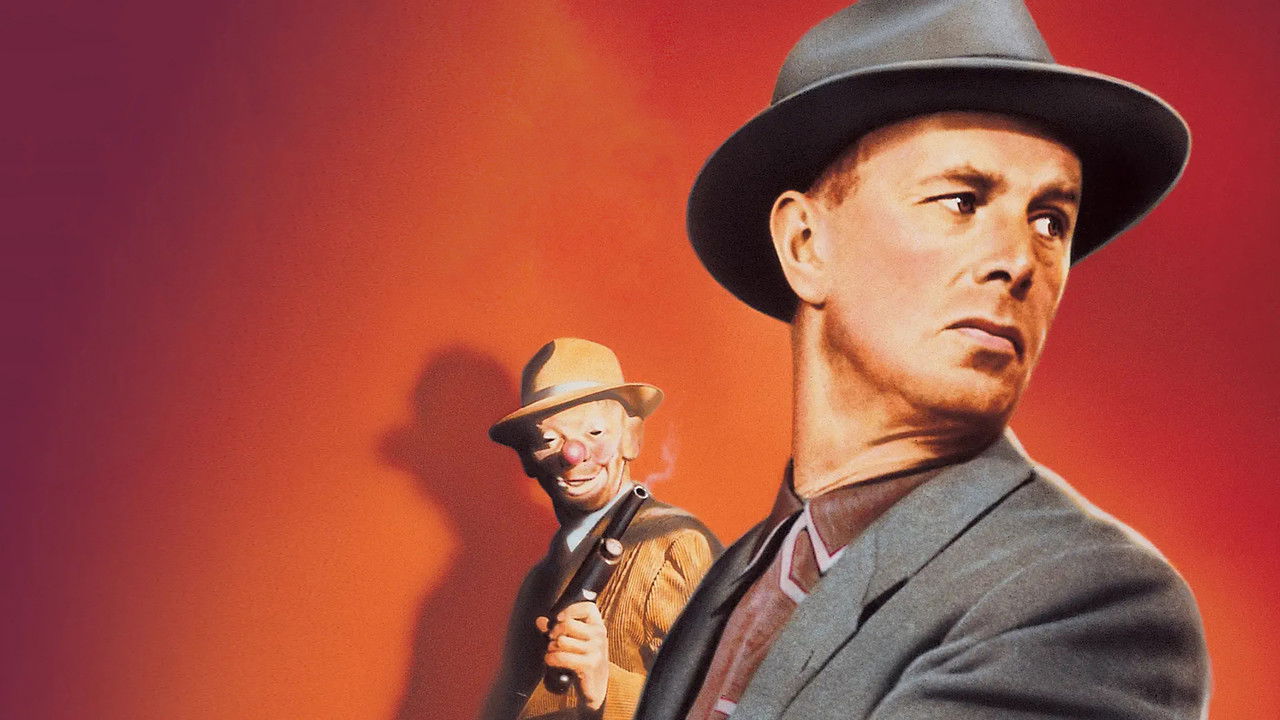
The Killing arrives at a pivotal moment in American noir, when the genre's fatalistic energies were beginning to calcify into formula. Kubrick, working from Lionel White's novel Clean Break with a screenplay by Jim Thompson, refuses both the romantic fatalism of classic noir and the procedural optimism of the police thriller. The fractured time structure – later associated with art cinema – functions here as a moral instrument: it denies the audience the satisfaction of linear cause and effect, forcing a recognition that the catastrophe was always latent in the plan's design. Sterling Hayden brings to Johnny Clay the same stoic competence he gave to The Asphalt Jungle, but here the competence reads as delusion. The ensemble construction distributes the film's anxieties across class lines – the cop, the bartender, the teller – situating the heist as a symptom of postwar economic strain rather than mere criminal ambition. At 85 minutes, the film wastes nothing.
– Classic Noir
As Johnny's car approaches the airport in the film's final sequence, Lucien Ballard's camera holds on the tarmac with a flat, unsparing clarity that refuses any visual mercy. The light is grey and diffuse – no shadows to hide in, no darkness to provide cover. When the luggage cart clips the poorly secured bag and it splits open, Ballard cuts to a wide shot of bundled bills scattering across the runway in the prop wash of a passing aircraft. The composition is almost geometric in its pitilessness: small figures standing still, money moving laterally across the frame in every direction, the horizon line perfectly level.
The image functions as the film's thesis made visible. Johnny has spent the entire picture mastering variables – timing the robbery to the second, hiring specialists, anticipating interference – and the mechanism that destroys him is a cheap bag lock and a small dog on a leash. The wide shot refuses close-up reaction; it holds the distance of a coroner. When Hayden finally says 'what's the difference,' the line carries the weight of the image behind it: not resignation exactly, but the recognition that competence was never the point.
Lucien Ballard shoots The Killing with a restraint that functions as a formal argument. Working primarily in studio interiors and on location at Bay Meadows Racecourse in San Mateo, Ballard employs wide-angle lenses that keep multiple planes of action simultaneously sharp, denying the audience the comfort of selective focus that might generate sympathy or suspense. Lighting setups favour flat, institutional sources – the cashier's cage, the locker rooms, the teller's apartment – environments where shadow does not conceal so much as register exhaustion. The racetrack sequences have the texture of newsreel footage, deliberately stripping the robbery of glamour. Where classic noir DP work used shadow as metaphor for moral ambiguity, Ballard's approach is closer to the opposite: his harshest light falls on the moments of greatest vulnerability, exposing rather than concealing. The visual language aligns precisely with the film's structural argument – nothing is hidden, and that is exactly what makes it hopeless.
The Criterion Channel presents the film in a clean transfer with access to contextual programming; the most reliable streaming option for quality and stability.
TubiFreeA free ad-supported option that has carried the film periodically; availability fluctuates, so confirm before viewing.
Archive.orgFreePublic domain prints circulate here with variable quality; acceptable for research purposes but not a preferred viewing experience.