Films People Pull a Fast One Night Beat Reading Room On TV Shop
Killer That Stalked New York 1950
1950 Robert Cohn Productions
★★★☆☆ Notable
Film Noir · 79 minutes · Black & White

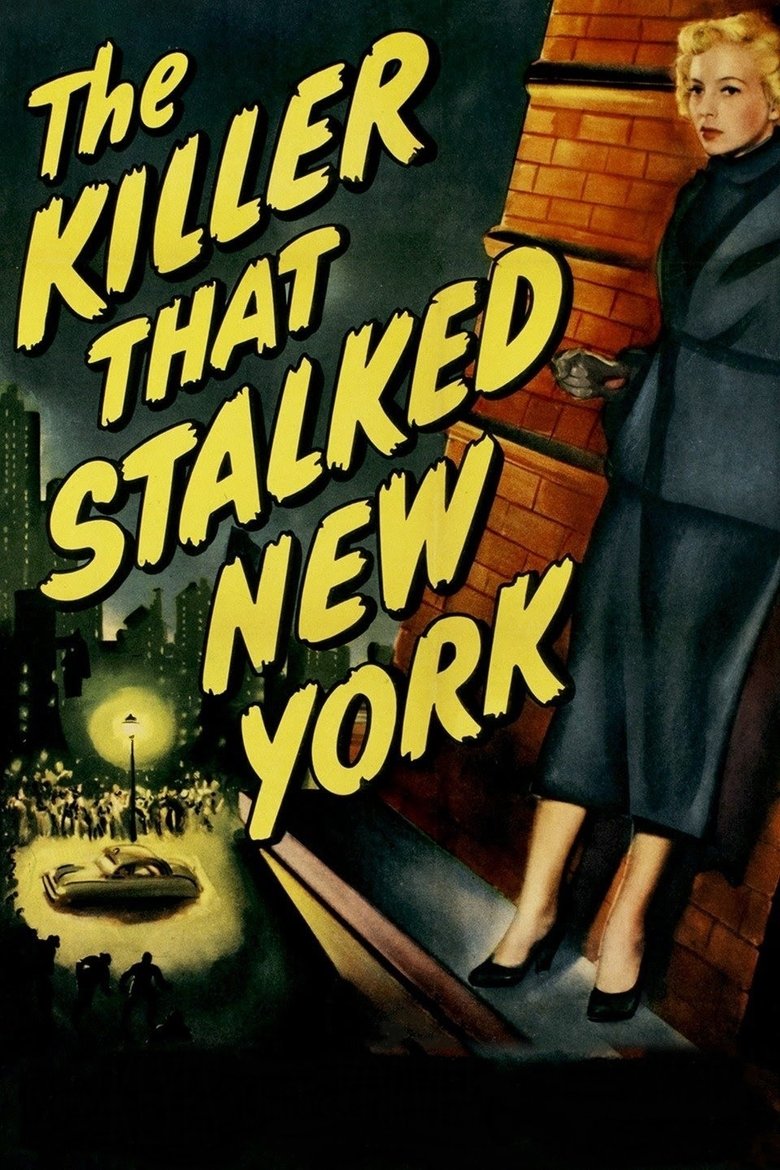
Killer That Stalked New York

Directed by Earl McEvoy
Year 1950
Runtime 79 min
Studio Robert Cohn Productions
TMDB 6.2 / 10
"A woman carries a plague through the city, and the city does not yet know it."

Sheila Bennet returns to New York from Cuba carrying smuggled diamonds and, unknown to her, something far more dangerous: smallpox. Her husband Matt Krane, a small-time grifter with large ambitions, cares only about the diamonds and has already set his sights on Sheila's younger sister Francie. Treasury Agent Johnson is closing in on the smuggling operation, while the city's public health apparatus, personified by the methodical Dr. Ben Wood and Commissioner Ellis, begins tracing an outbreak whose source they cannot yet name.

As Sheila sickens and the health department's net tightens, the film's moral geometry sharpens. Matt, unwilling to surface and expose himself to federal charges, lets his wife wander the city contagious and unattended. Sheila, still loyal to a man who has already abandoned her in every way that matters, resists medical contact even as her body fails. Dr. Wood works against the clock, mapping the disease's path through tenements, a school, and the ordinary foot traffic of a city that believes itself safe.

The film belongs to a cycle of procedural noirs that found in the postwar American city both a subject and an anxiety: the crowd as menace, the body as vector, institutions as the last line against chaos. It uses the mechanics of a public health emergency to do what noir does with crime – trace the damage one person's choices leave on everyone around them – and Evelyn Keyes anchors the film with a performance that refuses easy sympathy or easy condemnation.
Classic Noir

Killer That Stalked New York occupies a precise and undervalued position in the noir cycle: the semi-documentary procedural inflected with genuine dread. Released in the same year as Panic in the Streets, to which it invites comparison, Earl McEvoy's film works on a smaller budget and with less theatrical bravura, but it generates its tension from institutional logic rather than individual heroics. The smallpox premise is not a gimmick; it functions as a structural mirror for the film's moral argument about concealment and consequence. Matt Krane's refusal to allow his wife medical care is, within the film's terms, a crime equivalent to the smuggling that opens the story. Evelyn Keyes is given material that demands she be simultaneously victim, threat, and agent, and she manages all three registers without sentimentality. Joseph Biroc's location photography in New York gives the film documentary credibility, while the studio interiors maintain the controlled shadow work the genre demands. The film reveals, with more precision than comfort, how postwar American anxiety about contamination – biological and moral – ran along exactly the same channels.

– Classic Noir
3 ★★★☆☆ Notable
Credits

The Crew

DirectorEarl McEvoy
ScreenplayHarry Essex
CinematographyJoseph F. Biroc
MusicHans J. Salter
EditingJerome Thoms
Art DirectionWalter Holscher
CostumesJean Louis
ProducerRobert Cohn
Performances

The Cast

Close Reading

The Signature Scene

Killer That Stalked New York – scene
The Hotel Room Discovery Light Falling on Fever

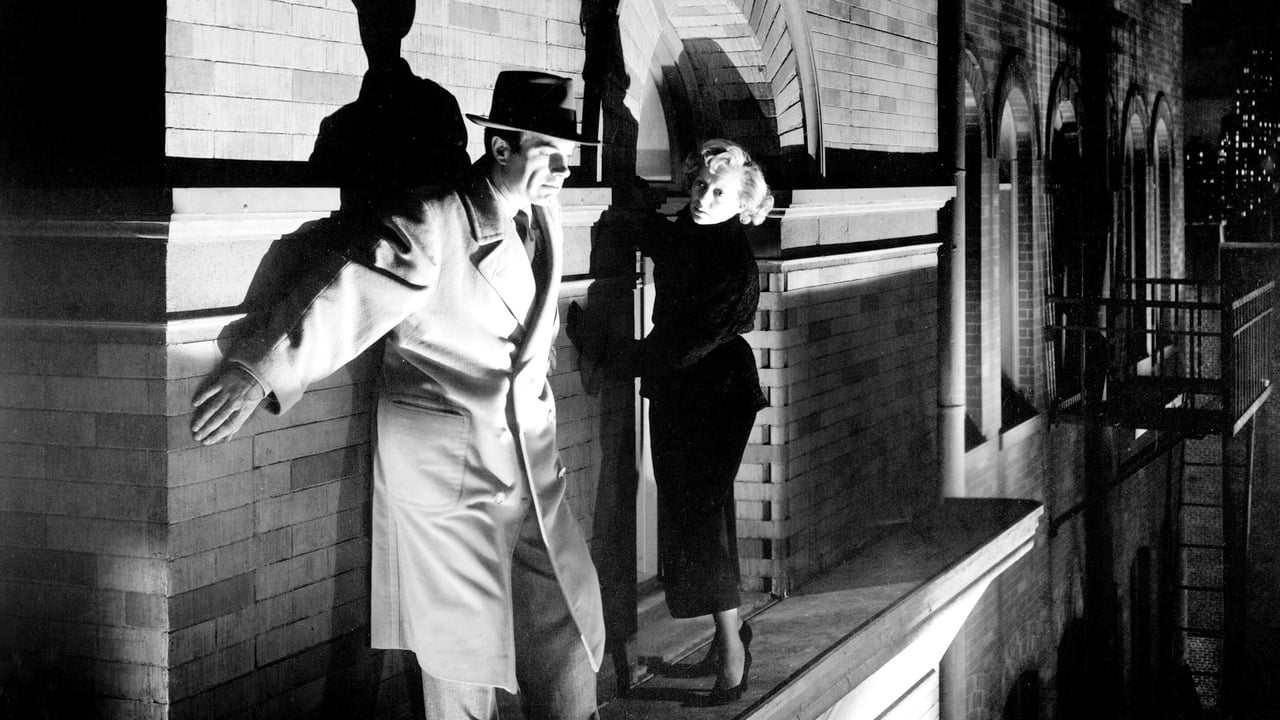
Biroc frames Sheila in a low-ceilinged hotel room, the single practical lamp casting a cone of amber light that ends at the edge of the bed where she lies. The walls press in from either side of the frame. The camera holds at a medium distance, neither intruding nor retreating, as her face moves in and out of the shadow line with each labored shift of position. The composition uses the room's geometry – doorframe, window sash, the dark rectangle of the corridor beyond – to construct a space that is simultaneously refuge and trap.

The scene crystallizes the film's central argument: Sheila is dying from a disease she did not know she was carrying, in a room she cannot safely leave, for a man who will not come to her. Her physical condition and her moral situation have become identical. The camera's restraint, its refusal to melodramatize her suffering, makes the isolation more absolute. She is beyond rescue not because rescue is impossible but because the structures around her – marital, criminal, economic – have systematically foreclosed it.

Visual Language

The Cinematography

🎞️
Joseph F. Biroc – Director of Photography

Joseph F. Biroc shoots Killer That Stalked New York with a discipline that suits the film's procedural temperament. Working partly on location in New York and partly on studio sets, he calibrates the two registers carefully: the location sequences use available depth and natural incident to establish the city as an indifferent, populated mass, while the interiors shift to controlled low-key lighting with hard shadow edges that isolate characters against flat dark backgrounds. Biroc does not reach for expressionist extremes; the shadow work here is functional rather than decorative, used to mark enclosure and diminishment rather than menace for its own sake. The health department sequences are lit with a flatter, cooler quality that distinguishes institutional space from the warmer, more oppressive interiors where Sheila deteriorates. Throughout, the lens work keeps depth of field moderate, refusing the kind of deep-focus compositions that would place character and environment in equal competition – the frame keeps Sheila centered and the world around her receding, a choice that serves the film's moral insistence on individual consequence within collective catastrophe.

In the Catalogue

Themes & Motifs

Availability

Where to Watch

Also in the Directory

See Also