Jimmy Weston (Scott Brady) is a young boxer with talent enough to go somewhere, managed by Victor 'Doc' Fuller (Charles D. Brown), a veteran operator whose interests extend well beyond the gym. When Jimmy falls for Sally Rivers (Anabel Shaw), a woman with cleaner ambitions than the fight game usually permits, the shape of his future seems briefly negotiable. But the world Jimmy inhabits is already spoken for, and the men who run it – among them the hulking Tiny Reed (Cy Kendall) and the calculating Tug Martin (James Millican) – have their own designs on his career.
The deeper Jimmy moves into the promotional machinery around him, the clearer it becomes that Doc Fuller's patronage is conditional on compliance. Birdie Bronson (Mary Meade) occupies the margins of the story as someone who knows more than she lets on, while Johnny Hart (John Indrisano) provides a further layer of institutional corruption. Jimmy must choose between the controlled ascent his backers have arranged and a version of integrity that carries a steep practical cost. Sally's presence sharpens the dilemma without resolving it.
In this Corner works the familiar terrain of the boxing noir – a genre strand that uses the prizefight as a compressed metaphor for systemic exploitation and the illusions of individual agency. The film belongs to a cycle of late-1940s programmers that found in sport and its criminal adjacencies a credible framework for examining how ambition is co-opted and how loyalty is weaponized. At fifty-nine minutes, it is lean enough to sustain its argument without overstaying.
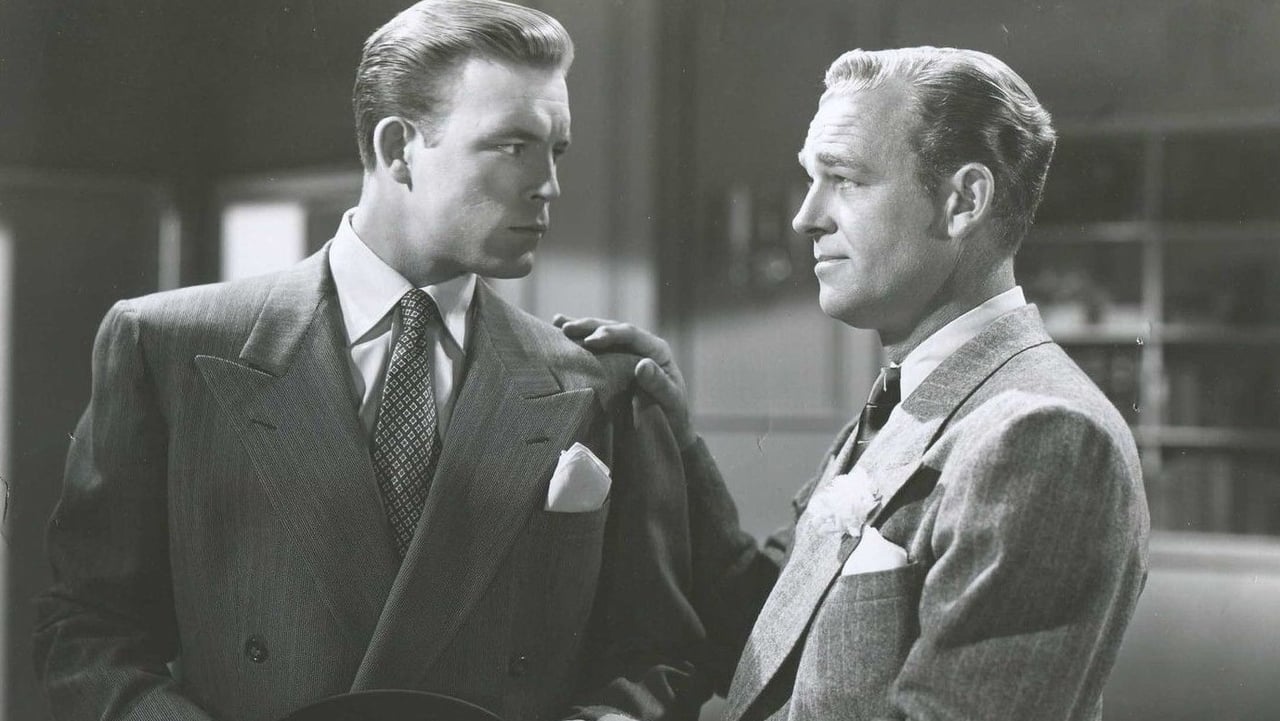
In this Corner arrives in 1948 as a compact entry in the fight-game noir cycle that also produced Body and Soul and The Set-Up that same year, though it operates at a considerably lower budget and institutional register. Charles Reisner, a director associated primarily with comedy, handles the material with more restraint than his background might suggest, and Scott Brady – in one of his earliest starring roles – brings a physical credibility to Jimmy Weston that the script does not always earn on the page. The film is most useful as a document of how the B-picture machinery absorbed noir conventions: the corrupt manager, the clean girlfriend, the syndicate pressure, and the athlete caught between them are deployed efficiently if not originally. What distinguishes the film slightly is its attention to the texture of the fight-game milieu – the gym interiors, the secondary figures who populate the promotional world, the sense that corruption is structural rather than individual. It does not transcend its budget, but it works honestly within it.
– Classic Noir
The scene is staged in the gym's interior, where a single source of hard overhead light cuts downward through the space, leaving the upper corners of the frame in near-total darkness. Jimmy stands at the center, rope or gloves nearby, while Doc Fuller occupies a position slightly elevated – seated on a ring apron or stairwell edge – so that the geometry of the frame encodes the power relation before a word is spoken. Guy Roe keeps the camera at middle distance, resisting the close-up long enough for the spatial disproportion to register.
What the scene establishes is the degree to which Jimmy's autonomy is already circumscribed. The gym, nominally his terrain, belongs in practice to Fuller and the interests Fuller represents. The high-key industrial light that might, in another context, signify honest labor here functions as exposure rather than illumination – Jimmy is visible, observed, and already assessed. The scene does not offer him an exit and does not pretend to.
Guy Roe's work on In this Corner reflects the practical economy of the late-1940s B-picture without sacrificing coherence of visual argument. Roe, who shot a number of low-budget crime films in this period, favors hard sources and strong shadow fall rather than the diffused studio glamour of larger productions. Interior spaces – the gym, back offices, hallways – are lit to suggest enclosure, with practical sources doing double work as both motivation and thematic instrument. There is little that could be called expressive excess; the lighting is purposeful rather than decorative. Exterior sequences, limited in number, tend toward the flat and functional, keeping the film's moral geography firmly indoors. Roe does not draw attention to the camera's movement, preferring a measured framing that reinforces the determinism of the narrative: these characters do not escape the frame because they cannot escape the situation. The cinematography serves the story's argument about constraint with quiet consistency.
Public domain prints of low-budget 1948 independents frequently appear here; search the full title for the most stable available transfer.
TubiFreeTubi's rotating catalog of B-noir programmers from the 1940s makes it a reasonable first stop, though availability changes without notice.
Amazon Prime VideoSubscriptionCatalog availability for minor 1948 titles varies by region; verify current listing before seeking elsewhere.