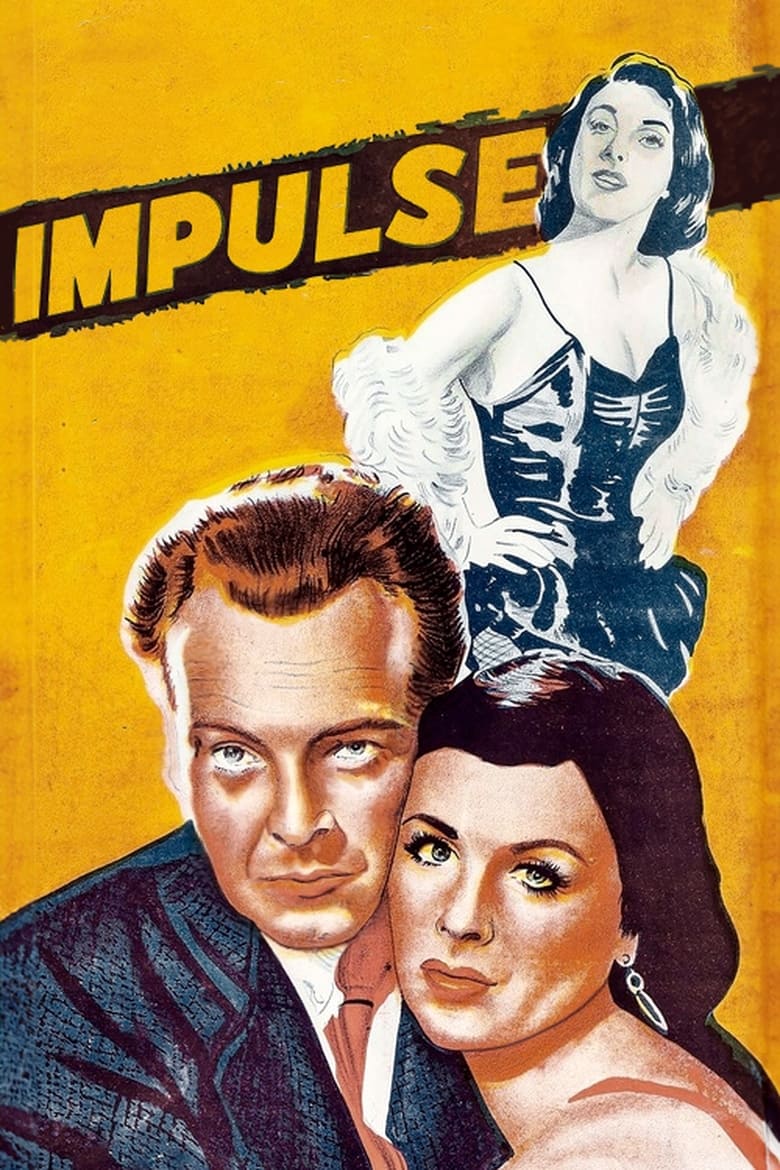
Alan Curtis is a real estate agent living a quiet, ordered life in a small English coastal town. When the local business community asks him to approach Lila Ray, a woman whose refusal to sell her property is blocking a development deal, Curtis accepts the task as routine. Lila is not what he expects: she is young, American, and possessed of an ease that cuts through his reserve. Within an evening, Curtis has stepped well outside the boundaries of his marriage.
What begins as an extramarital entanglement accelerates into something far more dangerous when a man turns up dead and Curtis finds himself entangled in a web of local corruption, intimidation, and concealment. His wife Elizabeth remains at home, unaware of the full extent of his betrayal, while the men behind the development scheme demonstrate that their interests extend well beyond property transactions. Curtis, already compromised, discovers that Lila herself is not without her own angles and allegiances.
Impulse works within the tradition of the ordinary man destroyed by a single lapse of judgment, a figure the noir genre returned to repeatedly in the postwar decade. Shot in Britain with an American lead and a script alive to the texture of provincial resentment and quiet menace, the film examines how quickly a man's constructed life can be dismantled once the first brick is pulled free. The resolution is less interested in justice than in cost.
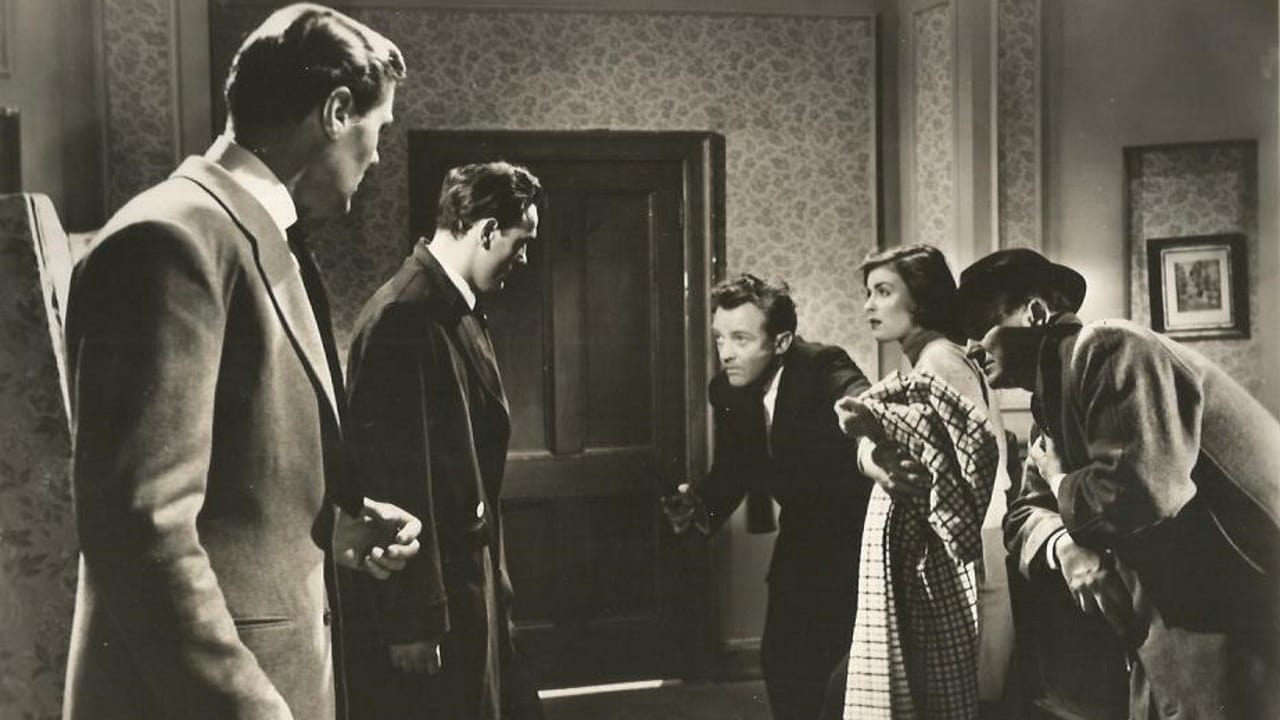
Cy Endfield was working under constraint when he made Impulse – blacklisted from Hollywood, he had relocated to Britain and was taking assignments where he could find them. That context is not incidental to the film. There is a particular tension in the work of directors who understand professional precarity from the inside, and Endfield brings to this modestly budgeted Tempean production a precision that the material might not have otherwise demanded. Arthur Kennedy, himself no stranger to playing men whose surfaces conceal fault lines, grounds the film in psychological credibility. The film is not ambitious in the way that the canonical noirs are ambitious, but it is disciplined. It understands that the noir trap functions most effectively when the protagonist is neither villain nor innocent but simply a man who, at a specific moment, chose badly. Impulse does not moralize about that choice. It simply tracks its consequences with the patience of someone who already knows how such things end. For students of British noir and of Endfield's career, it remains a document worth serious attention.
– Classic Noir
The camera holds on the doorway as Curtis enters Lila's apartment, the interior lamp behind her reducing her to a silhouette while the hall light catches his face in full exposure. Jonah Jones does not move the camera here – the static frame insists on the geometry of the moment, the man illuminated and therefore readable, the woman deliberately withheld. Shadow falls across the near wall in a diagonal that bisects the room, separating the space Lila occupies from the space Curtis is stepping into. The composition has the quality of a diagram.
The scene argues, without dialogue, that Curtis is the one who can be seen and therefore the one who will be held accountable. Lila's obscurity in the frame is not merely visual style but a statement about knowledge and power: he is entering a situation he cannot fully read, and the film's lighting has already told us so. The threshold here is not metaphorical – it is the moment the film assigns as the point of no return, and Endfield and Jones have the discipline to let the image carry that weight without underlining it.
Jonah Jones shoots Impulse with the economy appropriate to a production working within tight studio constraints, but economy is not the same as poverty of invention. Jones uses hard-source lighting throughout – practical lamps, window frames, doorways – to build a visual world in which illumination is localized and shadow is the default condition. This approach serves the film's moral logic directly: characters in full light are exposed, vulnerable, or deceiving themselves about their visibility. The coastal location footage, which establishes the town's surface respectability, is handled with a flatness that is deliberate – the ordinariness of the world Curtis inhabits is established photographically so that the nocturnal interiors can carry the weight of disruption. Lens choices favor mid-range focal lengths that keep faces in relation to their environments, avoiding the expressionist close-up distortions of American studio noir in favor of something more observational. The effect is a film that feels watched rather than stylized, which is finally the more unsettling register.
Public domain prints of this title have circulated online and Archive.org is among the most reliable sources for no-cost streaming, though print quality varies.
TubiFreeTubi has carried British B-noir titles from this period in its classic film holdings; availability shifts, so confirm before seeking.
Amazon Prime VideoSubscriptionClassic Tempean productions have appeared in Prime's catalogue via third-party classic film channels; verify current availability as licensing for this title is inconsistent.