Films People Pull a Fast One Night Beat Reading Room On TV Shop
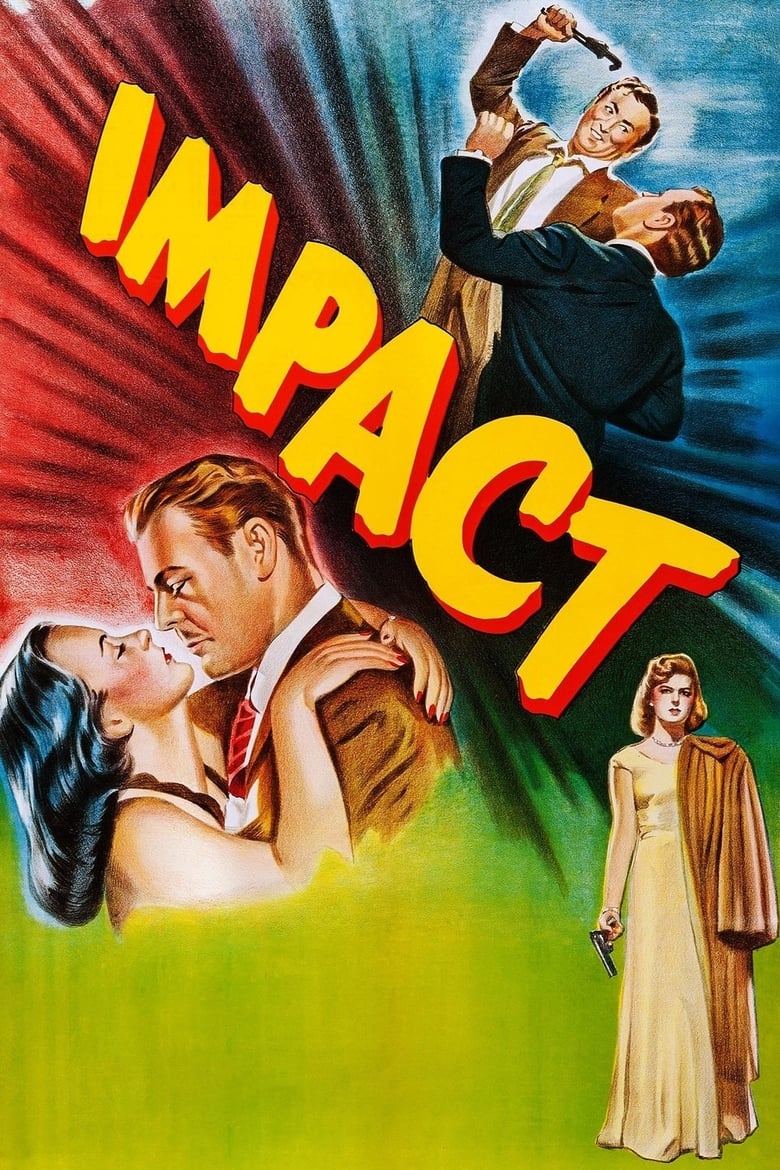
Impact 1949
1949 Cardinal Pictures
★★★☆☆ Notable
Film Noir · 111 minutes · Black & White

Impact

Directed by Arthur Lubin
Year 1949
Runtime 111 min
Studio Cardinal Pictures
TMDB 6.1 / 10
"A man disappears into someone else's life and finds it fits too well."

Walter Williams is a prosperous San Francisco industrialist whose ordered life fractures when his wife Irene persuades him to give a lift to her cousin – a man who, it quickly becomes clear, is her lover. When the car crashes and the lover is killed, Walter is badly injured, and Irene, believing her husband dead, conceals the body and collects on his insurance. Walter, suffering from amnesia, drifts north to the small Idaho town of Larkspur, where he is taken in by garage owner and part-time deputy Marsha Peters, a woman whose directness and lack of calculation stand in sharp contrast to everything his marriage contained.

As Walter recovers and slowly pieces together who he is, Irene is charged with the murder of a man whose body has been misidentified as her husband's. Walter, now a wanted figure by default, must decide whether to surface and clear himself – or remain dead to a world that treated him as a transaction. Lieutenant Quincy, a methodical and quietly persistent investigator, closes in from one side while Irene maneuvers through the legal system from the other, her guilt compounded by the involvement of her lover's associate Darcy.

Impact belongs to the postwar cycle of domestic noir in which the threat originates not from the criminal underworld but from the institution of marriage itself. The film uses the classical wrong-man structure to examine what a man becomes when stripped of his name, his wealth, and the woman who defined both – and whether the identity recovered at the other end of that ordeal is worth reclaiming.
Classic Noir

Impact occupies a specific and underexamined position in late-1940s noir: it is a film less concerned with crime as spectacle than with the psychological cost of erasure. Brian Donlevy, rarely cast as a figure of vulnerability, carries the film's central ambiguity with restraint – Walter Williams is neither sympathetic victim nor passive drifter but a man who recognizes in his own disappearance a form of relief. Ella Raines anchors the Idaho sequences with a performance of genuine moral weight, and it is in that second act, far from the genre's usual urban corridors, that the film finds its most honest register. Charles Coburn's Quincy resists the archetype of the relentless pursuer; he is observant rather than predatory. Director Arthur Lubin, not a filmmaker associated with the genre's prestige tier, handles the tonal shift between coastal noir and rural reprieve with more control than his reputation suggests. The film's principal argument – that a corrupt marriage can constitute its own kind of violence – is stated without melodrama and is the more persuasive for it.

– Classic Noir
3 ★★★☆☆ Notable
Credits

The Crew

DirectorArthur Lubin
ScreenplayJay Dratler
CinematographyErnest Laszlo
MusicMichel Michelet
EditingArthur H. Nadel
Art DirectionRudi Feld
CostumesMaria P. Donovan
ProducerLeo C. Popkin
Performances

The Cast

Close Reading

The Signature Scene

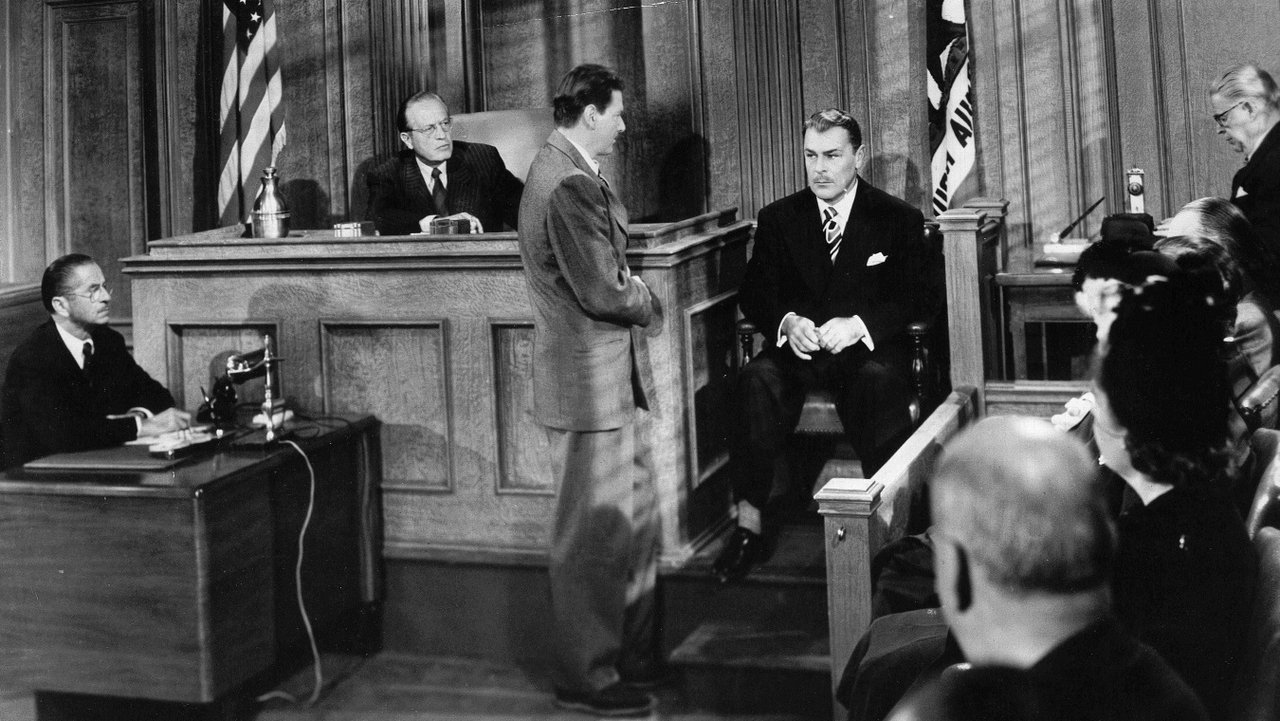
Impact – scene
The Larkspur Garage, Night Light Through a Dirty Window

Ernest Laszlo frames the scene in a low-angled two-shot, the garage's overhead work lamp casting a hard cone of light that catches the underside of Walter's jaw and leaves Marsha's eyes in partial shadow. The camera holds at a distance that refuses intimacy, and when it does move, it tracks laterally rather than pushing in – observing rather than pressing. The background detail is spare: a workbench, an oil-darkened floor, the geometry of tools hanging on a pegboard, each object present and accounted for.

What the scene discloses is less romantic than diagnostic. Marsha is not a femme fatale offering escape; she is a woman assessing damage. Walter, who has spent the preceding scenes performing competence, is here permitted to be still, and that stillness reads as the first honest moment the film has allowed him. The scene argues quietly that the noir protagonist's greatest danger is not the villain waiting in the dark but the life he left behind, which the light is already in the process of restoring.

Visual Language

The Cinematography

🎞️
Ernest Laszlo – Director of Photography

Ernest Laszlo's work on Impact demonstrates the range that would later earn him an Academy Award for Ship of Fools. The San Francisco sequences deploy the high-contrast chiaroscuro associated with urban noir – deep blacks in stairwells, key lighting that turns doorways into moral thresholds – but Laszlo makes a calculated adjustment when the film relocates to Idaho. There the shadows flatten, the frame opens, and the light acquires a quality that is neither warmth nor safety but neutrality, as if the landscape refuses to pass judgment. This tonal shift in the cinematography is the film's structural argument rendered visually: the city encodes guilt, the provinces offer not redemption but suspension. Laszlo works primarily on studio-built sets with selective location inserts, and his lighting setups in the interiors favor practical sources – desk lamps, hanging bulbs – that place moral weight on whoever happens to fall within their radius. Shadow in this film is not decoration; it is accountability deferred.

In the Catalogue

Themes & Motifs

Availability

Where to Watch

Also in the Directory

See Also