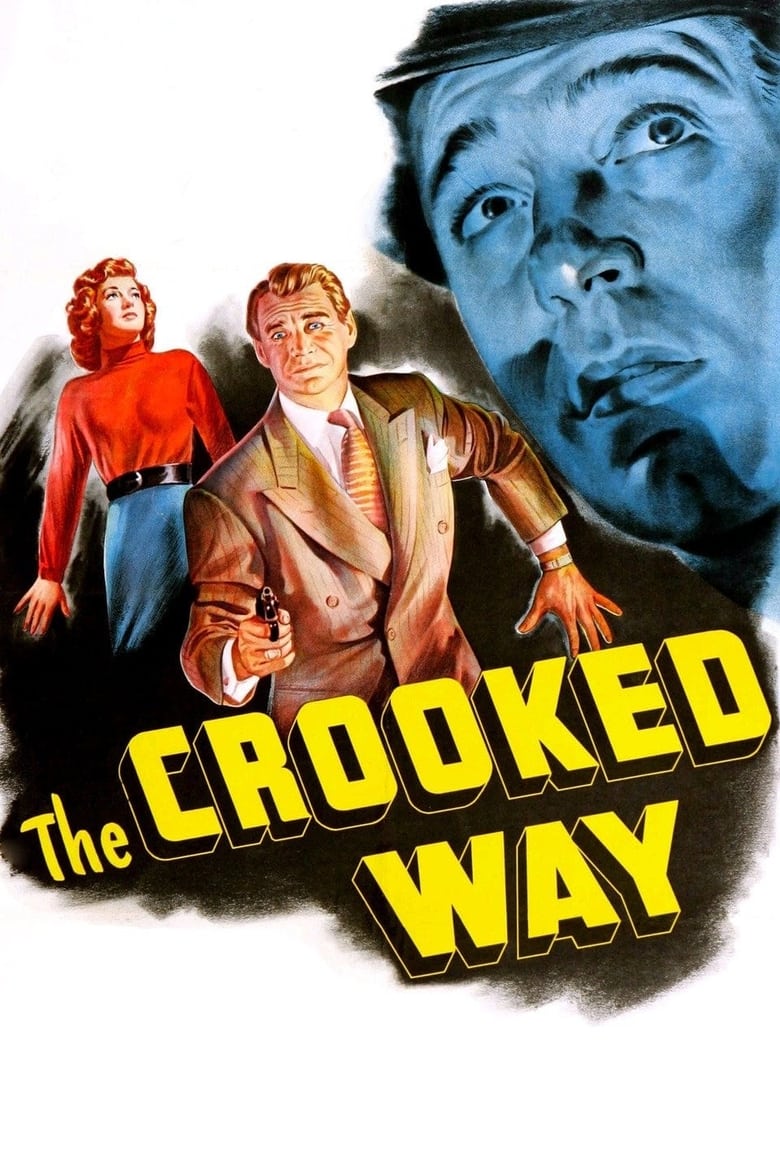
Eddie Rice wakes in a veterans' hospital with no memory of the man he was before the war. Discharged and adrift, he travels to Los Angeles to reconstruct an identity, armed only with a name and a service record. What he finds is that Eddie Rice was once Eddie Riccardi – a small-time racketeer with enemies still very much alive and a rap sheet the police have not forgotten.
The reunion with his past takes immediate, violent shape. Vince Alexander, the syndicate figure who once partnered with Eddie, has no interest in a reformed version of his old associate and even less in the complications Eddie's return creates. Nina Martin, Eddie's former wife, occupies the uneasy middle ground between the two men – her loyalties divided, her motives never entirely legible. Lieutenant Joe Williams watches from the margins, using Eddie's exposure as leverage to reach Vince while making clear that the law's tolerance for Eddie is strictly conditional.
The amnesia device gives the film its particular moral charge: Eddie is a man who must decide, without the weight of memory, whether to reclaim a criminal past or build something new – a choice the genre rarely frames with this degree of structural clarity. The film belongs to the postwar cycle preoccupied with veterans returning to a world that has changed around them, and to the darker subset of that cycle that questions whether the self left behind was worth recovering.
The Crooked Way sits at a productive intersection of the amnesia thriller and the postwar rehabilitation narrative, using Eddie Riccardi's blank-slate condition not as a simple plot convenience but as a sustained ethical question. Robert Florey directs with economy – there is no sentiment wasted on Eddie's plight, and the film is more interested in the institutional and criminal machinery closing around him than in psychological interiority. John Payne, rarely given credit for the controlled menace he could project, plays Eddie as a man whose decency is genuine without being reassuring: the audience is never certain it will survive contact with the world he has re-entered. Sonny Tufts, against type, provides a villain whose charm has curdled into something genuinely threatening. The film does not resolve its central tension so much as exhaust it, and that exhaustion feels honest to the era. As a product of Benedict Bogeaus's independent unit, it operates without the institutional gloss of the major studios, and that leanness serves the material.
– Classic Noir
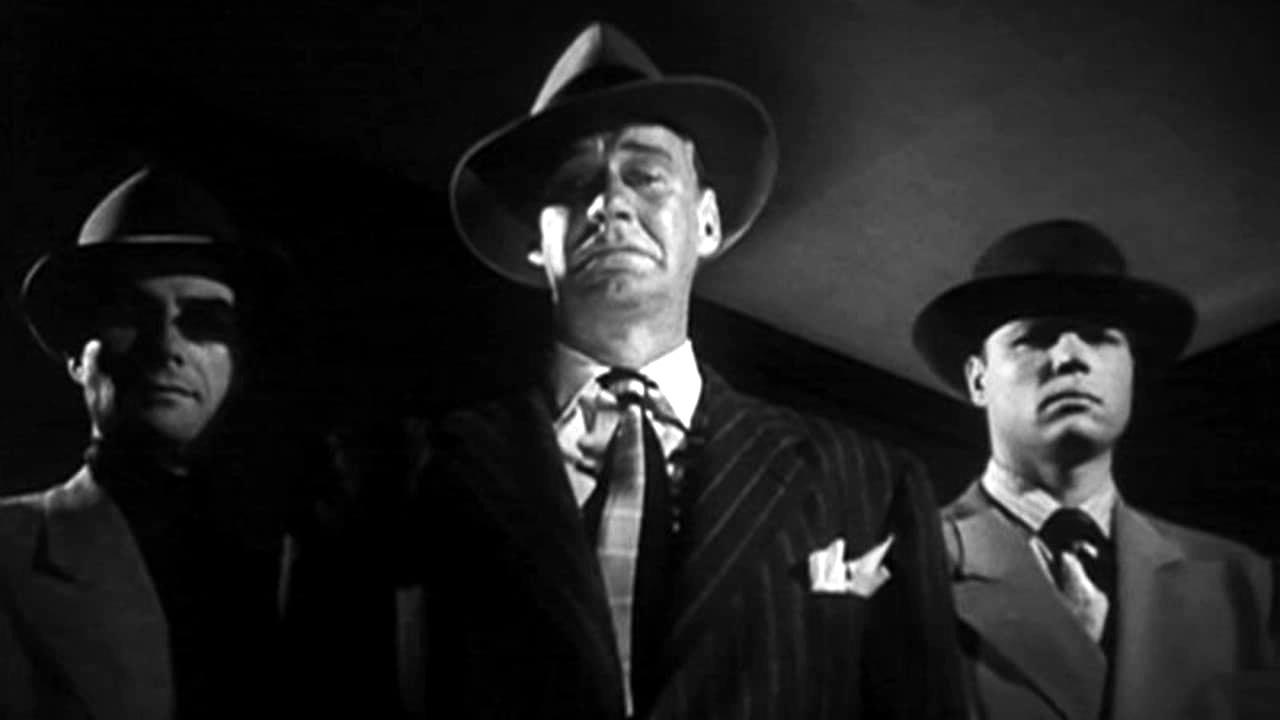
John Alton lights the scene from a single hard source positioned high and to the left, driving bars of shadow across Eddie and Vince that recall prison iconography without literal bars in frame. The camera holds at a middle distance that refuses to flatter either man – there is no privileged close-up, no shot designed to generate sympathy. When Vince moves, the geometry of light and shadow shifts with him, the darkness redistributing itself as though it belongs to him rather than to the architecture.
The scene's argument is spatial: Eddie occupies half the frame in relative light, Vince the other half in relative darkness, but the boundary between them is not fixed. It drifts. The composition embeds what the screenplay states – that the line between these two men is permeable, that Eddie's reformed identity has no structural guarantee – into the visual field itself, making the moral instability something the viewer registers before any line of dialogue confirms it.
John Alton's work on The Crooked Way extends the visual method he had been developing through the late 1940s in films like T-Men and He Walked by Night – a method founded on aggressive subtraction rather than conventional illumination. Alton withholds light as a narrative instrument, treating shadows not as atmosphere but as information about power and culpability. Here, working largely on studio-constructed sets that he lights as though they were genuine locations, he relies on hard, directional sources that produce deep, precisely shaped shadows with minimal fill. The effect is a world in which safety is geometric and provisional: step out of the light and the darkness claims you immediately. Alton also uses foreground objects – doorframes, structural columns, chain-link – to break and complicate the image, giving even static scenes a sense of obstruction. The visual language matches the film's moral logic exactly: Eddie's path forward is not blocked by a single antagonist but by a field of overlapping obstacles, and Alton renders that field with architectural precision.
Tubi has carried this title as a free, ad-supported stream and represents the most accessible entry point, though transfer quality may vary.
Archive.orgFreeAs a public domain title, Archive.org offers a freely downloadable print – quality is serviceable for a film of this vintage and provenance.
Amazon Prime VideoSubscriptionAvailability through Prime has fluctuated; check current listings, as the film cycles in and out of the library catalog.