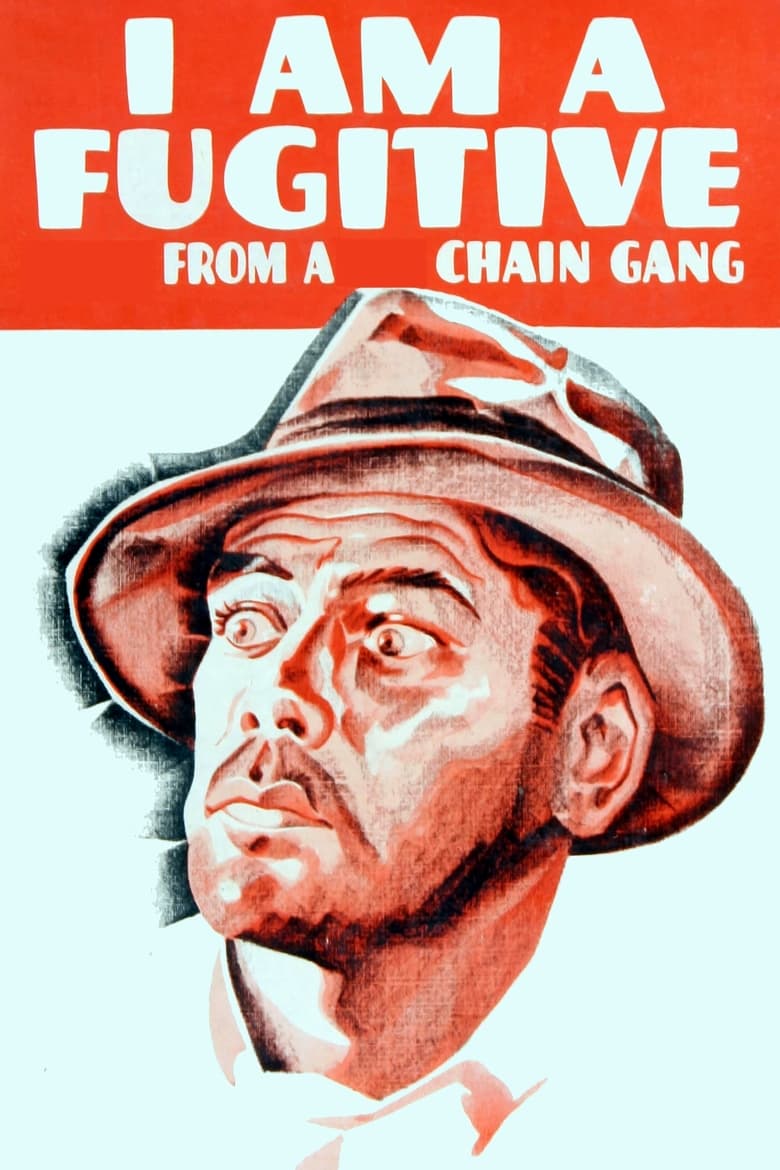
James Allen returns from the First World War with ambitions beyond the factory floor his family has prepared for him. Drifting south in search of construction work, he is swept into a roadside robbery he had no part in planning and sentenced to a Southern chain gang – years of brutal labor, iron shackles, and systematic dehumanization administered with the indifferent efficiency of a state that confuses punishment with justice.
Allen escapes and rebuilds himself in Chicago, rising through legitimate engineering work to a position of quiet respectability. Two women enter his life in succession: Marie, who discovers his past and leverages it into a coerced marriage, and Helen, who offers something closer to honest feeling. When the state of Georgia offers a negotiated surrender – promising a swift pardon in exchange for his voluntary return – Allen takes it, and the promise is broken the moment the manyard gates close behind him.
The film belongs to a cycle of socially conscious Warner Bros. productions that turned documentary outrage into genre narrative, but its allegiances are darker than reform-minded optimism usually allows. Allen's trajectory is not toward vindication but toward erasure, and the machinery that destroys him wears the face of due process throughout. The result sits at the intersection of the prison picture, the wronged-man thriller, and the early noir fatalism that would sharpen considerably as the decade progressed.
Released in 1932 and based on Robert Elliott Burns's autobiographical account of Georgia's chain gang system, Mervyn LeRoy's film is one of the few American pictures of its era that refuses to resolve the contradictions it raises. The state is not merely corrupt here – it is structurally indifferent to the individual, and no amount of respectability, veteran status, or documented innocence alters that arithmetic. Paul Muni anchors the film with a performance of sustained interior pressure: Allen is not a rebel but a man who keeps trying to work within systems that have already decided his outcome. What the film reveals about its era is the fragility of the American promise of reinvention – the idea that a man can outrun his record, that labor and ambition constitute a sufficient defense against institutional power. LeRoy's direction is at its most effective when it strips sentiment away entirely, as it does in the film's closing exchange, which became one of the most cited endings in pre-Code Hollywood for the precise reason that it offers nothing to hold onto.
– Classic Noir
Allen meets Helen briefly in a shadowed alley, the frame almost entirely evacuated of light. Sol Polito allows only the faintest edge illumination to separate Muni's face from the surrounding black, giving the composition the quality of a figure dissolving rather than standing. There is no establishing shot to orient the geography, no cutaway to safety – only two faces in a darkness that functions less as setting than as condition.
The scene crystallizes the film's central argument: that society does not rehabilitate or punish so much as it simply consumes. Allen cannot explain where he lives or how, can offer only the admission that he steals to survive. The man who fought in a war, who built bridges, who tried twice to submit to the law's terms, is reduced to a voice from the dark. The closing line does not invite interpretation – it closes off the possibility that the story has anywhere left to go.
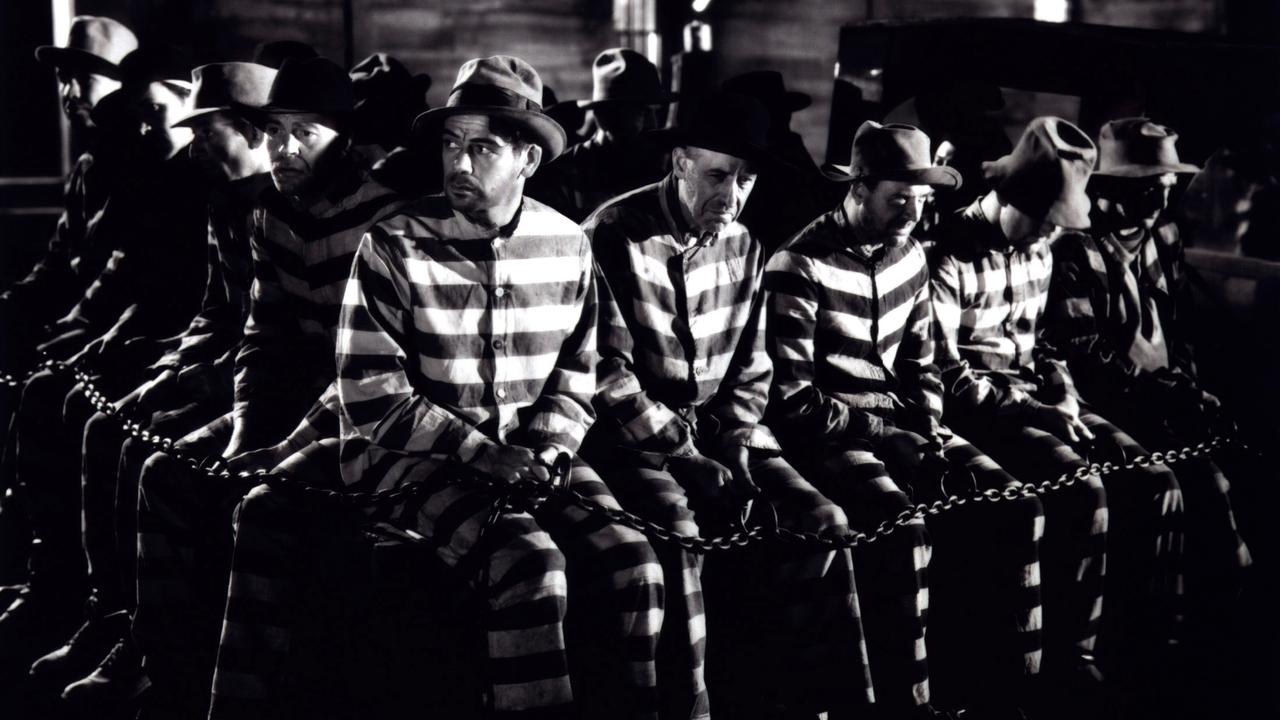
Sol Polito's cinematography operates throughout on a logic of diminishing light. In the early sequences – the return home, the drift south – the frame retains a workmanlike brightness consistent with the world Allen still believes he inhabits. As the gang sequences begin, Polito introduces harder, more directional sources that carve shadow across faces and make the physical space of the camp feel geometrically hostile: fences, bars, and chain links are lit to register as graphic elements as much as physical ones. Studio interiors in the Chicago sections are handled with a careful mid-range chiaroscuro that tracks Allen's precarious social rise – he is never fully in the light, but the darkness is held at distance. The final alley sequence abandons gradation entirely, reducing Polito's palette to near-total black with minimal edge light. The technique does not merely reflect Allen's fate; it enacts the film's moral logic, in which visibility itself is a privilege the state has revoked.
Warner Bros. library titles from this era appear on Max with reasonable print quality; confirm current availability before viewing.
TCMBroadcast/StreamingTCM screens this title periodically as part of its pre-Code and social-realist programming blocks, often with contextual introductions.
Archive.orgFreeA public domain print is available on Archive.org; quality varies by upload, but the film is fully watchable at no cost.