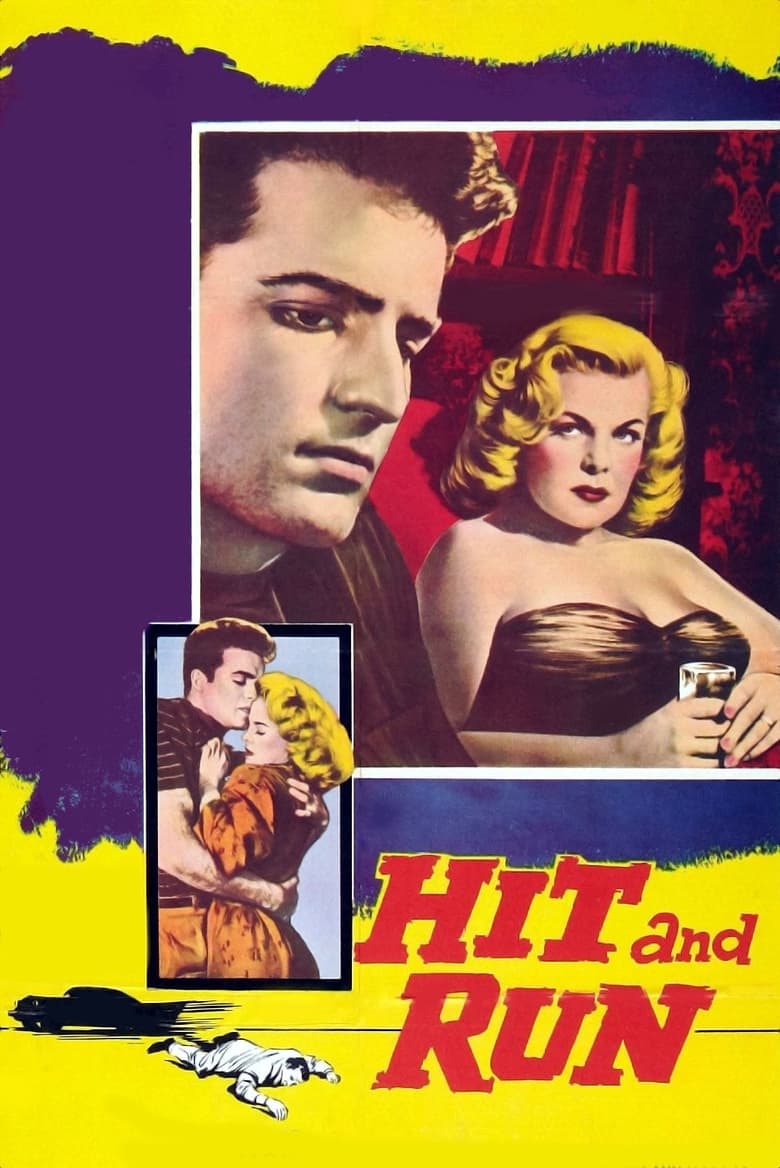
In a quiet rural backwater, Gus Hilmer (Hugo Haas) is a middle-aged garage owner married to the much younger Julie (Cleo Moore), a restless woman whose indifference to her husband is barely concealed. When Frank (Vince Edwards), a lean and opportunistic drifter, arrives and takes work at the garage, Julie's attention sharpens. The two begin an affair conducted in plain sight of a community that prefers not to look too closely.
Gus, neither blind nor stupid, watches the situation deteriorate with a fatalism that reads more as resignation than weakness. The film's central mechanism engages when a hit-and-run accident and the existence of Gus's previously unknown identical twin brother open a corridor for deception – one that Julie and Frank are quick to exploit. Questions of identity, inheritance, and culpability become entangled as the scheme acquires its own momentum, and the characters find themselves committed to a logic they can no longer revise.
Hit and Run operates within the tradition of the working-class noir, where the femme fatale is not glamorous so much as desperate, and the trap is built from poverty of imagination as much as poverty of conscience. Hugo Haas, who wrote, produced, directed, and stars in the film, uses the low-budget constraints not as a handicap but as a frame that keeps the moral stakes uncomfortably close. The film belongs to a cycle of independent noirs from the mid-1950s in which the absence of studio polish becomes its own form of authenticity.
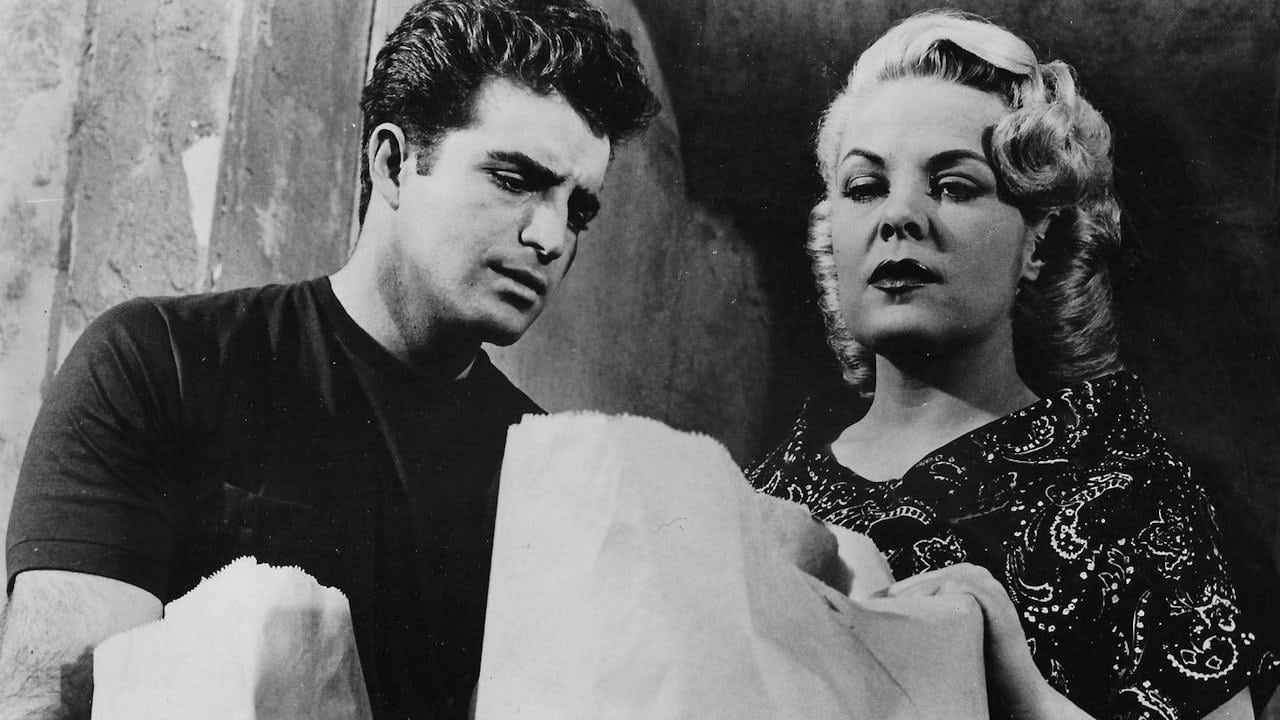
Hit and Run is among the more self-aware productions to emerge from Hugo Haas's run of independent noirs in the 1950s, a body of work that criticism has historically undervalued, partly because Haas cast himself repeatedly as the cuckolded older man and partly because the films resist the visual ambition associated with the genre's prestige titles. What Haas achieves here is something quieter and, in its way, more corrosive: a portrait of a marriage as a negotiated truce that neither party believes in, set against a landscape of filling stations and flat roads that offers no romance and no escape. Vince Edwards, several years before television made him a known quantity, brings a persuasive physical menace to Frank – not a schemer so much as a man who takes what is available. Cleo Moore, Haas's frequent collaborator, is more than decorative; her Julie is calculating in the specific register of someone who knows her options are narrowing. The twin-brother plot device could tip into contrivance, but Haas holds the film's moral argument steady: identity, in this world, is merely the story other people agree to accept.
– Classic Noir
Walter Strenge frames the interior of the garage with available-seeming light – a single work lamp throwing a hard cone across the oil-stained floor while the far wall dissolves into undifferentiated dark. Frank occupies the lit portion of the frame only partially; his face catches the lamp on one side while the other half remains unresolved, a compositional choice that the camera holds without adjustment. Julie enters from the right, stepping across the threshold between lit and unlit space, and Strenge lets the join between the two zones of exposure bisect the frame horizontally, so that neither character is entirely where the eye expects them to be.
The scene makes the argument the film has been building toward: Frank is not a man who arrives fully formed into anyone's life – he is a figure assembled from what the observer needs him to be. Julie looks at him and sees possibility; the camera's refusal to resolve his face entirely suggests she may be looking at a projection. It is the film's cleanest statement on desire and misrecognition, achieved without dialogue and without emphasis.
Walter Strenge, a cinematographer whose career ran largely through low-budget productions at Allied Artists and the independent sector, brings to Hit and Run a pragmatic rigour that suits the material. Working within the constraints of Hugo Haas Productions, Strenge avoids the deep-focus expressionism associated with higher-budget noir and instead constructs images from controlled scarcity: tight source lighting, shallow pools of illumination in exterior locations, and a persistent reluctance to open the frame beyond what the scene strictly requires. The effect is claustrophobic without being theatrical – the darkness in these compositions feels agricultural, functional, indifferent to the characters it swallows. Strenge shoots the rural exteriors with a flat, shadowless quality that refuses the picturesque, reserving harder, more directional shadow work for interiors where deception is being practised. The moral logic this serves is consistent: the world outside offers no cover, and the schemes hatched inside rooms are the only places shadow falls.
Tubi has carried several Hugo Haas independents from this period; availability shifts, but this is the most likely free streaming destination for the film.
Archive.orgFreeAs a low-budget independent from 1957 with uncertain copyright status, Hit and Run may be accessible via Archive.org, though print quality varies.
Amazon Prime VideoRentalOn-demand rental through Amazon is a reliable fallback for Hugo Haas titles not currently in active streaming rotation.