Films People Pull a Fast One Night Beat Reading Room On TV Shop
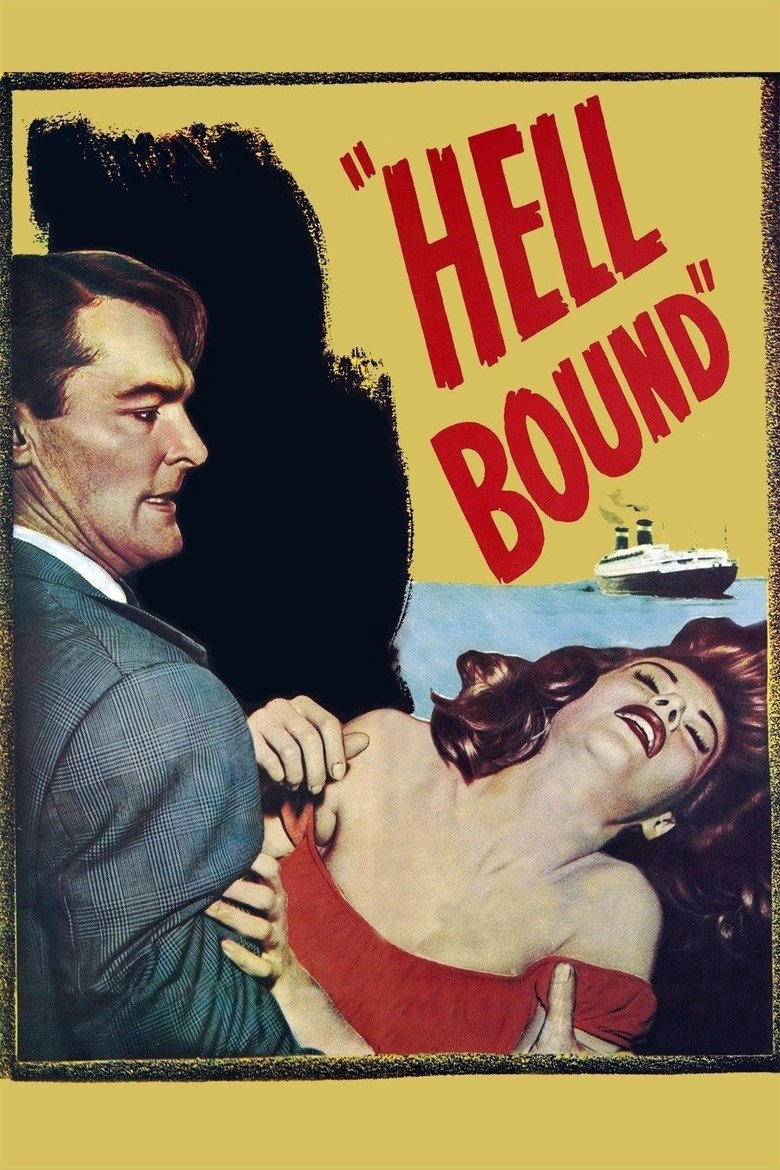
Hell Bound 1957
1957 Bel-Air Productions
★★★☆☆ Notable
Film Noir · 72 minutes · Black & White

Hell Bound

Directed by William J. Hole Jr.
Year 1957
Runtime 72 min
Studio Bel-Air Productions
TMDB 5.8 / 10
"A stolen shipment, a hired thug, and a woman caught between the man who owns her and the one who wants her."

In the shadow economy of 1950s Los Angeles, Jordan (John Russell) is a cool, calculating operator working for crime boss Harry Quantro (Frank Fenton). When Quantro devises a scheme to hijack a shipment of narcotics by smuggling it aboard a hospital ship under the cover of a legitimate medical operation, he assigns Jordan to manage the logistics and keep the moving parts from colliding. The plan is intricate and, on paper, airtight – but it depends on the compliance of people who have their own interests and their own breaking points.

Paula (June Blair) is drawn into the orbit of the scheme through her association with Jordan, while Eddie Mason (Stuart Whitman) represents a younger, more volatile force whose loyalties are contingent on self-interest. Herbert Fay Jr. (Stanley Adams) and the nervous Stanley Thomas (George E. Mather) round out an ensemble of men who are, in different degrees, complicit and expendable. As the operation moves toward execution, the alliances that seemed fixed begin to loosen, and the question of who will absorb the consequences becomes the film's central pressure.

Hell Bound works within the procedural strand of late-cycle noir, less concerned with psychological torment than with the mechanics of criminal enterprise and the institutional rot that permits it. The narcotics-smuggling premise – routed through the sanctioned space of a hospital ship – carries an implicit critique of the legitimate structures that organized crime learns to mimic and exploit, a concern that marks much of the B-noir output of the mid-to-late 1950s.
Classic Noir

Hell Bound occupies a specific and underexamined niche in the late noir canon: the B-picture procedural produced by an independent unit – here Bel-Air Productions – working with reduced resources but without the creative complacency that often follows studio formula. William J. Hole Jr. directs with economy rather than inspiration, keeping the film on pace and trusting the scenario's structural tension to do the heavier work. John Russell's Jordan is a useful noir protagonist precisely because he resists sentiment; Russell brings a professional coldness to the role that aligns character with genre logic. Stuart Whitman, still finding his register at this point in his career, supplies the instability the film requires from its secondary threat. What Hell Bound reveals about its moment is a genre in transition – the psychosexual intensity of classical noir has receded, and what replaces it is an almost bureaucratic interest in criminal organization, in the planning and execution of schemes that mirror legitimate enterprise. The film is not a landmark, but it is an honest document of the form at a specific hour of its evolution.

– Classic Noir
3 ★★★☆☆ Notable
Credits

The Crew

DirectorWilliam J. Hole Jr.
ScreenplayRichard H. Landau
CinematographyCarl E. Guthrie
MusicLes Baxter
EditingJohn A. Bushelman
ProducerHoward W. Koch
Performances

The Cast

Close Reading

The Signature Scene

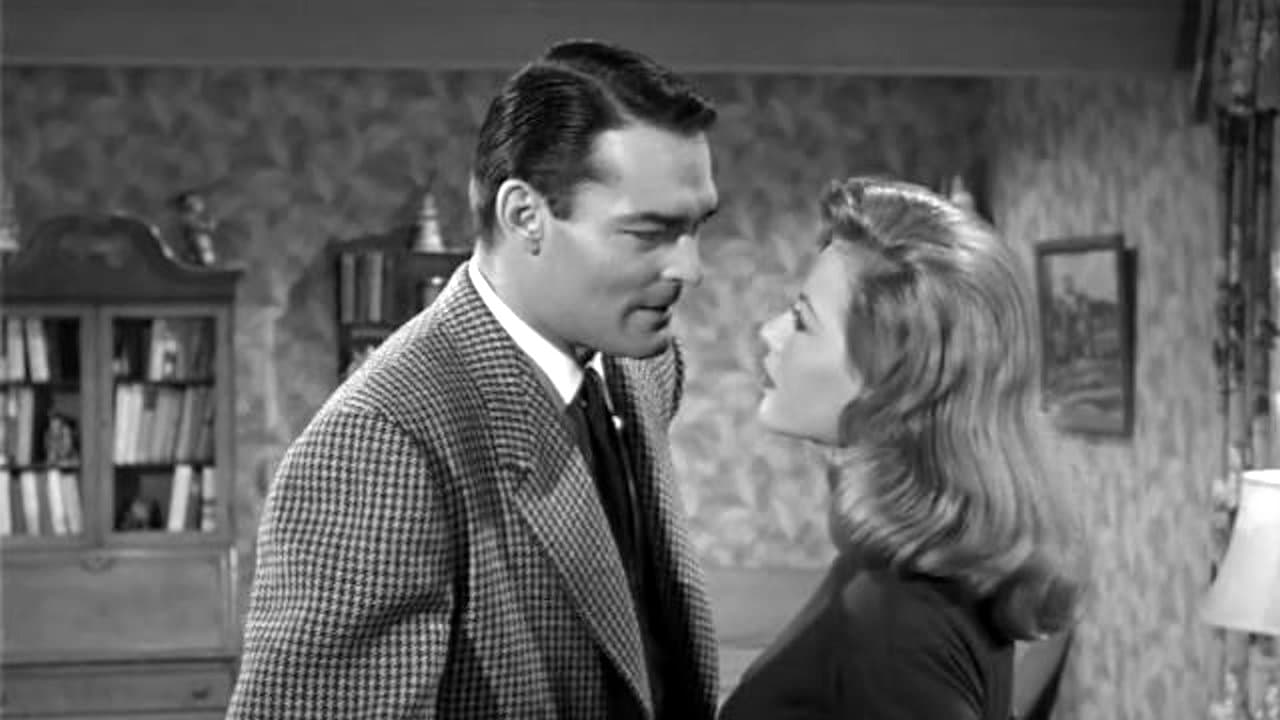
Hell Bound – scene
The Hospital Ship Boarding Contraband Moving Through Light

Carl E. Guthrie frames the boarding sequence in hard horizontal lines – the gangway, the hull, the dock's industrial geometry – and places the principal figures in a narrow corridor of light that the surrounding darkness presses against from both sides. The camera maintains a measured distance, refusing close-ups at the moment of maximum tension, which has the counterintuitive effect of making the transgression feel more clinical, more deliberate. Shadow pools at the edges of the frame with the consistency of standing water.

The restraint of the staging is itself a declaration of character. Jordan does not sweat; the camera does not tremble. The scene argues that the most dangerous men in the noir universe are not the passionate ones but the procedural ones – those who have reduced crime to a sequence of manageable steps and learned to move through legitimacy as if they belong there. The hospital ship, a vessel coded with humanitarian purpose, becomes the film's central moral inversion.

Visual Language

The Cinematography

🎞️
Carl E. Guthrie – Director of Photography

Carl E. Guthrie's cinematography on Hell Bound operates within the compressed grammar of the low-budget noir: available locations pressed into expressionistic service, lighting rigs that achieve contrast through subtraction rather than elaboration. Guthrie, a studio-trained DP with credits spanning multiple decades and production tiers, applies a consistent logic to the film's visual syntax – interior spaces are lit to emphasize enclosure, with practical sources used to anchor shadow patterns that the frame then organizes into moral geography. The dockside and shipboard sequences benefit from location texture that a studio set could not replicate, and Guthrie uses the industrial environment's natural linearity to impose compositional order on scenes that might otherwise feel under-controlled. Lens choices favor a middle focal length that keeps figure and environment in productive tension, resisting the distortion of wide-angle work that lesser B-pictures of the period relied on for cheap unease. The overall effect is a visual register that is cooler and more deliberate than the film's crime-thriller surface might suggest.

In the Catalogue

Themes & Motifs

Availability

Where to Watch

Also in the Directory

See Also