Films People Pull a Fast One Night Beat Reading Room On TV Shop
He Walked by Night 1949
1949 Bryan Foy Productions
★★★☆☆ Notable
Film Noir · 79 minutes · Black & White

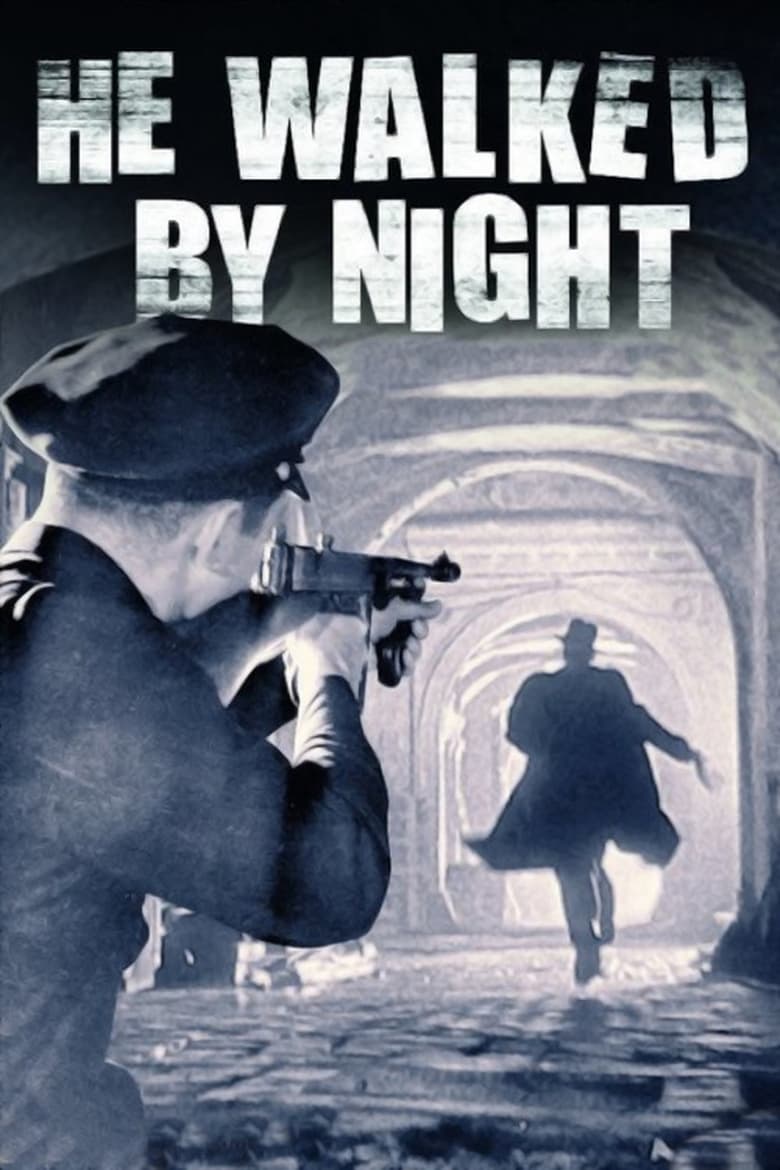
He Walked by Night

Directed by Alfred L. Werker
Year 1949
Runtime 79 min
Studio Bryan Foy Productions
TMDB 6.7 / 10
"A killer moves through the city like a shadow no law can hold."

In postwar Los Angeles, a lone gunman shoots a police officer during a routine stop and vanishes into the night. The dead man's colleagues – methodical Sgt. Marty Brennan and his partner Chuck Jones, working under the steady hand of Captain Breen – begin a deliberate, painstaking investigation. Their quarry is Roy Martin, a man of exceptional intelligence and technical skill who lives without connection, without record, and without apparent motive beyond a cold preference for survival on his own terms.

As the manhunt widens, the police assemble a picture of their suspect through fragments: a composite sketch refined across dozens of interviews, a partial fingerprint, a lead traced through electronic components Martin builds and sells. The procedural machinery grinds forward while Martin continues to operate in the open city, modifying his appearance, treating his own wounds, and evading capture through a combination of discipline and intimate knowledge of how the law pursues. The film grants him no accomplice and no romantic attachment – he moves alone, and the isolation defines him.

He Walked by Night belongs to the cycle of semidocumentary crime films that flourished in the late 1940s, works that borrowed the authority of newsreel and police record to examine what the postwar city had produced. Here the procedural form is pressed against something more unsettling: a criminal whose competence mirrors the system hunting him, and whose ultimate refuge beneath the city's streets transforms the chase into something approaching myth.
Classic Noir

He Walked by Night occupies a precise and instructive position in late-1940s American noir. It was produced in the semidocumentary mode that Call Northside 777 and The Naked City had established, using location photography, flat narration, and the rhetoric of the case file to ground its violence in institutional fact. What sets it apart is the counterweight it places against that institutional authority: Richard Basehart's Roy Martin is not a sympathetic figure, but he is a coherent one, and the film is unusually willing to make the police procedural work as hard to earn its resolution as the criminal does to avoid it. John Alton's cinematography refuses the comfort of moral clarity that the documentary mode usually implies. The film also carries biographical weight – it was during production that Jack Webb conceived Dragnet, and the influence is traceable. Historically, the case derives from Erwin Walker, the actual killer whose crimes shook the LAPD. The film processes real civic anxiety about the returned veteran, the solitary man, and the limits of institutional knowledge into 79 minutes of controlled dread.

– Classic Noir
3 ★★★☆☆ Notable
Credits

The Crew

DirectorAlfred L. Werker
ScreenplayCrane Wilbur
CinematographyJohn Alton
MusicLeonid Raab
EditingAlfred DeGaetano
Art DirectionEdward L. Ilou
ProducerRobert Kane
Performances

The Cast

Close Reading

The Signature Scene

He Walked by Night – scene
The Storm Drain Sequence Light Through the Culvert

In the film's climax, Martin retreats into the concrete storm drain network beneath Los Angeles – a space that Alton photographs as an underworld rendered literal. The camera holds low angles through cylindrical tunnels, so that the pursuing officers' flashlight beams become the only source of illumination, carving cones through absolute black. Martin's figure appears in fragments: a hand, a shoulder, the reflection of light on a wet concrete wall. Alton composes the pursuit as a series of geometric corridors that seem to extend without end, the architecture of the city's infrastructure turned inward and hostile.

The sequence argues that Martin's defining quality – his capacity to disappear into systems, to inhabit the city's negative spaces – has its ultimate expression here, underground, beneath the ordinary life he has never participated in. He is not hiding from society; he has simply located its underside and moved there. That the law follows him into this space and corners him not through superior intelligence but through superior numbers gives the resolution a note of attrition rather than triumph, which is the film's most honest admission.

Visual Language

The Cinematography

🎞️
John Alton – Director of Photography

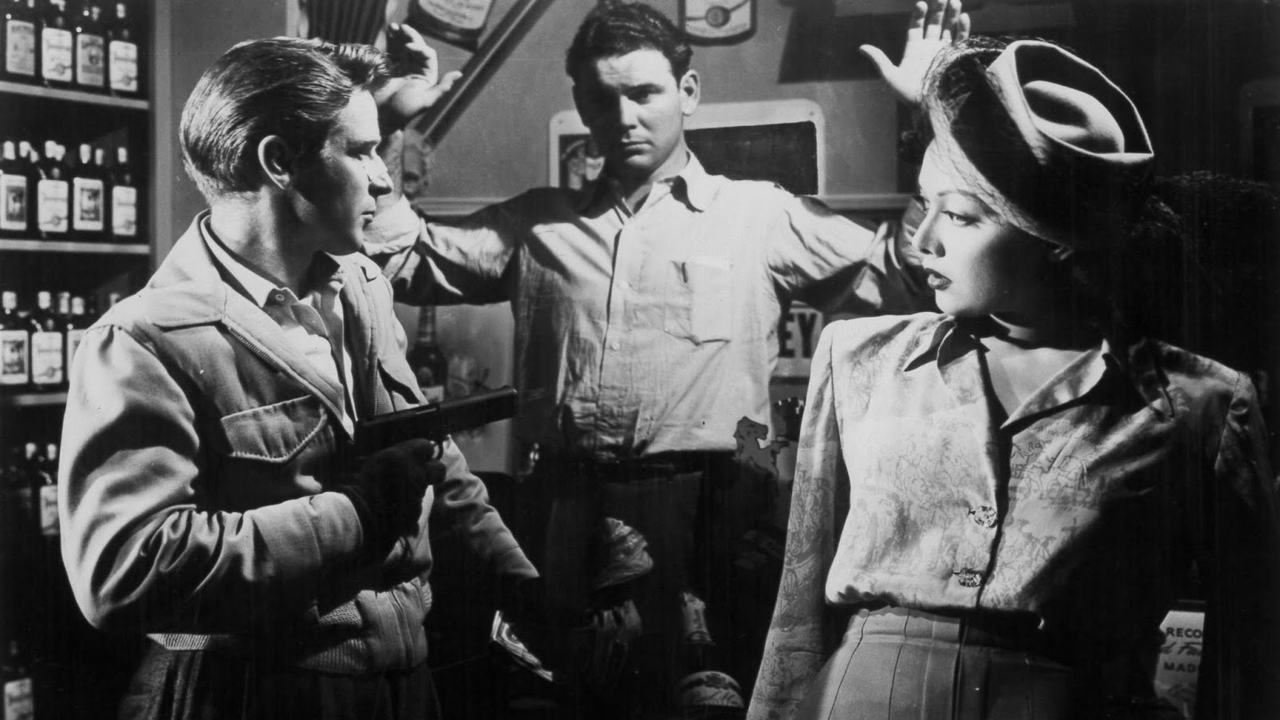
John Alton's work on He Walked by Night represents one of the more precise deployments of low-key cinematography in the semidocumentary cycle. Where that mode typically relied on available-light aesthetics and wide-angle location coverage to project authenticity, Alton subordinates documentary surface to moral atmosphere. He uses hard, directional sources – single practical lamps, flashlights, the occasional streetlight – to isolate figures against darkness rather than embed them in a legible environment. His lens choices favor moderate wide angles that keep the geometry of spaces visible without distorting; the threat in his frames comes from what is withheld rather than distended. In the interrogation and interview scenes, light falls across faces at angles that divide them, suggesting the incompleteness of any testimony or record. In the exterior night work, pools of light become islands that Martin navigates between with the same calculation the police apply to their charts and composites. The visual language insists that the city is fundamentally dark, and that illumination – investigative or photographic – is always partial.

In the Catalogue

Themes & Motifs

Availability

Where to Watch

Also in the Directory

See Also