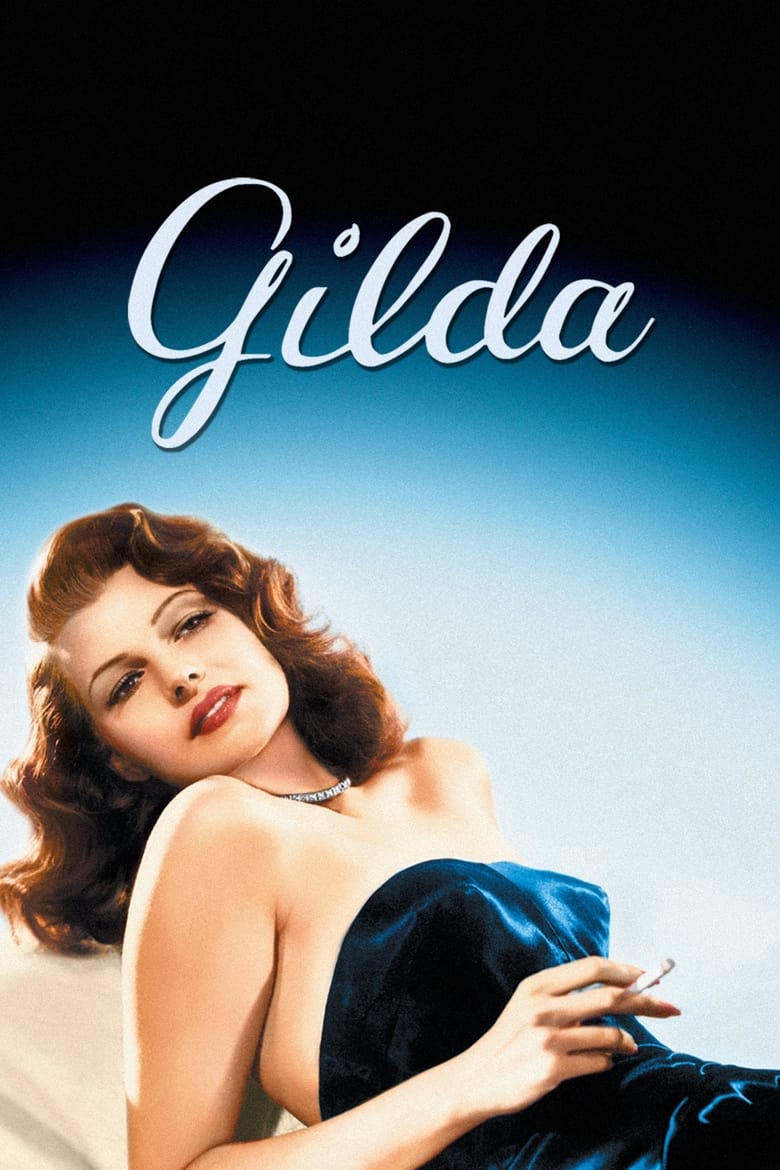
Johnny Farrell, a small-time American gambler drifting through Buenos Aires, is rescued from a street robbery by Ballin Mundson, a cool, imperious casino owner who carries a lethal swordstick and projects the calm authority of a man accustomed to controlling outcomes. Mundson takes Johnny on as his enforcer and trusted lieutenant, and for a time the arrangement suits both men. Then Mundson returns from a trip with a wife – Gilda, a woman Johnny already knows, and knows well.
The triangle that forms between Johnny, Gilda, and Mundson operates on several registers at once: sexual rivalry, suppressed history, and a mutual talent for cruelty dressed as indifference. Johnny is assigned to watch over Gilda, a duty that functions as both punishment and torment. Meanwhile, Mundson's casino conceals a deeper operation – a cartel controlling tungsten interests that draws the attention of the Argentine police and a persistent detective named Obregon. As Mundson's position grows precarious, the loyalties he has purchased begin to fracture.
Gilda occupies a complicated position within the noir cycle. It carries the genre's standard furniture – a corrupt milieu, a treacherous woman, male anxiety projected onto female desire – but presses against those conventions with enough internal pressure to expose their instability. The film's Buenos Aires is entirely a studio construction, which only sharpens its atmosphere of unreality and displacement, and Rita Hayworth's performance refuses to resolve into the clean archetype the plot seems to demand of her.
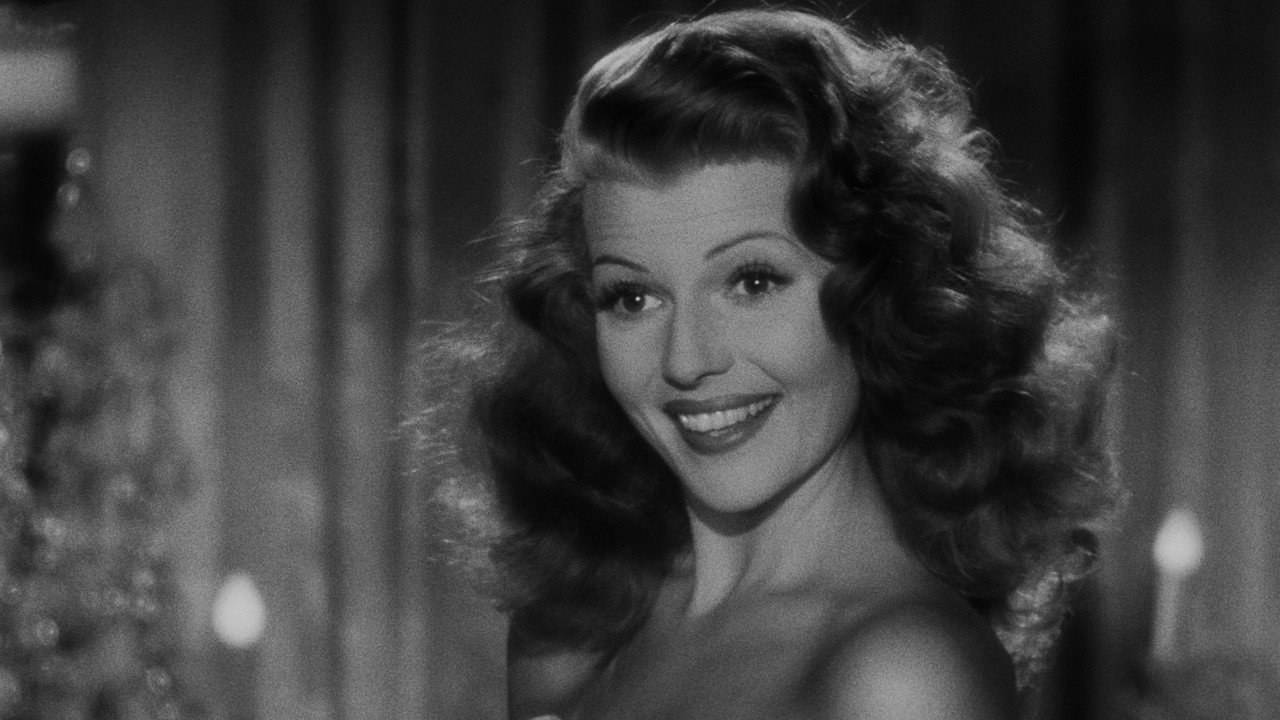
Gilda is simultaneously one of noir's most celebrated films and one of its most misread. The received reading – Hayworth as femme fatale, Ford as her hapless victim – obscures the more interesting argument the film is actually making. Gilda is the only character in the picture who says what she means. The men around her project, lie, punish, and rationalize; she performs, certainly, but her performances are transparent acts of self-defense. Charles Vidor and screenwriter Marion Parsonnet construct a Buenos Aires underworld that functions less as a geographic place than as a moral holding pen, where American guilt and postwar dislocation find no resolution. The film's tone is unstable in productive ways: it slides between romantic melodrama and genuine menace without ever fully committing to either, which is precisely what makes it durable. George Macready's Mundson, with his swordstick and measured sadism, carries the film's darkest energies. The ending remains the picture's most contested element, imposed against the material's logic – yet the damage is already done by the time it arrives.
– Classic Noir
Rudolph Maté lights the ballroom sequence in high-contrast pools that isolate Hayworth at the center of the frame while the crowd recedes into soft shadow. The camera holds on her face during the opening bars of 'Put the Blame on Mame,' then pulls back to catch the full silhouette – black strapless gown, long gloves, hair loose – before tracking slowly inward again as the performance escalates. The glove removal is filmed in a single unhurried movement: Hayworth works each finger with deliberate patience, and Maté keeps the lens close enough that the gesture registers as both theatrical and genuinely transgressive. The cross-cuts to Ford's face show calculation replacing desire, or desire replacing calculation – the film refuses to specify.
The scene crystallizes what the film has been arguing about performance and power. Gilda is not seducing a room; she is settling a score with one man in front of an audience, using the only currency the film's world allows her. That the gesture reads as erotic spectacle rather than aggressive retaliation is itself the point – she knows exactly how it will be received, and she deploys that knowledge as a weapon. The scene does not make her dangerous; it makes her cornered.
Rudolph Maté had already shot Vampyr and Dreyer's La Passion de Jeanne d'Arc before arriving at Columbia, and his work on Gilda draws on that European tradition of expressive shadow without surrendering the studio gloss the material requires. Shooting entirely on Columbia soundstages, Maté constructs a Buenos Aires of raked light and deep focus interiors, using practical-seeming practicals – casino chandeliers, bar back-lights – as motivating sources while placing his key lights low and lateral to carve faces rather than illuminate them. The casino sequences favor long takes with controlled camera movement; the more intimate confrontations between Ford and Hayworth are cut tighter and lit harder, the shadows falling across faces in ways that implicate rather than romanticize. Maté's lens work is restrained by design – no extreme angles, no expressionist distortion – which places the film's unease in the performances and the space between characters rather than in visual rhetoric. The effect is a world that looks glamorous and feels inescapable.
The Criterion Channel carries Gilda in a clean transfer as part of its Columbia noir programming, making it the most reliable streaming source for quality presentation.
TCMSubscriptionTCM broadcasts Gilda periodically within thematic noir programming blocks and is available via the TCM app with a cable or streaming bundle.
Amazon Prime VideoRentalAvailable for digital rental on Amazon Prime Video for viewers without a Criterion or TCM subscription; transfer quality varies by encode.