Films People Pull a Fast One Night Beat Reading Room On TV Shop
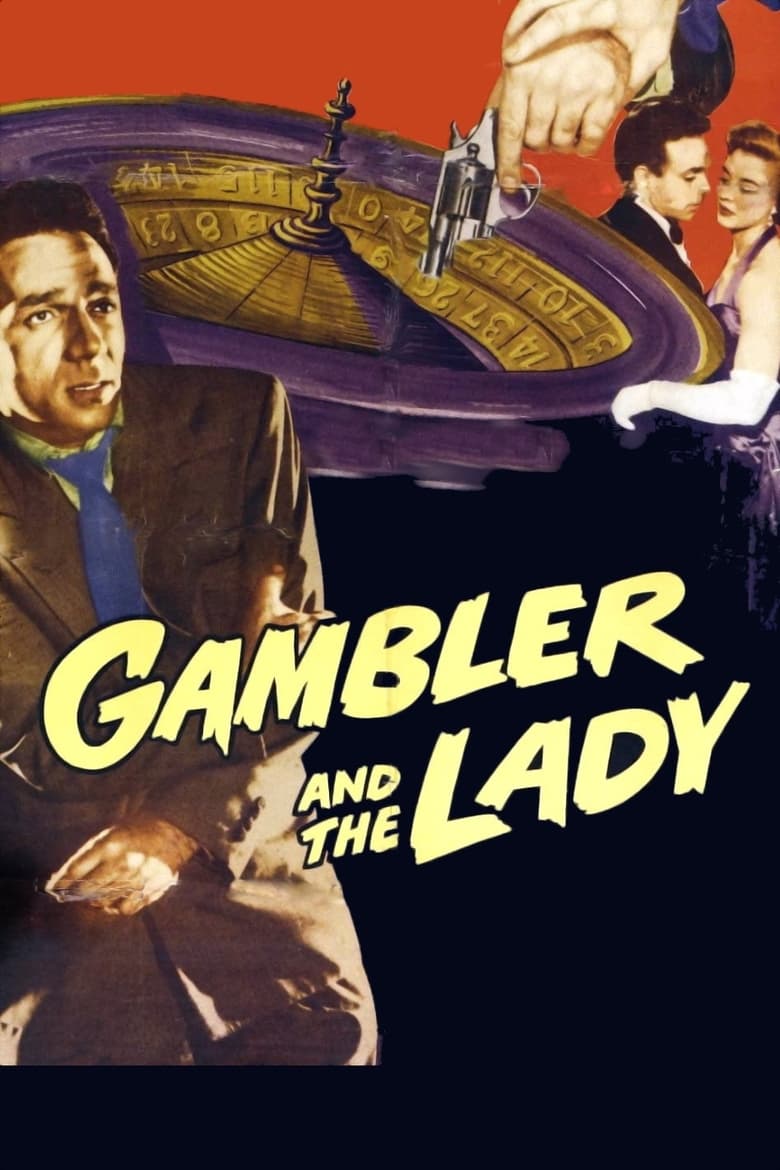
Gambler and the Lady 1952
1952 Lippert Films
★★★☆☆ Notable
Film Noir · 72 minutes · Black & White

Gambler and the Lady

Directed by Patrick Jenkins
Year 1952
Runtime 72 min
Studio Lippert Films
TMDB 5.6 / 10
"A man climbs toward respectability and finds only the drop on the other side."

Jim Forster is an American gambler operating in postwar London, running a prosperous illegal casino with the kind of practiced confidence that passes, in certain circles, for authority. He is competent, calculating, and restless – a man who has built something from nothing and cannot stop wanting more. When he becomes infatuated with Lady Susan Willens, a woman from a social world entirely closed to him, he begins a calculated campaign to remake himself as something he is not.

The pursuit of Susan pulls Forster into a web of obligations he cannot control. His existing partner Pat, who understands him far better than Susan ever will, watches the transformation with a mixture of grief and contempt. Meanwhile, the Italian syndicate figures Arturo and Angelo Colonna, who have interests in Forster's operation, grow impatient with his distraction. Lord Peter Willens, Susan's husband, provides an obstacle that class and money alone can maintain. The allegiances around Forster shift quietly and with purpose.

Gambler and the Lady works within the tradition of the social-climbing noir, a strand of the genre concerned less with violence as spectacle than with the slow erosion of a man's judgment by desire and vanity. The film's London setting – a world of clubs, drawing rooms, and criminal back offices existing in uncomfortable proximity – gives the familiar American genre machinery a specific postwar British texture, where the barriers Forster cannot cross are as much about accent and breeding as about law.
Classic Noir

Gambler and the Lady occupies an instructive position in the transatlantic noir cycle of the early 1950s, when British studios – here Lippert Films, an operation with one foot in Hollywood – were producing genre pictures that absorbed American conventions and filtered them through a distinctly British class consciousness. Dane Clark, imported from Hollywood where he had spent the late 1940s in Warner Bros. second-tier crime pictures, brings a coiled urban energy that the London setting deliberately frustrates. His Jim Forster is not defeated by the law or by a femme fatale in any strict sense; he is defeated by a social order that will absorb his money and then discard him. Kathleen Byron, still carrying the shadow of her astonishing work in Black Narcissus five years earlier, invests Pat with a weary intelligence that makes her the film's moral center. The film does not pretend that the world she represents is glamorous – only that it is honest. At 72 minutes it moves without waste, and its unsentimental view of aspiration and its costs places it in legitimate company with stronger pictures of the cycle.

– Classic Noir
3 ★★★☆☆ Notable
Credits

The Crew

DirectorPatrick Jenkins
ScreenplaySam Newfield
CinematographyWalter J. Harvey
MusicIvor Slaney
EditingMaurice Rootes
Art DirectionJ. Elder Wills
ProducerAnthony Hinds
Performances

The Cast

Close Reading

The Signature Scene

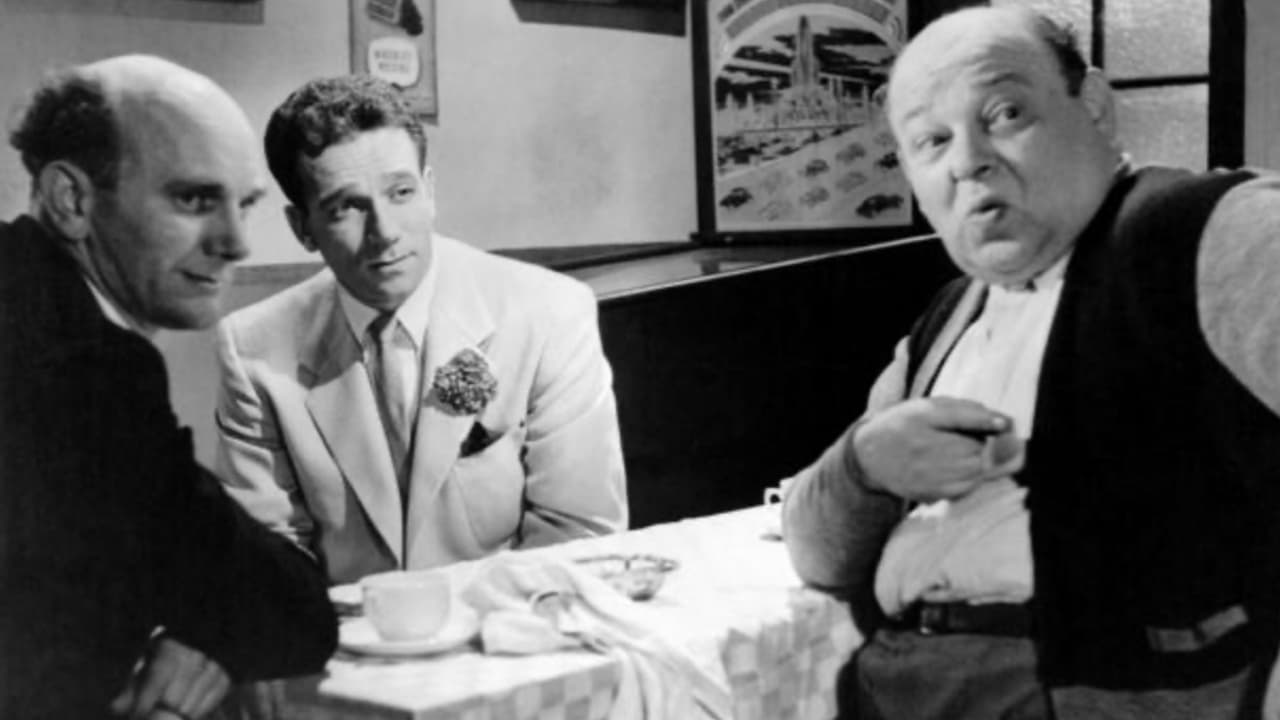
Gambler and the Lady – scene
The Casino Floor Forster Surveys His Kingdom

The camera finds Forster from a low angle near the roulette table, the overhead practicals cutting hard light across the felt and leaving the room's periphery in a measured darkness. Walter J. Harvey keeps the frame wide enough to show the architecture of the operation – the croupiers, the clients, the exits – before closing in on Clark's face, which reads the room with proprietorial calm. The composition places him at the center of something he has built but does not, the film quietly insists, truly possess.

The scene functions as an argument about the nature of ownership. Forster controls the room and is controlled by it; the casino is not an achievement but a cage he has decorated to his own taste. The low angle that initially flatters him also traps him within the frame's geometry, and the darkness pressing at the edges of the light suggests that what lies beyond his small illuminated dominion is not opportunity but consequence.

Visual Language

The Cinematography

🎞️
Walter J. Harvey – Director of Photography

Walter J. Harvey works in a register that is disciplined rather than expressive, which suits the film's underlying argument about surfaces and what lies beneath them. The London locations – street exteriors, club interiors, the careful geography of a city still wearing its postwar shabbiness – are used without romanticism; Harvey does not allow the city to become atmospheric decoration. Interior lighting setups favor hard single-source practicals that create sharp facial shadows without the exaggerated chiaroscuro of the Hollywood B-noir tradition. The effect is a world that looks credible rather than stylized, which is the correct choice for a story about a man who mistakes social performance for social reality. When the frame does tighten – in the confrontation scenes between Clark and Byron, or in the sequences involving the Colonna syndicate – Harvey moves the camera closer rather than reaching for expressionist angles, keeping the threat interior and behavioral rather than visually declared. The result is a noir that wears its menace under the skin.

In the Catalogue

Themes & Motifs

Availability

Where to Watch

Also in the Directory

See Also