Films People Pull a Fast One Night Beat Reading Room On TV Shop
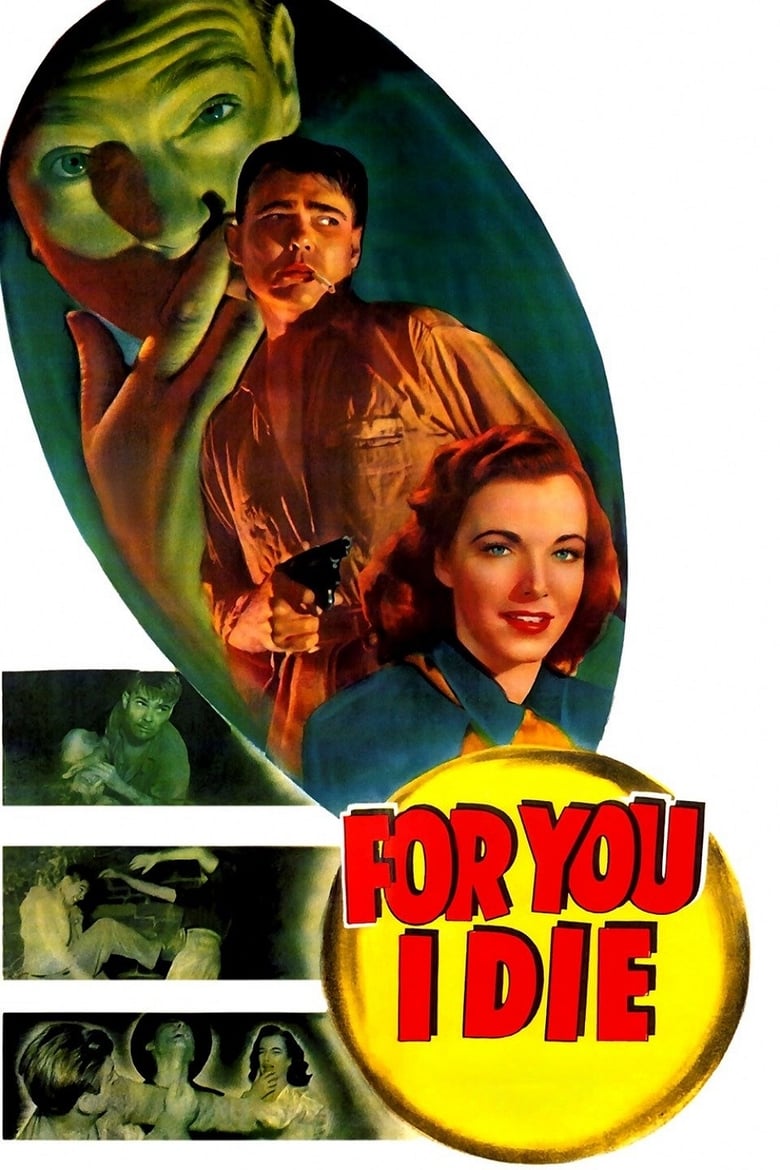
For You I Die 1947
1947 Arpi Productions
★★★☆☆ Notable
Film Noir · 76 minutes · Black & White

For You I Die

Directed by John Reinhardt
Year 1947
Runtime 76 min
Studio Arpi Productions
TMDB 5.9 / 10
"A man escapes prison for love, and finds that freedom carries its own sentence."

Johnny Coulter, a convict nearing the end of his sentence, agrees to help fellow prisoner Alec Shaw escape from a road-gang detail in exchange for a promised reward waiting outside. The plan goes wrong, as such plans do, and Johnny finds himself alone and on the run, taking refuge at a remote desert diner operated by the quiet, cautious Smitty and his young waitress, Hope Novak. Hope is a woman with her own reasons for staying close to the middle of nowhere, and the two begin a careful, watchful proximity that neither entirely trusts.

As Johnny recovers and waits, the relationship between him and Hope deepens from suspicion into something more fragile and consequential. Alec Shaw eventually surfaces, and with him come the complications Johnny had half-anticipated: the promised money is entangled with violence, and loyalties that seemed fixed begin to shift. Smitty, genial but observant, occupies a position that is neither fully ally nor obstacle, while the diner itself becomes a kind of pressure chamber, isolating the principals from any clean exit.

For You I Die works within the fugitive-romance strand of postwar noir, a territory that trades urban menace for the particular desolation of open country and closed options. The film's interest lies less in plot mechanism than in the moral weight it places on ordinary people caught between self-preservation and the rarer impulse toward genuine feeling – a tension the genre returned to repeatedly in the years immediately following the war.
Classic Noir

For You I Die occupies the lower-budget margins of the postwar noir cycle, produced independently through Arpi Productions and distributed without the institutional support of a major studio. John Reinhardt's direction is economical without being careless, and the film earns genuine credit for its restraint: the desert-diner setting keeps the melodrama grounded, and the screenplay understands that isolation is itself a form of pressure. Cathy Downs brings a disciplined stillness to Hope Novak that resists the genre's tendency toward ornamental femininity, and Paul Langton's Johnny is credibly worn rather than glamorously doomed. Mischa Auer, typically deployed for comic relief elsewhere, is used here with productive ambiguity. The film belongs to a significant minor tradition within noir – the fugitive-love story set against emptied American landscape – and read alongside its contemporaries it maps the anxieties of men and women for whom the war's end resolved nothing about how to live honestly in ordinary time.

– Classic Noir
3 ★★★☆☆ Notable
Credits

The Crew

DirectorJohn Reinhardt
ScreenplayRobert Presnell Sr.
CinematographyWilliam H. Clothier
MusicPaul Sawtell
EditingJason H. Bernie
ProducerRobert Presnell Sr.
Performances

The Cast

Close Reading

The Signature Scene

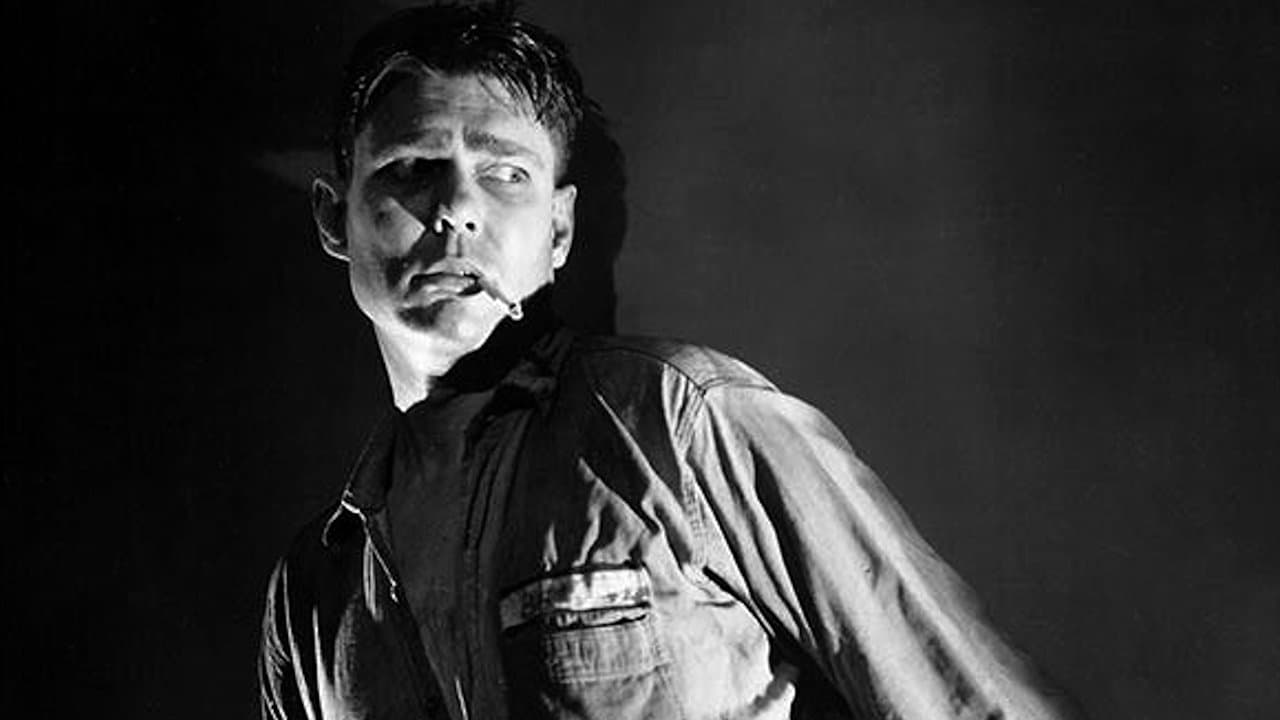
For You I Die – scene
The Diner at Night Light Through a Screen Door

Clothier positions the camera at a low angle inside the diner, letting the screen door divide the frame between the warm interior and the blue-black desert beyond. A single overhead practical throws hard light across the counter, leaving the corners in unresolved shadow. When Hope moves into the doorframe, she occupies a threshold – neither fully inside nor out – and the composition holds her there long enough to register as a formal statement rather than incidental blocking.

The scene crystallizes the film's central argument about conditional freedom. Johnny watches from the far edge of the frame, already half-absorbed by shadow, and the spatial arrangement says plainly what the dialogue withholds: the door opens both ways, and whatever is between these two people exists only in the narrow lit space between one kind of danger and another.

Visual Language

The Cinematography

🎞️
William H. Clothier – Director of Photography

William H. Clothier, who would later distinguish himself on John Ford's late westerns, brings to For You I Die a cinematographer's instinct for geography as moral condition. Working on a limited budget that foreclosed elaborate studio construction, Clothier treats the desert location not as a liability but as a resource, using the flat, directionless quality of night exteriors to strip away any reassuring depth. His interior lighting favors a single hard source – a practial lamp, a window – that creates clean shadow lines without expressionist exaggeration. The effect is less European Gothic than American functional: a world where darkness is just darkness, without the city's neon promise. Clothier's lens choices tend toward the normal range, keeping distortion minimal and spatial relationships honest, which suits a film whose drama depends on characters being exactly as close or as far from one another as the geometry requires.

In the Catalogue

Themes & Motifs

Availability

Where to Watch

Also in the Directory

See Also