Films People Pull a Fast One Night Beat Reading Room On TV Shop
Contraband 1940
1940 British National Films
★★★☆☆ Notable
Film Noir · 91 minutes · Black & White

Contraband

Directed by Michael Powell
Year 1940
Runtime 91 min
Studio British National Films
TMDB 7.1 / 10
"In wartime London, a neutral captain finds that staying out of the war was never an option."

It is the early months of World War Two, and the North Sea is a contested corridor between neutral Scandinavia and blockaded Britain. Captain Andersen, a Danish merchant skipper played with characteristic reserve by Conrad Veidt, resents the Royal Navy's right to board and inspect his vessel. When the British detain his ship at Weymouth for contraband inspection, Andersen takes matters into his own hands and slips away to London, drawn in part by the enigmatic Mrs. Sorensen, a passenger whose calm demeanor and elusive purpose mark her as something more than a neutral traveler.

London, blacked out and edgy under wartime restrictions, becomes a labyrinth of false identities, German agents, and loyalties that shift with the fog. Mrs. Sorensen is revealed to be working for British intelligence, and Andersen – reluctant, stubborn, still nominally neutral – is pulled deeper into her operation against a Nazi espionage ring operating through a Soho restaurant. The antagonists, led by the composed Van Dyne, are embedded in the social fabric of the city, making the familiar strange and the trustworthy suspect.

Contraband operates at the intersection of the spy thriller and wartime noir, sharing with classic noir its preoccupation with concealed identity, moral compromise, and the city as a space of hidden menace. Powell keeps the comedy of manners and the threat in constant tension, producing a film that is lighter in register than pure noir but darker in implication than the patriotic adventure it superficially resembles. The film is a document of Britain in the phoney war, anxious beneath its surface confidence.
Classic Noir

Contraband arrives at a precise and peculiar moment: Britain at war but not yet fully mobilized, cinema not yet committed to outright propaganda, and Michael Powell not yet the Powell of The Life and Death of Colonel Blimp or A Matter of Life and Death. The film benefits from Conrad Veidt, whose Central European bearing and history of playing moral complexity give Andersen an ambivalence that straightforward casting would have erased. Powell uses the blacked-out city not as a backdrop but as an argument: darkness as the condition of wartime social life, where anyone might be anything. Richard Addinsell's score is restrained enough to avoid sentimentality. What the film finally reveals about its era is the uneasy intimacy between entertainment and anxiety in British cinema of 1940 – the way genre machinery was used to process fears that could not yet be addressed directly. It is not essential Powell, but it is purposeful and often shrewd.

– Classic Noir
3 ★★★☆☆ Notable
Credits

The Crew

DirectorMichael Powell
ScreenplayEmeric Pressburger
CinematographyFreddie Young
MusicRichard Addinsell
EditingJohn Seabourne Sr.
ProducerJohn Corfield
Performances

The Cast

Close Reading

The Signature Scene

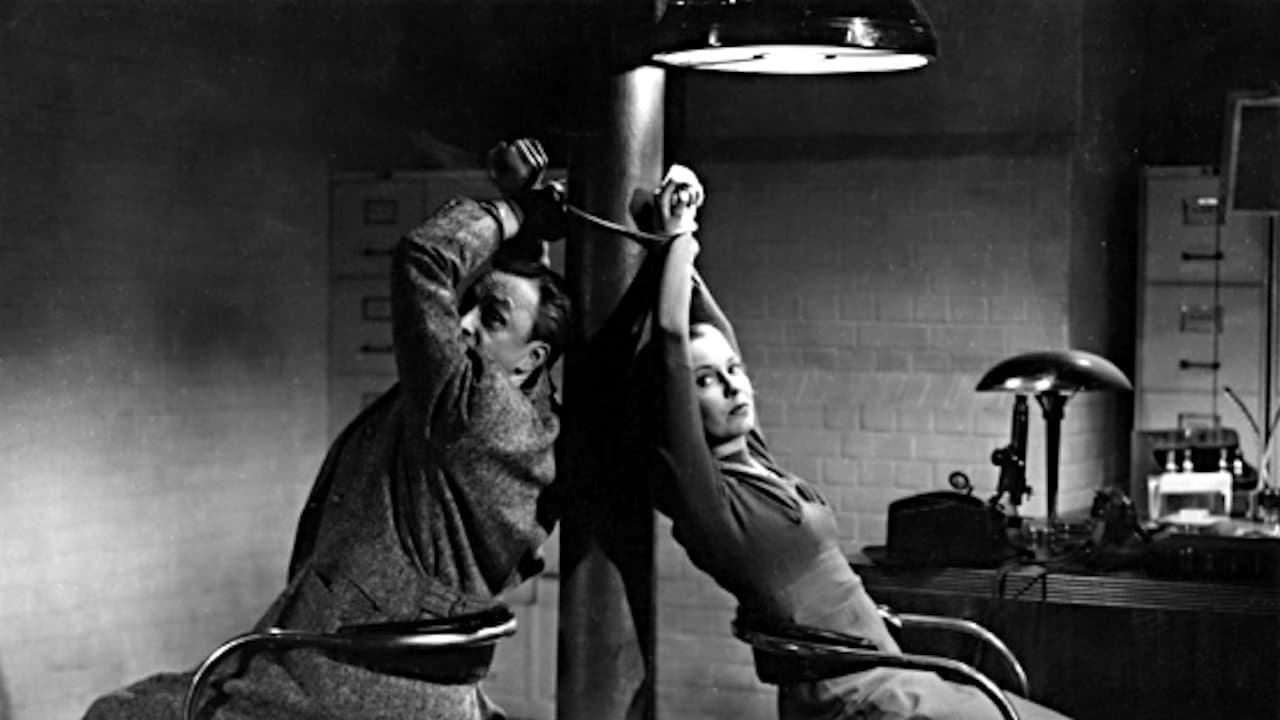
Contraband – scene
The Blacked-Out Restaurant Faces in the Dark

Freddie Young lights the restaurant sequence so that faces emerge from near-total blackness, the wartime blackout literalized as a compositional condition. The camera holds on mid-shots that flatten depth, forcing the viewer to read intention from the small available surface of illuminated skin and eye. Shadows do not fall dramatically as in American studio noir – they simply consume everything that the narrative has no use for, leaving only the essential geometry of the confrontation.

The scene does more than establish threat: it makes the point that wartime London has abolished the social contract of the visible. Anyone sitting across a table may be operating under a false identity. Andersen's stillness in the frame, his unwillingness to read the room as dangerous until the danger is literal, is the film's central character argument. The darkness is not atmosphere – it is condition.

Visual Language

The Cinematography

🎞️
Freddie Young – Director of Photography

Freddie Young, working here years before his collaborations with David Lean would make his reputation, applies a discipline to Contraband that suits both the wartime subject and the noir-adjacent material. He keeps the London location work and the studio interiors in a consistent tonal register, avoiding the high-contrast expressionism of American noir in favor of a more diffuse, environmental shadow – darkness that seeps rather than strikes. The blacked-out city sequences exploit available darkness rather than manufacturing it, giving the film an authenticity that studio-bound productions of the period often lack. Young's lens choices favor moderate focal lengths that keep figures in readable relation to their surroundings, which serves Powell's interest in social space as a field of menace. The moral logic of the cinematography is straightforward: in this film, what you cannot see is what will harm you, and Young ensures the frame never fully resolves its uncertainties.

In the Catalogue

Themes & Motifs

Availability

Where to Watch

Also in the Directory

See Also