Films People Pull a Fast One Night Beat Reading Room On TV Shop
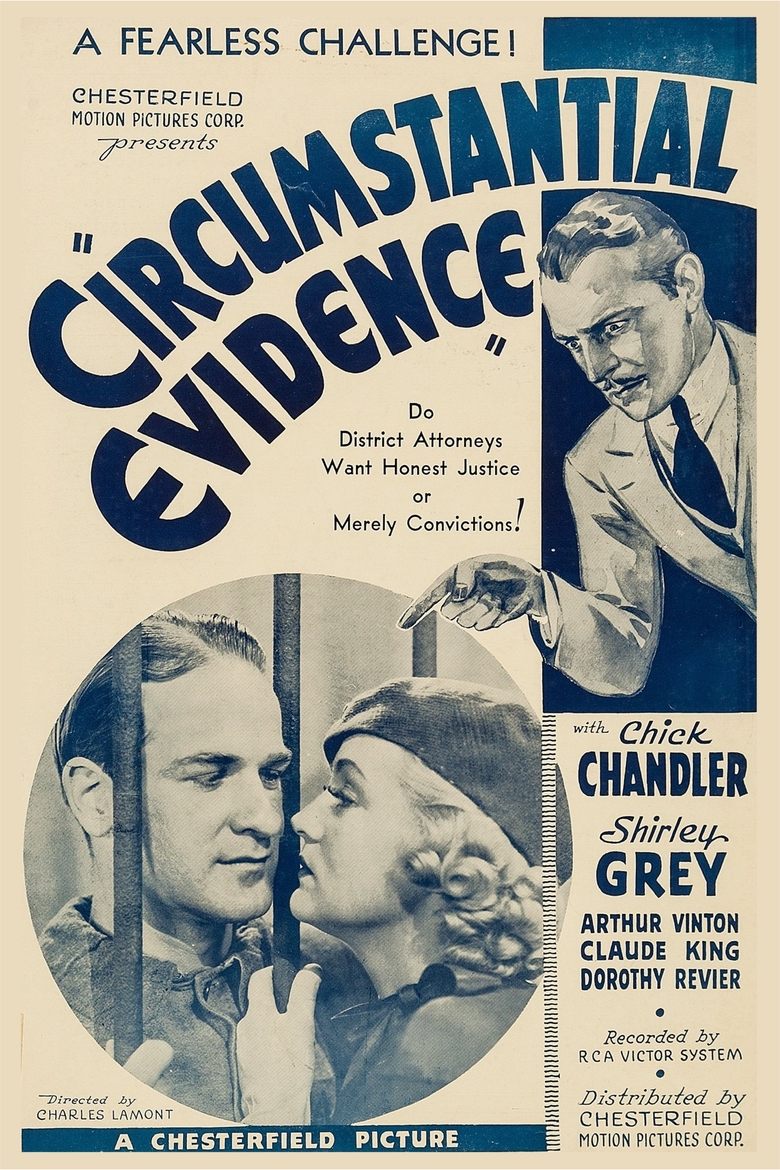
Circumstantial Evidence 1935
1935 Chesterfield Motion Pictures Corporation
★★★☆☆ Notable
Film Noir · 67 minutes · Black & White

Circumstantial Evidence

Directed by Charles Lamont
Year 1935
Runtime 67 min
Studio Chesterfield Motion Pictures Corporation
TMDB 6.2 / 10
"A man's past closes around him like a room with no doors."

Jim Baldwin, a newspaper reporter with a conscience and a record, finds himself entangled in a murder case that mirrors his own history with the law. When Ralph Winters, a wealthy and quietly corrupt figure, turns up dead, the evidence points with uncomfortable precision toward Baldwin – a man who had motive, opportunity, and the singular misfortune of being in the wrong place at the wrong time. Adrienne Grey, a woman whose loyalties remain opaque, drifts into Baldwin's orbit, her presence complicating whatever alibi he might otherwise construct.

Fred Stevens, a harder and more ruthless presence, moves through the investigation with purposes of his own, and as the police tighten their inquiry, the line between those who want the truth and those who want a conviction begins to blur. Bernice Winters, the dead man's wife, carries a grief that does not quite read as genuine, and the men around her – Spike Horton, George Malone, Harris – each hold a piece of the picture that no one is willing to surrender voluntarily.

Circumstantial Evidence operates within the wrongful-accusation framework that American crime cinema returned to repeatedly in the 1930s, using the legal system not as a guarantor of justice but as a mechanism that grinds impartially against the innocent and the guilty alike. The film's interest lies less in whodunit resolution than in the procedural pressure applied to a man who knows the truth and cannot make it legible to those with the power to destroy him.
Classic Noir

Circumstantial Evidence arrives from Chesterfield Motion Pictures Corporation, one of the more industrious of the Poverty Row studios, and it carries the hallmarks of that production context: a tight runtime, a functional rather than expansive visual grammar, and performers working efficiently within clearly defined types. Charles Lamont, better known later for Abbott and Costello comedies, handles the material with more restraint than his reputation might suggest, keeping the film moving without entirely sacrificing atmosphere to pace. What the film achieves, within its constraints, is a reasonably coherent argument about the unreliability of evidence – the way circumstance can be read selectively, and the way institutions designed to establish fact can instead calcify assumption. Chick Chandler brings a wiry, skeptical energy to Baldwin that suits the material, and the supporting cast populates the margins with the kind of moral ambiguity that the Poverty Row crime picture quietly specialized in. As a document of the era, the film reflects a Depression-period anxiety about the trustworthiness of official systems.

– Classic Noir
3 ★★★☆☆ Notable
Credits

The Crew

DirectorCharles Lamont
ScreenplayEwart Adamson
CinematographyM.A. Andersen
EditingRoland D. Reed
Art DirectionEdward C. Jewell
ProducerGeorge R. Batcheller
Performances

The Cast

Close Reading

The Signature Scene

Circumstantial Evidence – scene
The Interrogation Room Light Against the Suspect

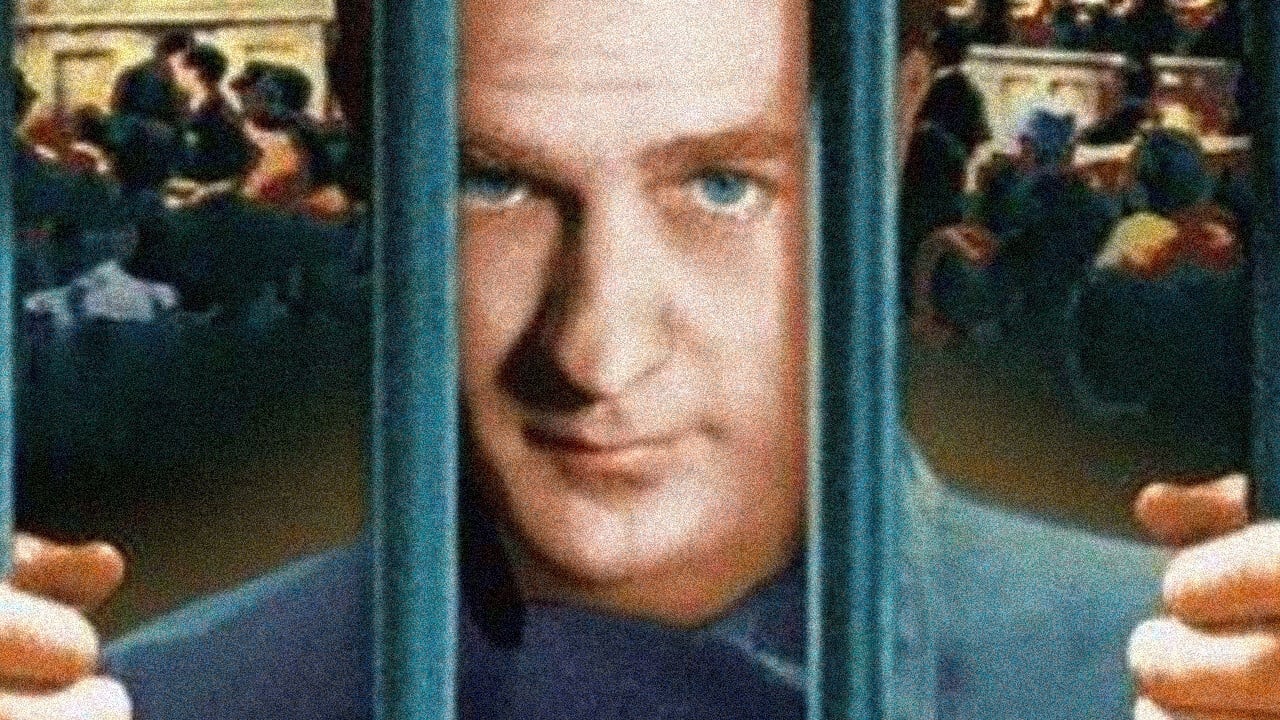
The camera holds Baldwin in medium shot, a single hard light source cutting across his face from a high angle while the interrogating officers remain in relative shadow at the frame's edges. Andersen's lighting refuses to glamorize the situation: the shadows are functional rather than expressionistic, pressing the geometry of the room onto Baldwin's features and leaving the background as a flat, institutional void. The composition places Baldwin at the center not as protagonist in command but as specimen under examination, the light doing the work of accusation.

The scene articulates the film's central argument without a word of dialogue carrying the weight: innocence, in this world, is no protection against the interpretive machinery of the state. Baldwin's face registers the specific exhaustion of a man who understands that the truth is insufficient currency in a room where the evidence has already been arranged against him. The wrongful-accusation noir depends on this moment – the instant in which the innocent man recognizes that his innocence is, institutionally, irrelevant.

Visual Language

The Cinematography

🎞️
M.A. Andersen – Director of Photography

M.A. Andersen's cinematography on Circumstantial Evidence reflects the disciplined economy that Poverty Row productions demanded and occasionally turned to advantage. Working within the constraints of limited studio space and compressed shooting schedules, Andersen relies on high-contrast key lighting and tight framing to generate a sense of claustrophobic pressure that a larger budget might have dissipated across more expansive setups. His lens choices favor close and medium distances, keeping the viewer inside the physical and psychological space of the scene rather than granting the relief of wider geography. Shadow work is purposeful rather than decorative: darkness falls where guilt is ambiguous, and the few scenes that open into brighter register tend to occur precisely when the narrative is most deceptive. This moral alignment of light with false clarity is the film's most coherent visual argument. The studio environments are rendered with a flatness that reads, under Andersen's key lighting, as institutional rather than merely low-budget – a distinction that quietly serves the film's interest in systems that process human beings without warmth.

In the Catalogue

Themes & Motifs

Availability

Where to Watch

Also in the Directory

See Also