Films People Pull a Fast One Night Beat Reading Room On TV Shop
Brute Force 1947
1947 Mark Hellinger Productions
★★★★☆ Recommended
Film Noir · 98 minutes · Black & White

Brute Force

Directed by Jules Dassin
Year 1947
Runtime 98 min
Studio Mark Hellinger Productions
TMDB 7.3 / 10
"Inside Westgate Prison, the only law that holds is the one men make with their fists."

In Westgate Prison, Joe Collins (Burt Lancaster) leads a cell block of men defined less by their crimes than by the women who haunt their memories. Through a series of flashbacks – each prisoner's private history given its own light and register – the film establishes the human cost that has landed these men in the same iron corridor. Collins is single-minded: he intends to break out, and he will bring his cellmates with him or die in the attempt. His stated reason is Ruth (Ann Blyth), a woman on the outside who is ill and dependent on him.

Standing between Collins and any exit is Captain Munsey (Hume Cronyn), the head of prison security, a man who has organized the institution around his own sadistic authority. Munsey is precise where Collins is physical; he governs through fear, informants, and punishment detail at the drainpipe – a labor assignment that functions as a slow death sentence. The prison's nominal doctor (Art Smith) drinks himself toward silence, while Gallagher (Charles Bickford), the unofficial moral conscience of the yard, counsels patience Collins cannot afford. Allegiances inside the walls are tested by Munsey's recruitment of informers, and the escape plan begins to fracture before it can be executed.

Brute Force belongs to the cycle of postwar American prison films that used confinement as a structural metaphor for social coercion, but it pushes further than most toward an explicitly political reading of institutional violence. Dassin frames the prison not as an aberration from society but as its concentrated expression, and the film's trajectory – shaped equally by Miklós Rózsa's portentous score and the accumulated weight of the men's backstories – moves toward a conclusion that refuses easy heroism. The film asks what force costs the man who uses it, and whether survival and dignity can occupy the same space.
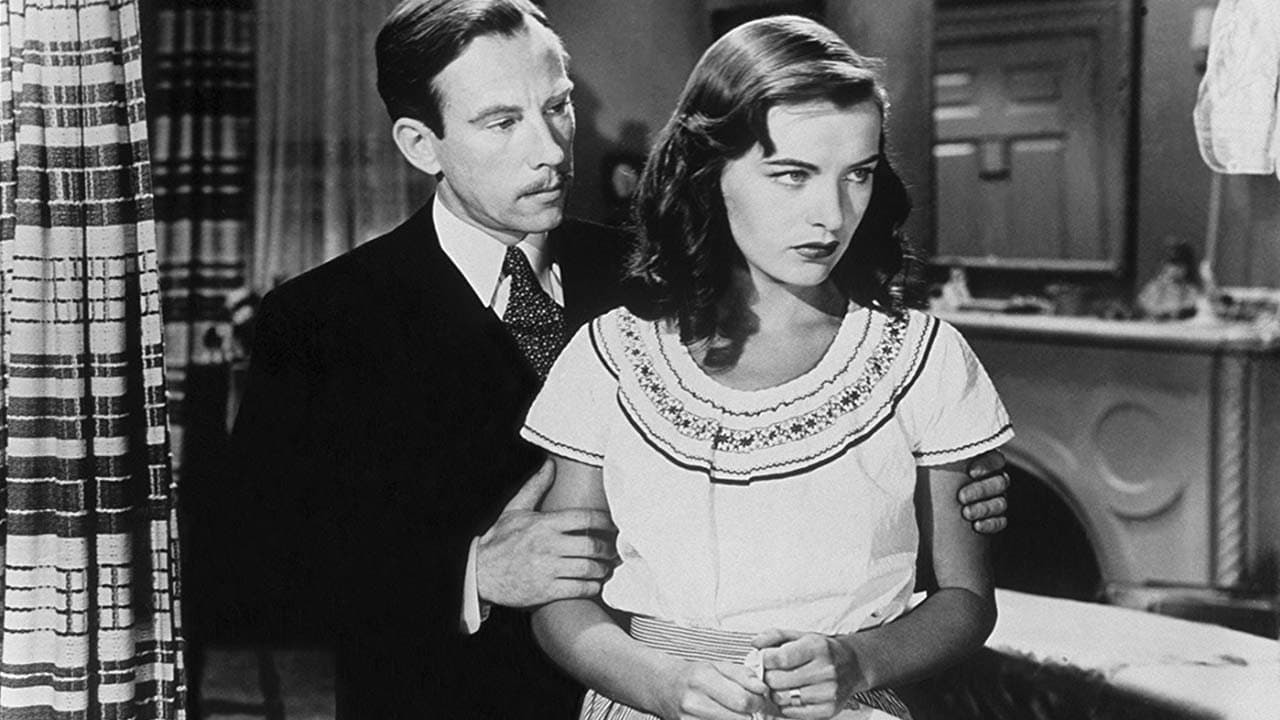
Classic Noir

Brute Force represents Jules Dassin working at full extension within the studio system, and the tension between institutional constraint and raw subject matter is precisely what gives the film its charge. Produced by Mark Hellinger – who had commissioned The Killers the year before – it channels postwar disillusionment into a prison setting stripped of rehabilitation mythology. Hume Cronyn's Munsey is the film's true center of gravity: a bureaucrat of cruelty who listens to Wagner while conducting an interrogation, he embodies the period's anxiety about authority's appetite for itself. Burt Lancaster, still new to film, brings a physical directness that makes Collins sympathetic without softening him. William H. Daniels's cinematography and Rózsa's score collaborate to create a pressure that never fully releases. The flashback structure, sometimes criticized as digressive, is in fact the film's moral argument: these men are not abstractions of crime but accumulations of circumstance. Dassin would be blacklisted within three years; Brute Force reads differently knowing what was coming.

– Classic Noir
4 ★★★★☆ Recommended
Credits

The Crew

DirectorJules Dassin
ScreenplayRichard Brooks
CinematographyWilliam H. Daniels
MusicMiklós Rózsa
EditingEdward Curtiss
Art DirectionJohn DeCuir
CostumesRosemary Odell
ProducerMark Hellinger
Performances

The Cast

Close Reading

The Signature Scene

Brute Force – scene
The Drainpipe Detail Men Working Toward Nothing

Daniels shoots the drainpipe sequence in hard, unmodulated light that offers no shadows to rest in. The frame holds the labor as pure duration – men moving mud under a sky that provides no horizon. The camera stays at a middle distance that refuses both heroic close-up and the detachment of a wide establishing shot, positioning the viewer in the uncomfortable register of witness. When a prisoner falters, the guards fill the frame's edge without urgency, their presence a structural fact rather than a dramatic event.

The sequence makes the argument the film has been constructing: punishment at Westgate is not corrective but consumptive. Munsey does not need these men broken in any useful sense – he needs them diminished, which is a different project entirely. Collins watching from the yard understands this distinction before he can articulate it, and his resolve to escape hardens not from hope but from the recognition that endurance here is its own form of defeat.

Visual Language

The Cinematography

🎞️
William H. Daniels – Director of Photography

William H. Daniels brings to Brute Force a lighting grammar built around constriction. Working largely on studio-constructed sets that replicate Westgate's cell blocks and corridors, Daniels uses low-key setups that push shadow into the vertical space of the frame – walls and ceilings absorbing light rather than reflecting it, so that the men occupy a perpetual penumbra. His lens choices favor moderate focal lengths that hold the ensemble in the same plane without the distortion that might aestheticize the violence. Where the flashback sequences unfold, Daniels shifts register deliberately: the women's spaces are lit with a softer gradation, not to sentimentalize memory but to mark its distance from the present tense of the prison. The contrast is moral as much as photographic. In the climactic sequences, the light fractures into direct, almost documentary sources – fire, spotlights, bare bulbs – stripping the frame of any remaining atmosphere and leaving action exposed on its own terms.

In the Catalogue

Themes & Motifs

Availability

Where to Watch

Also in the Directory

See Also