Films People Pull a Fast One Night Beat Reading Room On TV Shop
Breaking Point 1950
1950 Warner Bros. Pictures
★★★★☆ Recommended
Film Noir · 97 minutes · Black & White

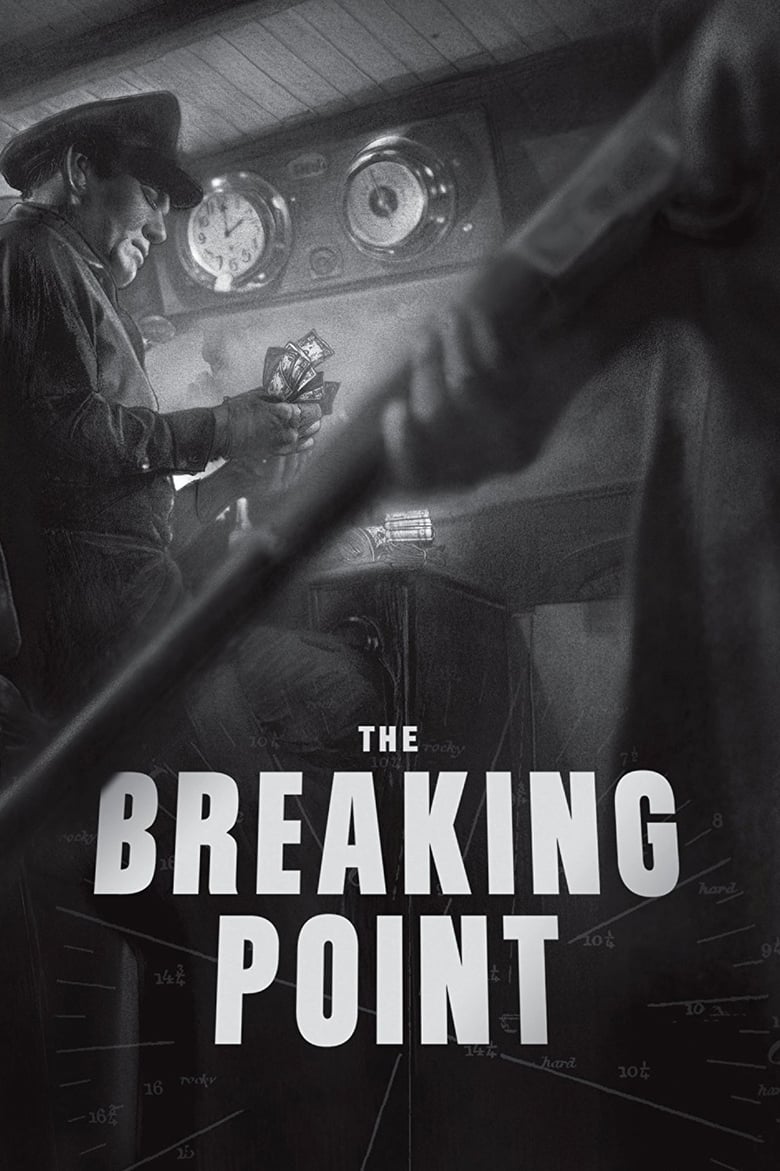
Breaking Point

Directed by Michael Curtiz
Year 1950
Runtime 97 min
Studio Warner Bros. Pictures
TMDB 7.1 / 10
"A man with a boat and debts finds that the sea offers no clean escape."

Harry Morgan is a Korean War veteran running a charter fishing boat out of a California coastal town, scraping to keep his vessel and support his wife Lucy and their two daughters. When a client skips out on a sizable fare, Harry is left broke and behind on payments. A chance encounter with Leona Charles, a cool, self-possessed woman with few illusions about men or money, offers a temporary distraction from the pressure closing in on him.

Desperate for income, Harry agrees to ferry a group of men across the border, only to learn too late that his passengers are criminals with no intention of leaving witnesses. His mechanic and close friend Wesley Park is drawn into the same current of danger, and the loyalties Harry holds – to his family, to Leona, to his own diminished sense of integrity – are placed in direct conflict. The criminal operator Hannagan, representing the kind of syndicate muscle that preys on men already cornered, tightens the arrangement until Harry has almost no room to maneuver.

Adapted from Ernest Hemingway's novel To Have and Have Not, Breaking Point discards the romantic adventure tone of the 1944 Warner Bros. film in favor of a harder, more economical fatalism. Curtiz and screenwriter Ranald MacDougall situate Harry's choices within the specific economic anxieties of postwar America, where a man's self-reliance and his capacity for moral compromise become two sides of the same coin. The film belongs to the strand of social-realist noir that treats criminality not as aberration but as the predictable outcome of a system that leaves working men with diminishing margins.
Classic Noir

Breaking Point occupies an undervalued position in the Warner Bros. noir cycle, in part because its 1944 predecessor cast a long shadow, and in part because John Garfield's career was already under pressure from the blacklist when the film was released. Yet Curtiz's picture earns its place on its own terms. The script by Ranald MacDougall strips Hemingway's source material of its expatriate glamour and replants it in a recognizably postwar American landscape of debt, dislocation, and eroding masculine self-sufficiency. Garfield, never an actor who performed vulnerability from a safe distance, gives Harry Morgan a quality of trapped intelligence – a man who sees clearly what is happening to him and cannot stop it. Juano Hernández's Wesley Park is rendered with a dignity unusual for the period, and his fate carries the film's sharpest moral charge. Patricia Neal brings a watchful economy to Leona that refuses sentimentality. The film's argument – that economic desperation and institutional indifference produce violence as reliably as any criminal intent – lands with a precision that has not dated.

– Classic Noir
4 ★★★★☆ Recommended
Credits

The Crew

DirectorMichael Curtiz
ScreenplayRanald MacDougall
CinematographyTed D. McCord
MusicMax Steiner
EditingAlan Crosland, Jr.
Art DirectionEdward Carrere
ProducerJerry Wald
Performances

The Cast

Close Reading

The Signature Scene

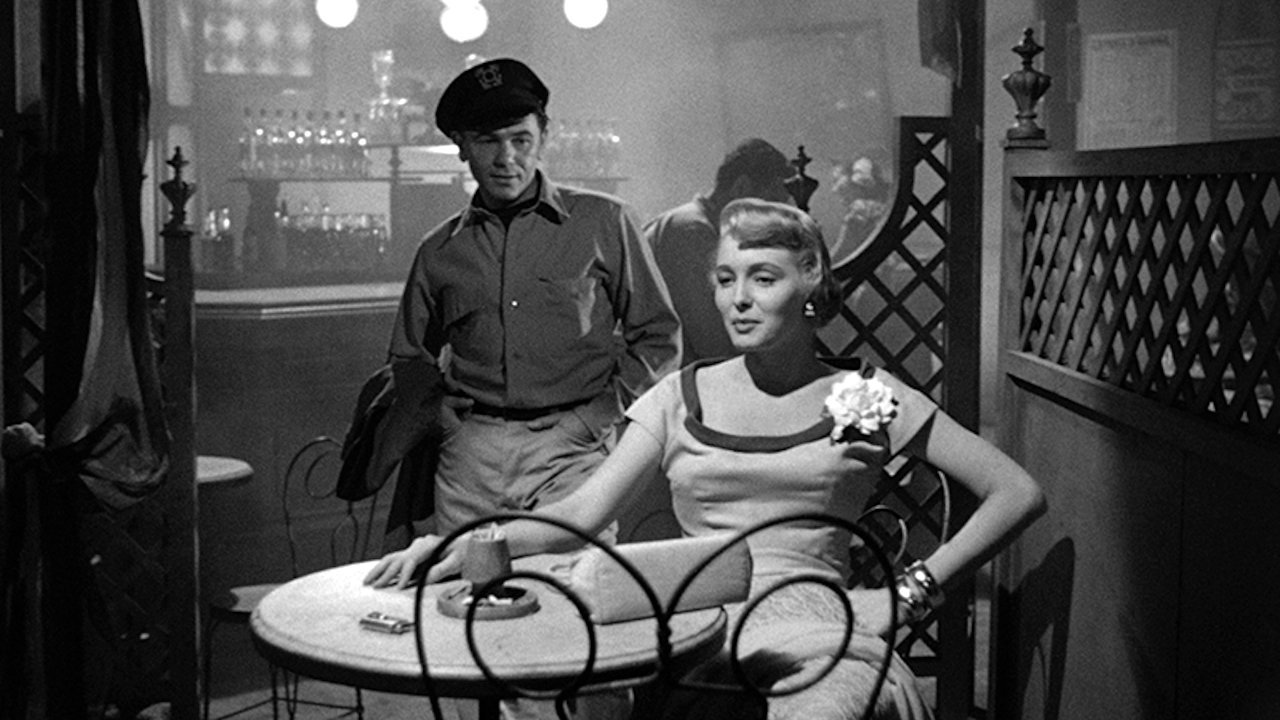
Breaking Point – scene
The Boat Deck, Final Approach One Hand on the Wheel

Ted D. McCord frames Harry at the helm of the damaged boat from a low angle that emphasizes the flat, bleached sky above him and the indifferent expanse of water below. The light is unsparing – high and diffuse, the kind that erases shadows and leaves a man with nowhere to hide on deck. The frame is largely empty of other human presence, which is precisely the point: McCord holds the composition steady as the boat moves toward shore, the horizon line bisecting the image with a geometry that feels less like natural beauty than like a closing parenthesis.

The scene concentrates the film's central argument into a single sustained image. Harry has lost the thing he tried hardest to protect, and the boat – mortgaged, damaged, implicated – is no longer a symbol of independence but its ruins. Curtiz does not score the moment for pathos. The camera simply watches, and in that refusal of comfort lies the film's most honest statement about what postwar self-reliance actually costs a man who never had enough margin to absorb a single serious mistake.

Visual Language

The Cinematography

🎞️
Ted D. McCord – Director of Photography

Ted D. McCord's work on Breaking Point operates within the Warner Bros. tradition of location-inflected realism while pressing against its conventions. McCord photographs the coastal California setting with a preference for flat, high-key exterior light that strips away the expressionist shadow play more commonly associated with noir, replacing atmosphere with exposure – a choice that suits a story about a man with nothing left to conceal. On the water, he uses medium focal lengths that keep Harry in his environment rather than isolating him against it, reinforcing the film's insistence that circumstance, not character flaw alone, is the engine of destruction. Interior scenes aboard the boat and in dockside spaces are lit with practical-source logic: overhead light that flattens faces, windows that backlight without flattering. The result is a visual grammar that aligns with the film's social-realist ambitions, making violence and loss feel less like fate delivered from above than like the ordinary conclusion of ordinary financial pressure.

In the Catalogue

Themes & Motifs

Availability

Where to Watch

Also in the Directory

See Also