Films People Pull a Fast One Night Beat Reading Room On TV Shop
Beast of the City 1932
1932 Metro-Goldwyn-Mayer
★★★☆☆ Notable
Film Noir · 86 minutes · Black & White

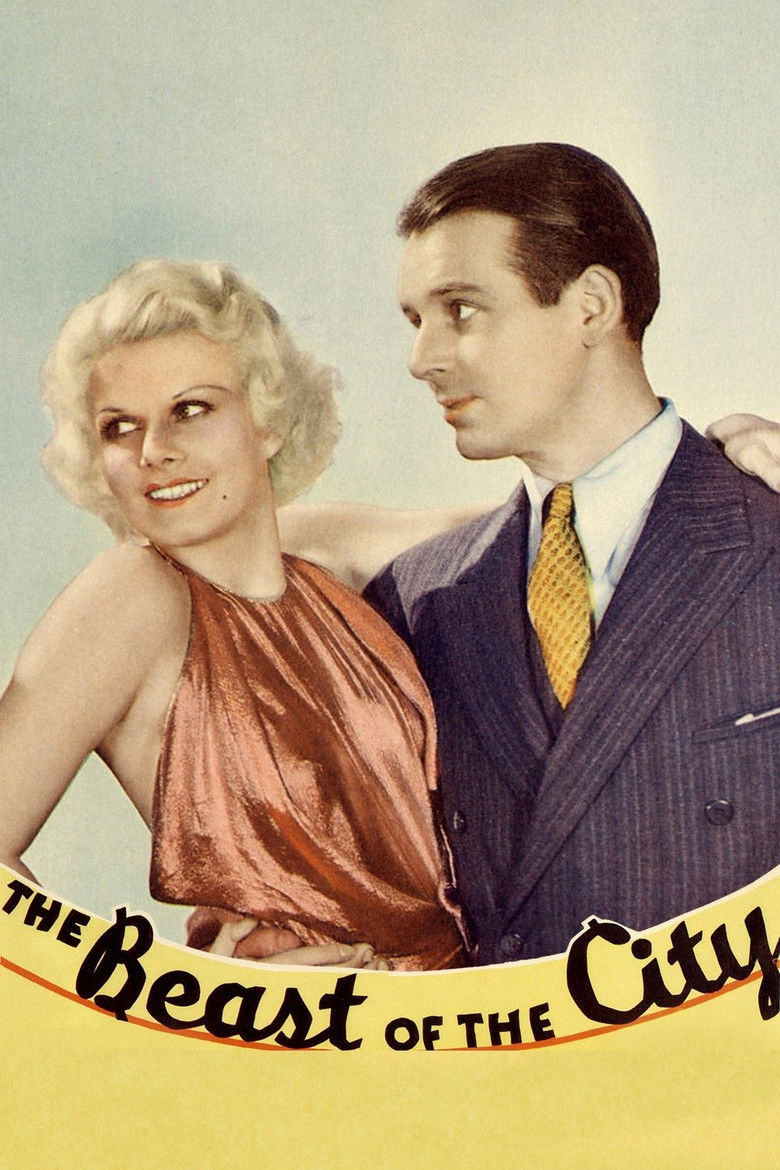
Beast of the City

Directed by Charles Brabin
Year 1932
Runtime 86 min
Studio Metro-Goldwyn-Mayer
TMDB 6.0 / 10
"A cop who will not bend meets a city that will not break."

Captain James Fitzpatrick – known on the street as Fighting Fitz – is a career police officer who has spent years trying to crack the criminal empire of Sam Belmonte, a mob boss whose lawyers and political connections have made him effectively untouchable. When Fitzpatrick's aggressive tactics embarrass the department, he is transferred to a quiet precinct, sidelined by a system more comfortable with accommodation than confrontation. His wife Mary keeps the household together while Fitzpatrick nurses his conviction that the law, used honestly, can still mean something.

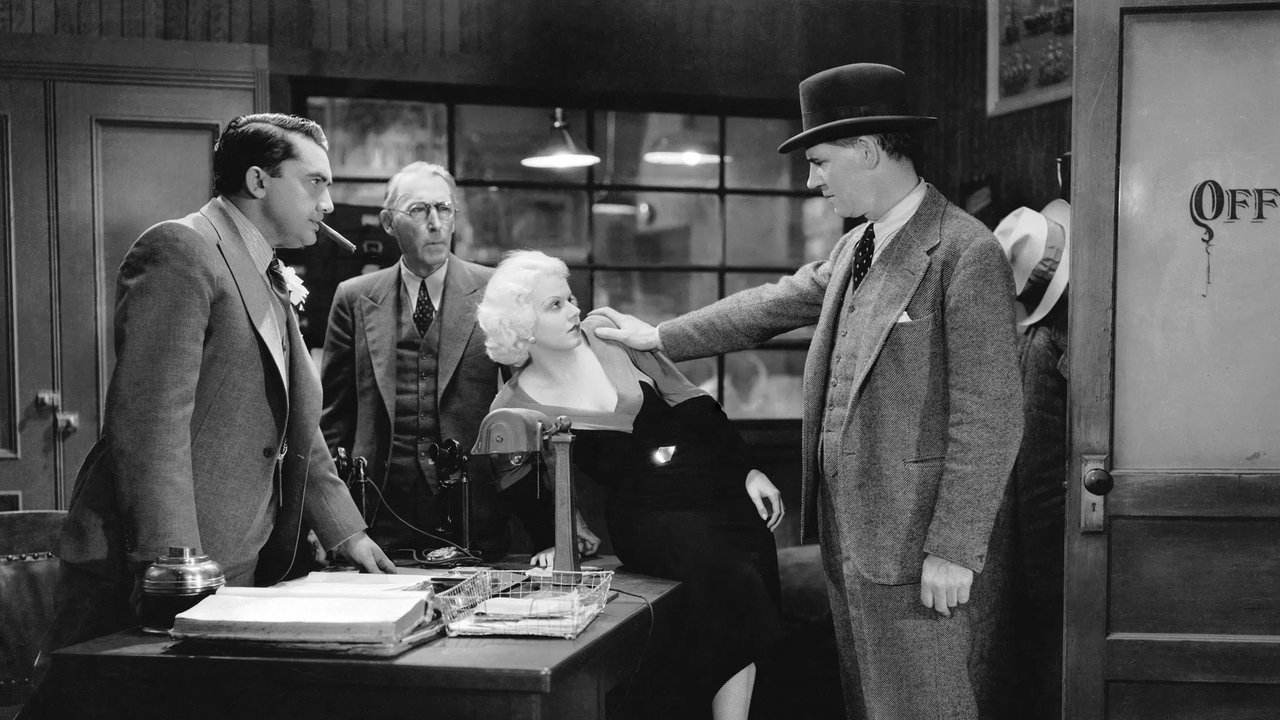
The complication arrives through Fitzpatrick's younger brother Ed, a detective drawn into Belmonte's orbit by way of Daisy Stevens, a calculating woman who moves between the criminal world and anyone useful to it. Ed's infatuation compromises him professionally and personally, placing him in direct opposition to everything his brother stands for. As Belmonte's syndicate tightens its grip on the city and a new police chief gives Fitzpatrick unexpected authority, the conflict between institutional corruption and individual conscience moves toward a violent, irrevocable confrontation.

Beast of the City belongs to the early-talkie cycle of police procedurals that predates the Production Code's full enforcement, drawing on the gangster cycle of the same period while insisting – somewhat against the grain – on the legitimacy of law enforcement as a moral force. The film's interest lies less in conventional noir fatalism than in the tension between institutional idealism and personal weakness, a tension the screenplay refuses to resolve without cost to every principal involved.
Classic Noir

Beast of the City occupies an instructive position at the junction of the gangster film and what would later be codified as police noir. Released in 1932 with a preface endorsing the film attributed to President Hoover, it carries the weight of civic anxiety: Prohibition-era crime as a systemic failure of urban governance, not merely individual moral collapse. Charles Brabin directs with efficiency rather than flair, but the film earns its place in the genre by refusing easy heroism. Walter Huston's Fitzpatrick is principled to the point of rigidity, and the film understands that rigidity as its own kind of vulnerability. Jean Harlow, in a performance that undercuts her comedic image, functions as an instrument of institutional rot – not a femme fatale in the classical sense, but a woman whose loyalties are purely transactional. The film's climactic sequence anticipates the nihilistic finales of later noir by refusing to separate the guilty from the righteous in its body count. What it reveals about its era is the degree to which American public culture needed to believe in the honest cop precisely because such a figure was so difficult to locate in fact.

– Classic Noir
3 ★★★☆☆ Notable
Credits

The Crew

DirectorCharles Brabin
ScreenplayW.R. Burnett
CinematographyNorbert Brodine
EditingAnne Bauchens
Art DirectionCedric Gibbons
CostumesAdrian
ProducerHunt Stromberg
Performances

The Cast

Close Reading

The Signature Scene

Beast of the City – scene
The Ambush at Belmonte's Compound All Guns, No Mercy

Brodine frames the sequence in tight, claustrophobic interiors that open suddenly into exposed space, denying both characters and viewer any stable refuge. Light sources are hard and directional – practical lamps and muzzle flash in the darkness – throwing faces into half-relief and reducing bodies to silhouettes at the critical moment. The camera holds steady where another film might cut away, allowing the accumulation of violence to register without editorializing, each figure occupying a fixed position in the frame until they do not.

What the sequence argues, visually and structurally, is that the line between law and criminality has become a matter of method rather than morality. Fitzpatrick and Belmonte's men occupy the same darkness, use the same weapons, and are destroyed by the same logic. The scene does not celebrate its violence; it exhausts it, and in doing so delivers the film's central proposition – that a city capable of producing Belmonte is also capable of producing the conditions that destroy the men sent to stop him.

Visual Language

The Cinematography

🎞️
Norbert Brodine – Director of Photography

Norbert Brodine's photography on Beast of the City reflects the transitional state of Hollywood cinematography in the early sound era – still partly constrained by the noise and immobility of early recording equipment, yet reaching toward the expressive shadow work that would define noir a decade later. Brodine favors high-contrast lighting that separates subjects sharply from their environments, using deep shadows in Belmonte's interiors to communicate moral opacity without recourse to elaborate set design. His treatment of Harlow is notably unsentimental: where other cinematographers of the period softened her in diffused glamour light, Brodine frequently places her in harder, more revealing illumination, consistent with the film's refusal to romanticize her character's function. Exterior sequences shot on studio-constructed street sets gain credibility through low-angle compositions that emphasize wet pavement and architectural geometry over human scale. The cumulative visual effect supports the film's argument that the urban environment itself is an antagonist – indifferent to the distinction between the lawful and the criminal.

In the Catalogue

Themes & Motifs

Availability

Where to Watch

Also in the Directory

See Also