Films People Pull a Fast One Night Beat Reading Room On TV Shop
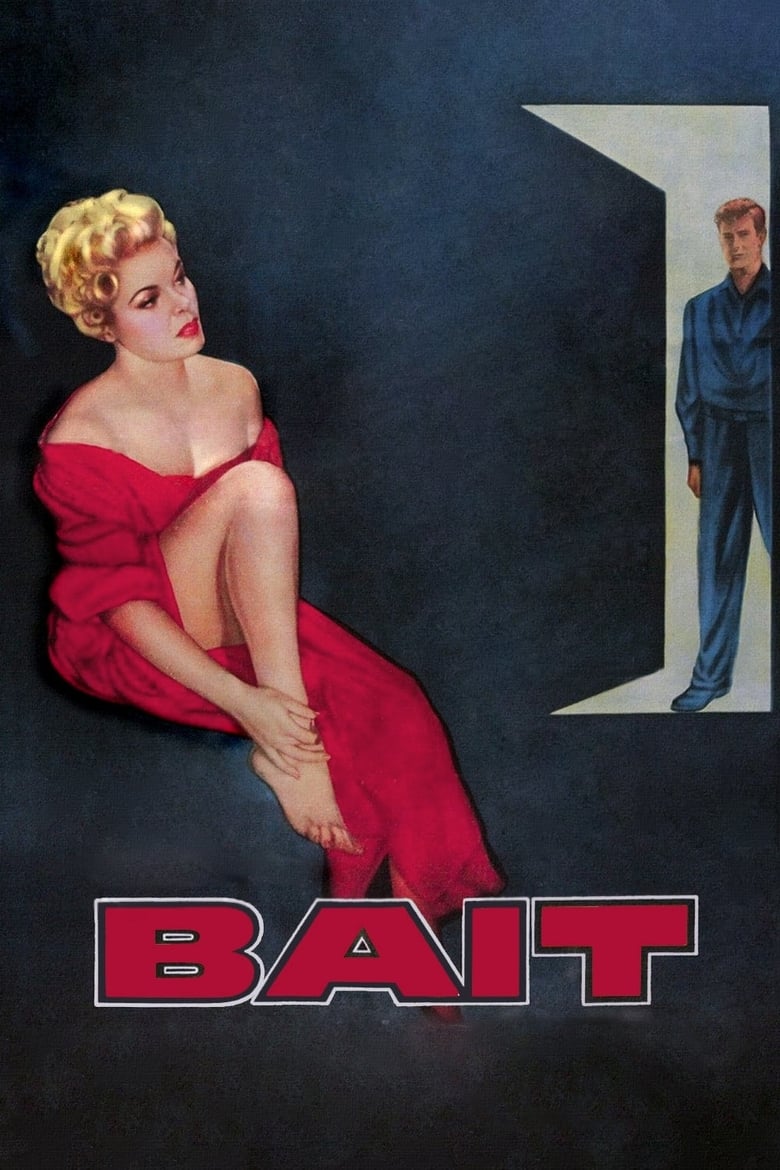
Bait 1954
1954 Hugo Haas Productions
★★★☆☆ Notable
Film Noir · 79 minutes · Black & White

Bait

Directed by Hugo Haas
Year 1954
Runtime 79 min
Studio Hugo Haas Productions
TMDB 5.4 / 10
"A old man's gold draws a young man's greed, and a woman stands between them like a lit fuse."

In the sun-baked desert of the American Southwest, aging prospector Marco (Hugo Haas) strikes a modest gold claim and, lonely and susceptible, falls for Peggy (Cleo Moore), a hard-edged young woman with ambitions that exceed her affection for him. Marco marries her, bringing her to the isolated claim with more hope than judgment, aware on some level that youth and beauty rarely come without a price.

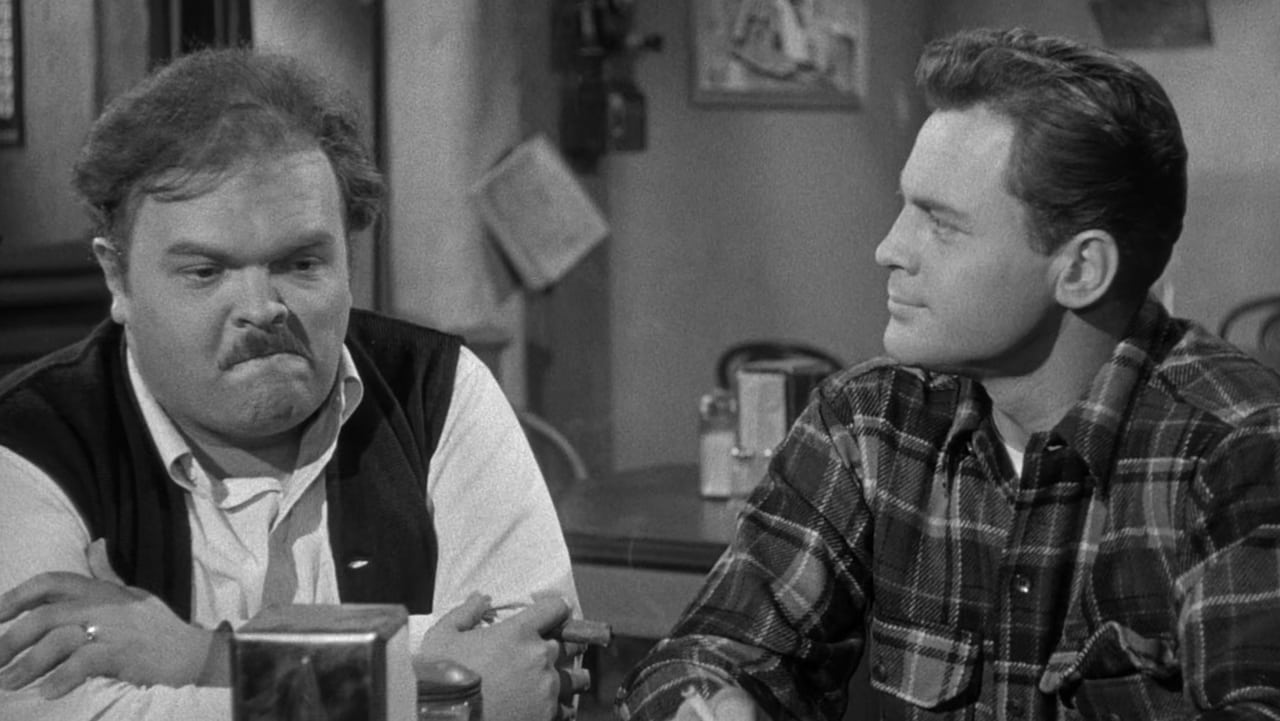
Ray Brighton (John Agar), a younger man drifting through the territory, arrives and is drawn into Marco's world, first as a hired hand and then as Peggy's quiet obsession. The two begin an affair, and Peggy, calculating and impatient, presses Ray toward the idea of taking Marco's gold outright. Ray is neither fully willing nor fully resistant, and the triangle tightens around all three of them as greed and desire crowd out whatever decency he might have retained.

Bait operates as a stripped-down moral fable rather than a conventional crime picture, using the desert setting to isolate its characters and amplify their worst impulses. The film belongs to the low-budget independent noir cycle of the early 1950s, where filmmakers with limited resources compensated with directness and a willingness to push at the limits of the Production Code, particularly in its treatment of female sexuality and male weakness.
Classic Noir

Hugo Haas made a career in the early 1950s of producing, directing, and starring in low-budget noirs that recycled a single obsessive template: an older, often European man undone by a younger woman of questionable motive. Bait is one of the more formally coherent entries in that cycle. What distinguishes it is not sophistication but honesty – Haas does not obscure the pathology of Marco's desire, and he casts himself without vanity, allowing the audience to read the character's self-deception clearly. Cleo Moore, frequently dismissed by critics of the period, brings a specific physical and emotional register to Peggy that the film requires: she is neither a simple predator nor a victim of circumstance, but something more uncomfortable. John Agar's Ray functions as a weak center, and the film understands that weakness as a moral condition rather than a dramatic failure. For students of independent noir production, Bait is a useful index of how genre conventions could be reworked on minimal budgets while retaining genuine thematic weight.

– Classic Noir
3 ★★★☆☆ Notable
Credits

The Crew

DirectorHugo Haas
ScreenplaySamuel W. Taylor
CinematographyEddie Fitzgerald
MusicVáclav Divina
EditingRobert S. Eisen
Art DirectionWilliam Glasgow
ProducerHugo Haas
Performances

The Cast

Close Reading

The Signature Scene

Bait – scene
The Mine Shaft, Night Gold Light, Wrong Hands

Eddie Fitzgerald lights the interior of the mine shaft with a single hard source positioned low and to the left, casting deep lateral shadows along the rough-cut walls and reducing the faces of the characters to half-lit planes. The camera holds at a medium distance, refusing close-ups that might invite sympathy, and the composition places Marco in the middle ground while Ray and Peggy occupy the frame's edges, spatially enacting the dynamic that the script has been building toward. Fitzgerald's use of available-seeming light in what is almost certainly a studio construction gives the scene an airless, claustrophobic quality that no exterior location could have provided.

The scene functions as the film's moral fulcrum. Marco is surrounded by the gold he has worked for, which the frame renders not as wealth but as trap – the light that catches the ore is the same light that exposes the faces of the two people who intend to take it from him. Haas's performance in this moment is deliberately opaque; it is unclear whether Marco understands what is happening, and that ambiguity is the film's central argument about desire and willful blindness.

Visual Language

The Cinematography

🎞️
Eddie Fitzgerald – Director of Photography

Eddie Fitzgerald shot Bait on a constrained schedule and budget typical of independent productions released through small distributors in the early 1950s, and the visual language he developed with Haas reflects those constraints without being diminished by them. Working largely on studio-built sets dressed to suggest desert interiors and open-country exteriors, Fitzgerald relies on hard single-source lighting and strong shadow geometry to establish mood in lieu of production design. His lens choices tend toward the standard to slightly longer end, flattening space modestly and keeping characters in frames that feel closed rather than open, reinforcing the sense of entrapment that the narrative requires. The desert exteriors, when used, are shot with high contrast to drain them of warmth, making the landscape hostile rather than picturesque. Shadow work on Moore is particularly consistent: Fitzgerald repeatedly splits her face between light and dark in a way that visually encodes her character's divided allegiance without underscoring it. The cinematography does not call attention to itself, which is precisely its function in a film that depends on moral legibility over stylistic display.

In the Catalogue

Themes & Motifs

Availability

Where to Watch

Also in the Directory

See Also