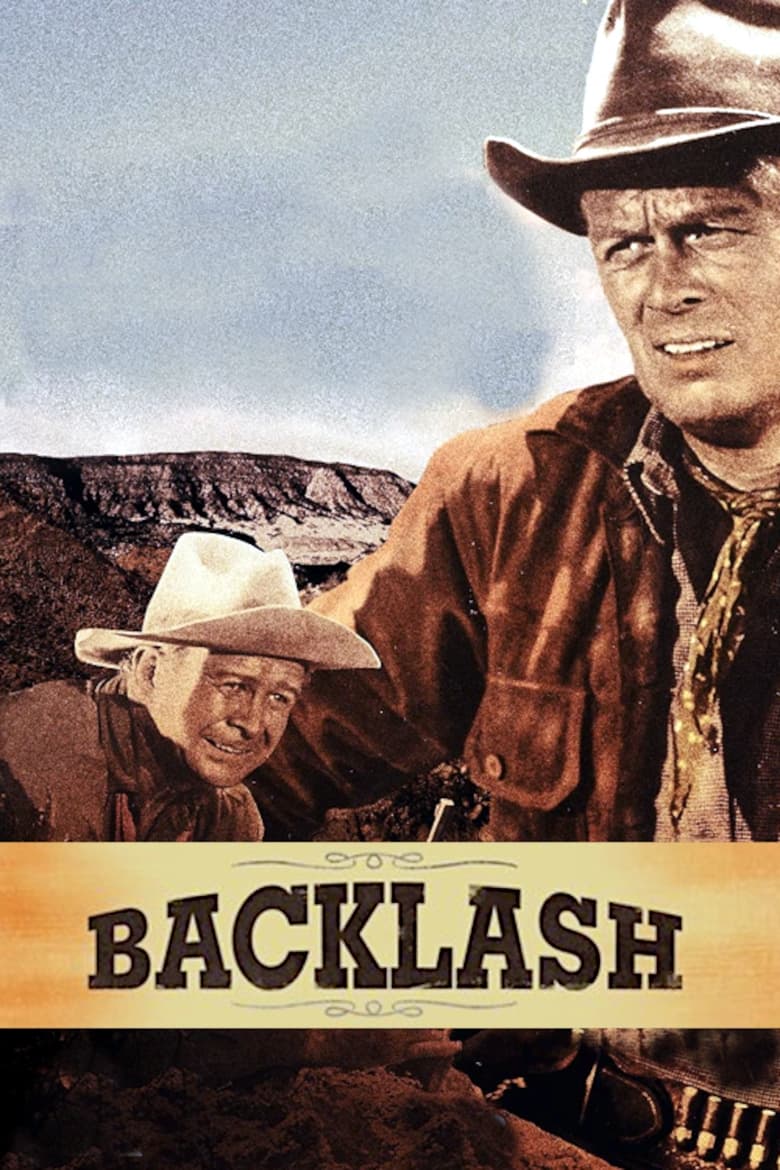
Jim Slater (Richard Widmark) arrives in the Arizona Territory consumed by a single purpose: to find the one survivor of a Apache massacre that claimed five men, including – he believes – his father. The survivor walked away with a cache of gold, and Slater intends to trace that gold to the man who abandoned the others to die. His pursuit brings him into contact with Karyl Orton (Donna Reed), a woman moving through the same territory with a motive she is slow to disclose, and whose composure under pressure suggests she knows more than she admits.
As Slater closes in on the truth, the investigation fractures into competing claims and concealed identities. The outlaw Johnny Cool (William Campbell) and the Welker brothers complicate the trail with violence and self-interest, while a former lawman, Bonniwell (John McIntire), emerges as a figure whose past intersects with the massacre in ways that gradually reframe everything Slater thought he knew. The gold becomes secondary to the question of identity – specifically, who Slater's father actually was.
Backlash operates at the intersection of the Western and noir, using the open landscape of the Southwest to externalize an inward drama of inheritance, deception, and the cost of knowledge. The revelation Slater ultimately confronts is the kind noir reserves for its most structurally precise stories: the answer to the question he has been asking destroys the premise on which he asked it.
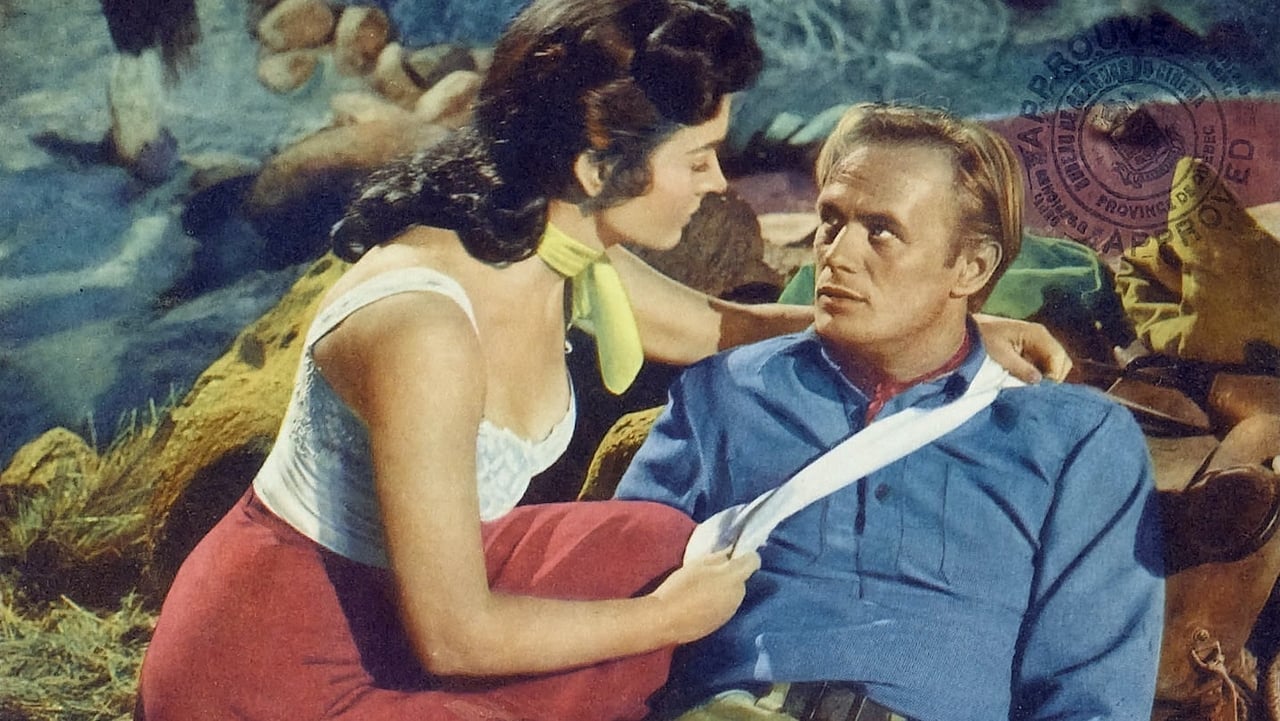
Backlash arrives at the mid-decade point when the psychological Western and noir were borrowing so freely from each other that the distinction had become largely administrative. John Sturges, working two years before The Magnificent Seven consolidated his reputation, directs with the economy that marks his best work: no scene runs longer than its function requires, and the Arizona locations are treated as moral terrain rather than spectacle. Widmark brings his characteristic tautness to Slater – a man whose certainty contracts as the evidence expands – and John McIntire's performance in the pivotal supporting role is a model of deliberate understatement. What the film achieves, within an 84-minute frame, is a credible noir transposition: the hidden identity, the compromised past, and the revelation that corrupts rather than liberates. It does not rank with the decade's essential noirs, but it handles its central conceit with more discipline than the genre usually demands of its Westerns.
– Classic Noir
Irving Glassberg frames the confrontation inside the mine's partial darkness, letting the exterior light from the shaft entrance cut a hard diagonal across the figures rather than illuminating them evenly. Widmark stands closer to that light; McIntire remains in the middle ground where the shadows are softer and less decisive. The camera holds at a medium distance, denying the audience the close-up that would conventionally signal the emotional peak, so that what the characters say must carry the weight the composition withholds.
The staging encodes the scene's argument about knowledge: Slater stands in light he cannot use, because the information arriving with it unmakes the identity he came to defend. McIntire's position in the indeterminate zone between light and shadow is not incidental – it mirrors the moral status of a man who is simultaneously the answer Slater sought and proof that the question was built on false ground. The scene is the film's thesis made spatial.
Irving Glassberg's work on Backlash reflects the particular challenge of shooting noir logic against daylit Western landscape – a problem that cannot be solved by the low-key studio setups that were standard noir grammar. Glassberg's response is to find interior spaces – mine shafts, canyon walls, shadowed interiors of frontier buildings – where he can reassert directional light and controlled contrast. On location, he keeps the sun high and lateral where possible, using it to carve faces rather than illuminate them flatly. His lens choices favor moderate focal lengths that compress the desert middle ground, preventing the landscape from becoming merely picturesque and keeping figures in a spatial relationship that feels pressurized rather than expansive. The moral logic of the story – identity concealed, revelation corrosive – is served by a visual scheme that consistently refuses easy legibility. Faces are not well-lit when they tell the truth; they are well-lit when they are still concealing it.
Tubi has carried Backlash in its classic Western and noir rotation; no subscription required, though availability should be confirmed before viewing.
Amazon Prime VideoRentalAvailable for digital rental in standard definition; a reliable fallback when free streaming options are unavailable.
TCMSubscriptionTCM periodically programs Backlash alongside Widmark retrospectives and mid-decade Universal noirs; check the schedule for broadcast and on-demand access via the TCM app.