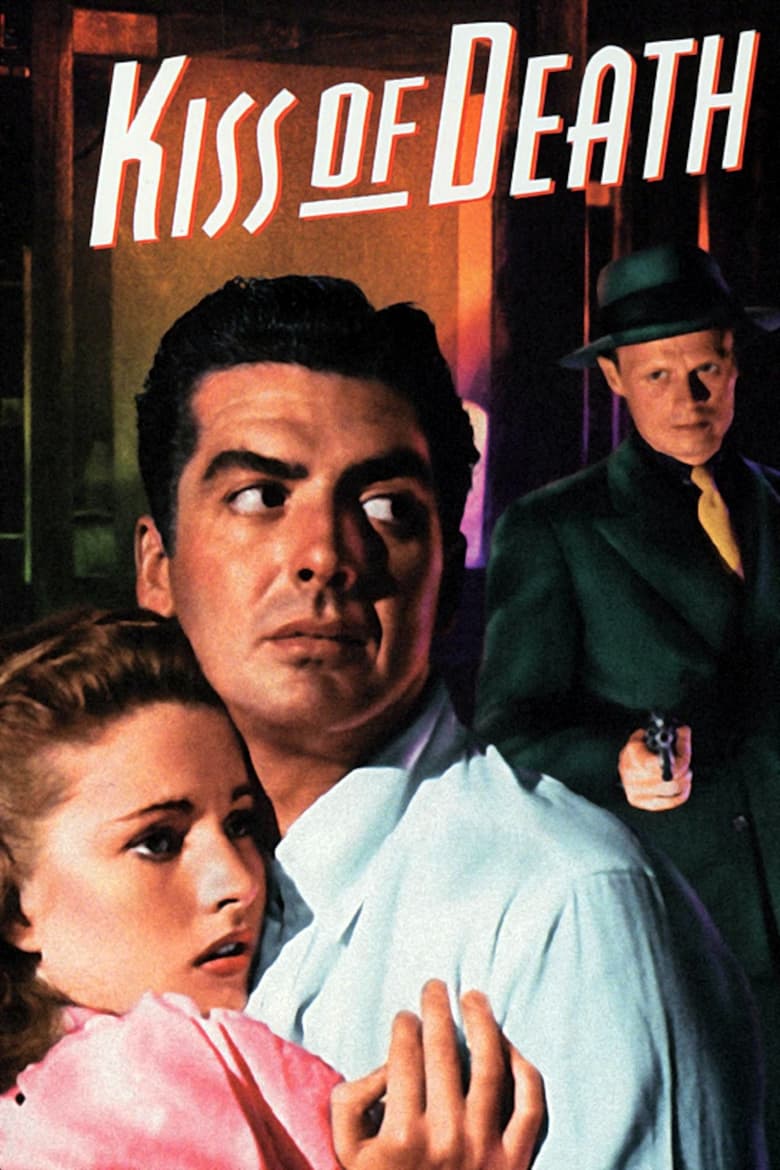
New York, Christmas Eve. Nick Bianco, a small-time thief with a wife and two daughters at home, takes part in a jewellery store robbery that goes wrong. Arrested and facing a long sentence, Nick refuses to inform on his associates – a code he holds not out of loyalty but out of a hard-learned understanding that talking gets people killed. When his wife, unable to endure the wait, takes her own life and his daughters are placed in an orphanage, the calculus shifts. Facing an extended sentence, Nick approaches Assistant District Attorney Louis D'Angelo with a proposition: he will give names in exchange for early release and a chance to rebuild something resembling a life.
D'Angelo uses Nick selectively, and Nick is eventually paroled into the orbit of the syndicate's attorney, Earl Howser, where he is assigned to monitor Tommy Udo – a freelance enforcer of such casual, almost cheerful viciousness that he stands apart from the usual machinery of noir menace. Udo, played by Richard Widmark in his debut performance, functions less as a villain than as a force of pure contingency: violence with no discernible motive beyond amusement. Nick marries Nettie, a woman who had kept watch over his daughters during his imprisonment, and begins to understand that no arrangement with the law, however carefully structured, can shield those around him from Udo's reach.
Kiss of Death positions Nick's moral predicament not as a question of guilt or innocence but as a problem of survival within systems – criminal and judicial – that treat individuals as instruments. Shot largely on location in New York City and at Sing Sing, the film carries a procedural authenticity that distances it from the studio-bound expressionism of its contemporaries, even as it arrives at conclusions about fate and complicity that are recognisably noir.
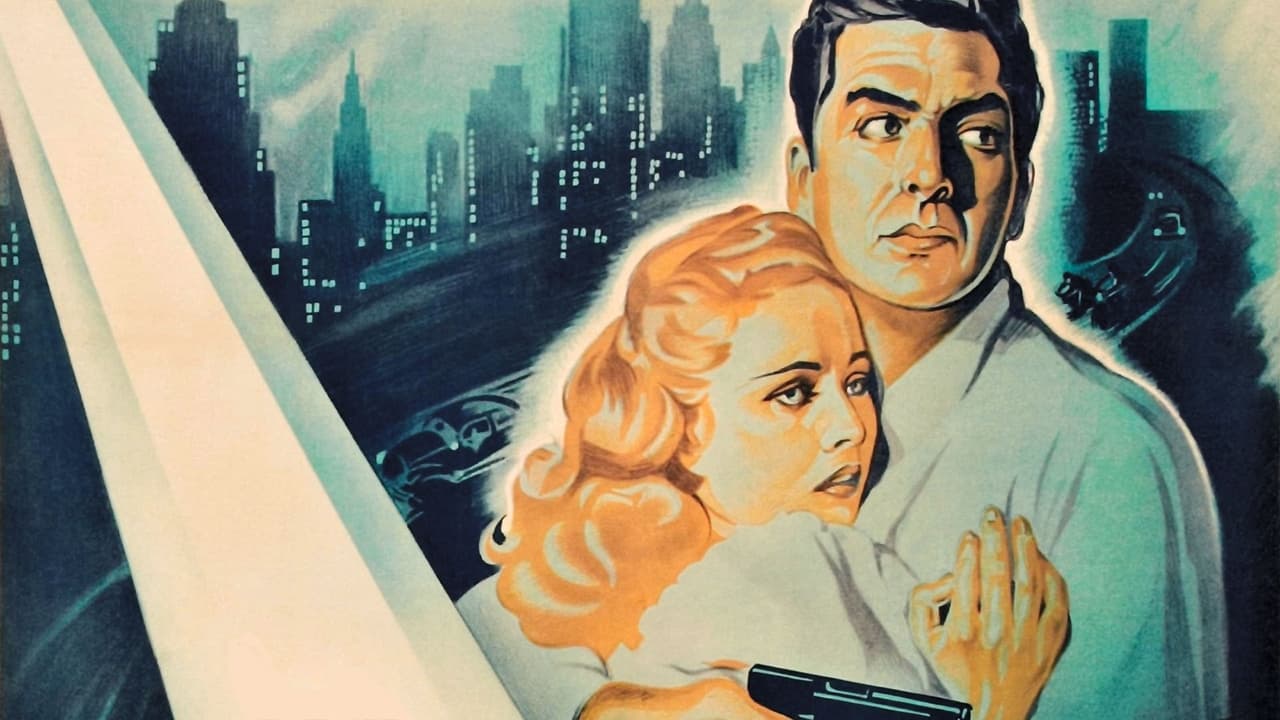
Kiss of Death occupies a specific and underexamined position in postwar American noir. Henry Hathaway's semi-documentary approach – real locations, an almost journalistic attention to institutional process – might suggest realism as an antidote to shadow-play, but the film is more complicated than that. The documentary surface sits uneasily against the genre's underlying fatalism, and that tension is precisely where the film does its most honest work. Nick Bianco is not a man undone by desire or greed; he is undone by arithmetic, by the impossibility of settling debts in a system that accrues interest faster than any man can pay. Victor Mature, persistently underrated, gives the role a physical heaviness that reads as moral exhaustion. What the film reveals about its era is the anxiety attending the informer, a figure who in 1947 was already acquiring a cultural weight that would only deepen in the decade to come. Richard Widmark's Tommy Udo has absorbed most of the critical attention across the decades, and justly, but the film's argument lives in Mature's silences.
– Classic Noir
The camera holds at the base of a long staircase as Tommy Udo, having bound an elderly woman to her wheelchair, tips her over the top step. Hathaway and cinematographer Norbert Brodine refuse the cut that would soften the moment. The staircase is lit with a hard, institutional clarity – no shadows to absorb the act, no expressionist distortion to aestheticise it. The chair descends the full length of the frame, and the composition's vertical severity strips away any possibility of distance between the viewer and what is happening.
The scene defines Tommy Udo not through backstory or motivation but through unmediated action, and in doing so it argues something about violence that much of noir avoids: that it requires no psychology to be devastating, only opportunity. For Nick Bianco, who will hear of this act rather than witness it, the scene establishes what he is being asked to contain – not a man with explicable grievances, but a contingency that the law's procedures are structurally unequipped to anticipate. It is the film's moral centre, expressed entirely in geometry and gravity.
Norbert Brodine's work on Kiss of Death is inseparable from the film's argument about institutional reality. Shooting extensively on location in New York – Mulberry Street, the Criminal Courts Building, and inside Sing Sing prison – Brodine employs a shallower depth of field than was standard for the period, keeping backgrounds present but slightly unresolved, as though the world Nick moves through resists legibility. Interior scenes use high-key lighting that reads as juridical exposure rather than warmth: interrogation rooms and D'Angelo's office are lit to eliminate shadow, positioning the law as a space with nowhere to hide. Against this, Udo's appearances favour harder, raking side-light that models his face in a way that isolates him from any readable social context. The location work grounds the film in a specific material New York – rain-slicked kerbs, tenement facades, the actual weight of the city – while Brodine's compositional discipline ensures that authenticity serves moral pressure rather than mere atmosphere.
Criterion Channel periodically programmes Kiss of Death within curated noir retrospectives and offers the most reliably clean transfer currently available for streaming.
TubiFreeTubi has carried the film as part of its classic Hollywood library; transfer quality varies, but it remains a no-cost option worth checking for current availability.
TCMSubscriptionTCM broadcasts Kiss of Death with some regularity as part of noir programming blocks; check the schedule and TCM's on-demand library via participating cable providers.