Films People Pull a Fast One Night Beat Reading Room On TV Shop
All the Kings Men 1949
1949 Columbia Pictures
★★★★☆ Recommended
Film Noir · 109 minutes · Black & White

All the Kings Men

Directed by Robert Rossen
Year 1949
Runtime 109 min
Studio Columbia Pictures
TMDB 7.0 / 10
"Power is a country boy's game, and the rules are written in other men's ruin."

In the rural American South of the late 1930s, Jack Burden – a newspaper reporter of fading idealism – watches Willie Stark rise from a small-town county treasurer to a demagogue of formidable and dangerous popular appeal. Stark begins as an honest man, a plainspoken farmer who genuinely believes the system can be worked from within. Burden, narrating from a position of compromised hindsight, records the ascent with the detachment of a man who has already surrendered his own moral bearings.

As Stark consolidates political power – building hospitals, roads, and loyalties with equal cynicism – Burden is drawn deeper into the machinery of corruption. He is ordered to dig for damaging information on Judge Stanton, a man Burden regards as incorruptible and whose daughter, Anne, Burden loves with an ambivalence that mirrors his broader paralysis. The judge's son, Adam, a surgeon of rigid principle, becomes a reluctant instrument in Stark's designs, maneuvered into a position of public service that will cost him everything. Sadie Burke, Stark's fierce and unsparing confidante, watches all of it with the clarity of someone who never had the luxury of illusion.

Adapted from Robert Penn Warren's Pulitzer Prize-winning novel, All the Kings Men operates in the register of political tragedy rather than conventional crime noir, though its moral architecture is thoroughly noir in disposition – a world in which knowledge corrupts, loyalty is transactional, and the pursuit of good ends through bad means leaves no one clean. The film charts not simply a fall from grace but the systematic dismantling of the idea that grace was ever a realistic option in the first place.
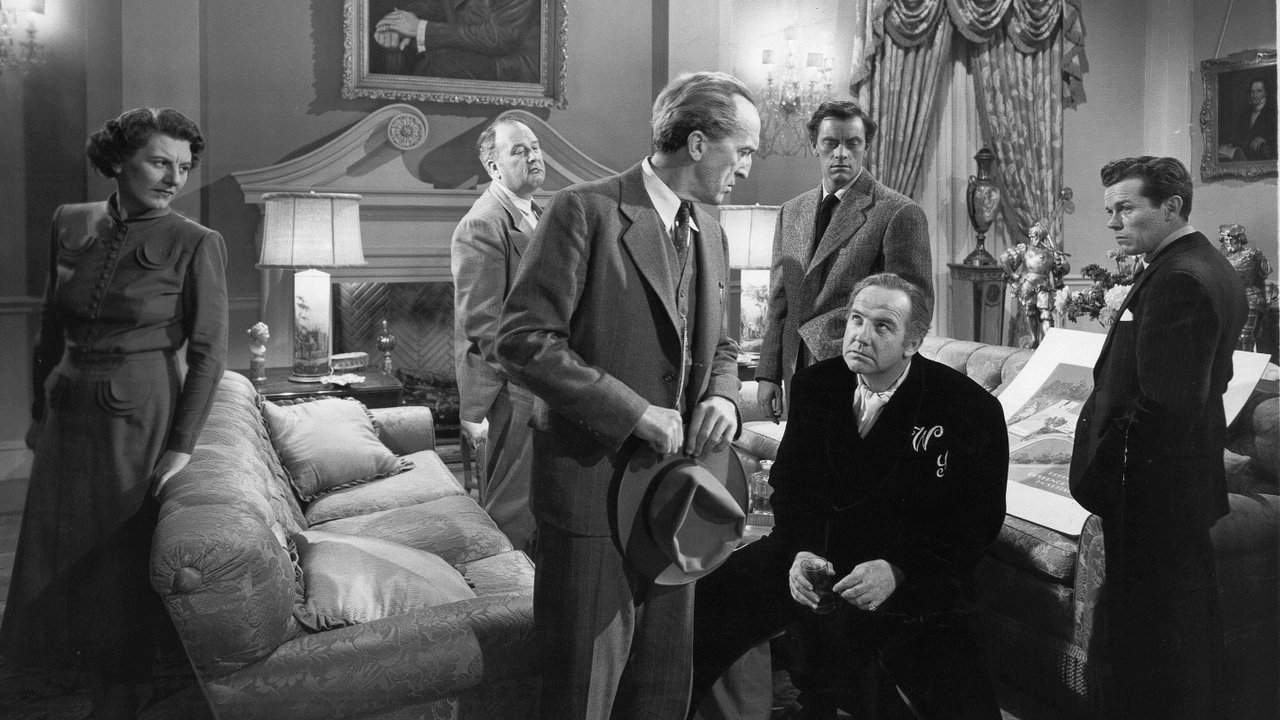
Classic Noir

All the Kings Men arrives at the close of a decade shaped by war, the consolidation of federal power, and a widespread anxiety about whether democratic institutions could survive the men who claimed to serve them. Robert Rossen strips Warren's novel of its baroque Southern literary architecture and produces something leaner and more discomfiting – a film that implicates its narrator as fully as its subject. Broderick Crawford's Willie Stark is not a cartoon tyrant; he is a man in whom genuine grievance curdled into appetite, and Crawford never lets the audience forget the original sincerity beneath the corruption. What the film understands, and what places it firmly within the noir tradition despite its political scale, is that the moral rot is systemic rather than individual. Jack Burden's complicity is the film's real subject, and John Ireland carries that weight with a studied flatness that reads, correctly, as a man who has stopped asking questions he already knows the answers to. Mercedes McCambridge, in her debut, delivers the film's most electrically honest performance. The Academy rewarded the film with Best Picture, Best Actor, and Best Supporting Actress – a recognition, perhaps, of how precisely it named the corruption it depicted.

– Classic Noir
4 ★★★★☆ Recommended
Credits

The Crew

DirectorRobert Rossen
ScreenplayRobert Rossen
CinematographyBurnett Guffey
MusicLouis Gruenberg
EditingAl Clark
Art DirectionSturges Carne
CostumesJean Louis
ProducerRobert Rossen
Performances

The Cast

Close Reading

The Signature Scene

All the Kings Men – scene
The Campaign Rally The Crowd Becomes the Man

Burnett Guffey shoots the rally sequence with a restless, low-angle camera that places Crawford's Stark against open sky and then, almost immediately, against the compressed faces of the crowd – the geometry of the shots suggesting both exposure and enclosure. The lighting is harsh and unbeautiful, the kind of flat daylight that strips faces of shadow and offers no concealment. Guffey moves the camera into the crowd and out again in a rhythm that mimics Stark's own rhetorical cadence: advance, withdraw, advance harder. The compositional center is never quite where the eye expects it to be.

The scene functions as the film's argument in miniature. Willie Stark does not manipulate the crowd so much as locate and amplify something already present in it – a stored anger that predates him and will outlast him. Burden watches from the periphery, and the framing isolates him there, a man who understands the mechanism but cannot step outside it. The rally does not show the birth of a demagogue; it shows the moment a man discovers that the truth of what he is saying and the use to which he is putting it are no longer the same thing.

Visual Language

The Cinematography

🎞️
Burnett Guffey – Director of Photography

Burnett Guffey's cinematography on All the Kings Men makes a series of deliberate and politically legible choices. Working largely on location in California's Central Valley and Sacramento rather than on studio sets, Guffey exposes his subjects to the indifferent light of actual places – courthouses, rally grounds, back rooms – where the camera has nowhere to hide and neither do the characters. His shadow work is most precise in the interior scenes: the overhead sources in Stark's offices and Burden's apartment cut faces into planes of light and dark that align with the film's moral binary without ever becoming schematic. Guffey favors mid-range focal lengths that keep figures in spatial relation to their environments, grounding the political drama in physical reality. The mobile camera in crowd sequences contrasts with the static, almost imprisoned framing of scenes in which Stark conducts private business – a visual grammar that tracks the difference between public performance and private transaction. Throughout, Guffey refuses the expressionist excess available to him, and the restraint is itself an argument: this is how corruption looks, ordinary and fully lit.

In the Catalogue

Themes & Motifs

Availability

Where to Watch

Also in the Directory

See Also