Films People Pull a Fast One Night Beat Reading Room On TV Shop
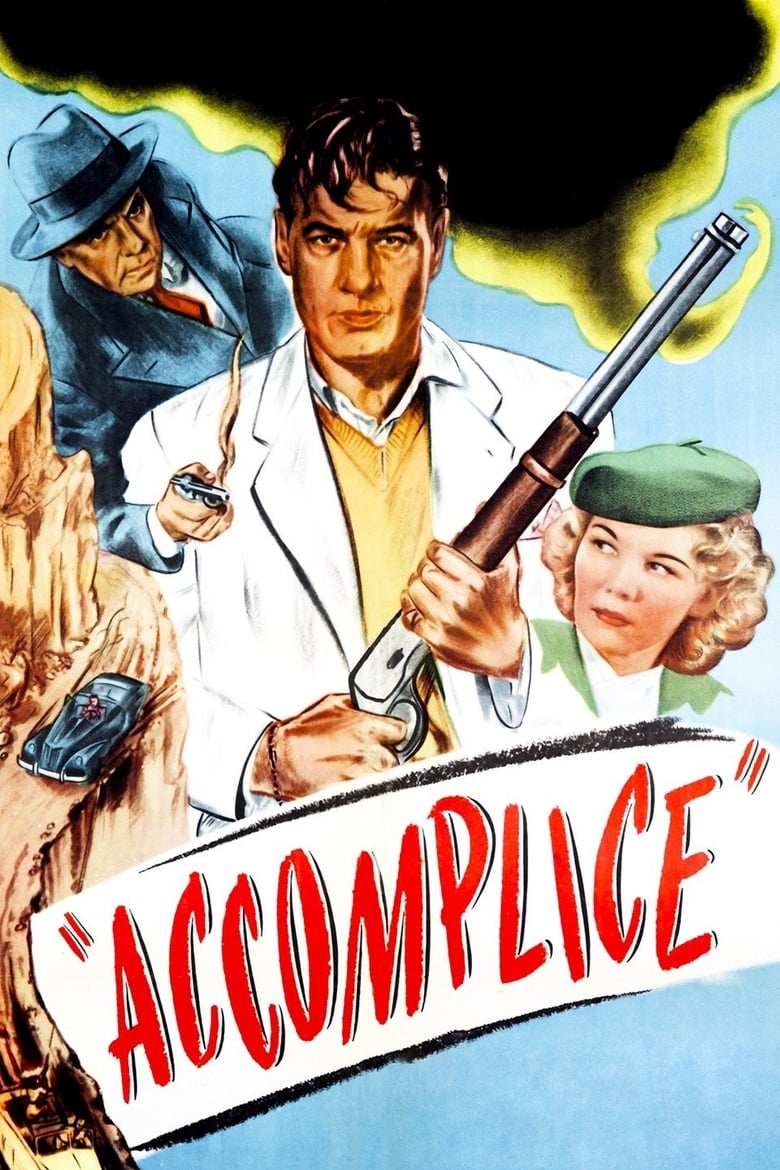
Accomplice 1946
1946 PRC
★★★☆☆ Notable
Film Noir · 68 minutes · Black & White

Accomplice

Directed by Walter Colmes
Year 1946
Runtime 68 min
Studio PRC
TMDB 5.8 / 10
"A detective follows a dead man's trail into country where the law arrives too late."

Simon Lash, a private investigator with a methodical disposition and few illusions, is drawn into a case involving a dead client and a circle of people with reasons to lie. The body belongs to a man named Bonniwell, and his widow Joyce, played with cool calculation by Veda Ann Borg, is the first to claim innocence and the last anyone should trust. Set against a landscape of small-town authority figures and crooked arrangements, the film establishes its moral geography quickly: everyone is implicated, and the official law – represented by Sheriff Rucker and Lt. Hayden – is either outpaced or compromised.

Lash's investigation pulls in Evelyn Price, a woman whose relationship to the dead man is ambiguous enough to make her either a witness or a suspect. Allegiances shift as the money trail surfaces, and what appeared to be a straightforward inheritance dispute reveals deeper arrangements between the living and the recently departed. Eddie Slocum, Lash's associate, provides both logistical support and comic counterweight, though the film is careful not to let that register as levity – the stakes remain material and the betrayals personal.

Accomplice works within the tradition of the private-eye procedural, positioning Lash as a figure who operates in the gap between institutional law and actual justice. The film belongs to that strain of mid-1940s noir produced outside the major studios, where limited resources enforced a compression that often served the genre's fatalistic temperament better than lavish production could.
Classic Noir

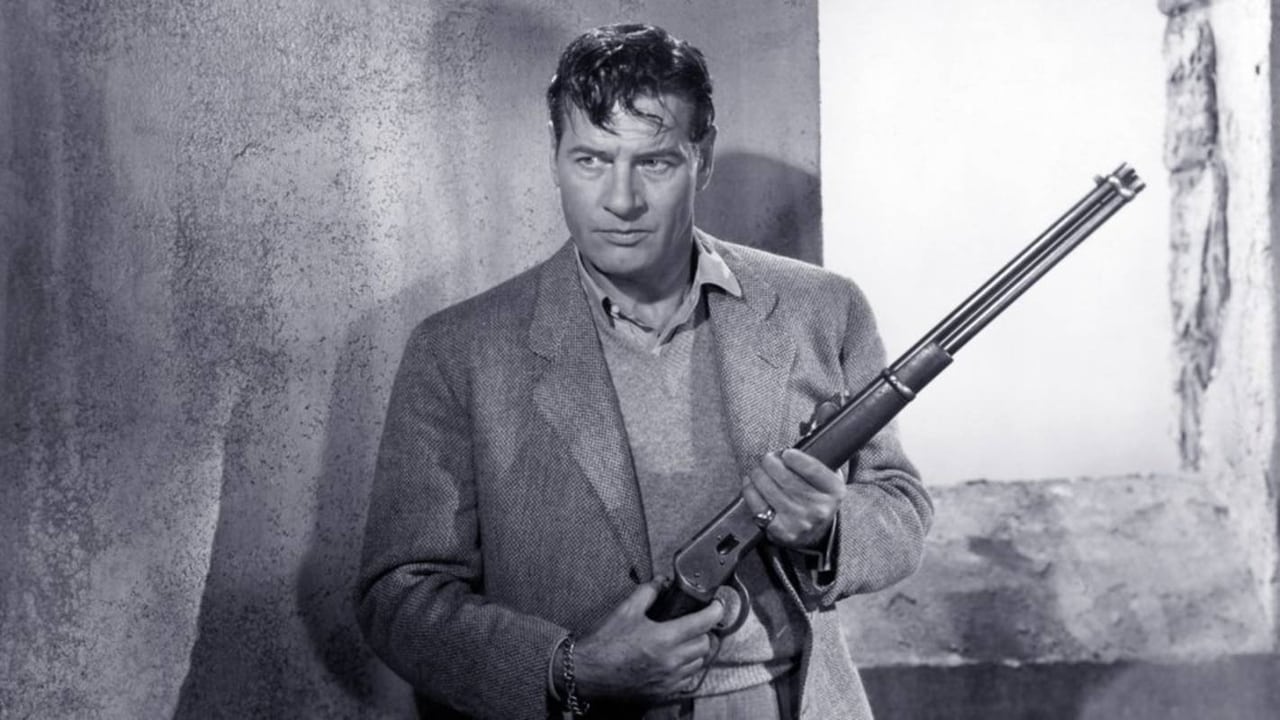
Accomplice is a PRC production, which situates it immediately within a particular industrial context: lean budgets, short schedules, and a reliance on contract players who knew how to work fast and economically. Richard Arlen brings a weathered credibility to Simon Lash that the role requires – he is not a romantic figure but a professional one, and that distinction matters in a film where the femme fatale operates through social performance rather than seduction. Veda Ann Borg, often underestimated in the canon, does precise work here, modulating between grief and calculation with enough ambiguity to keep the moral center unstable. Walter Colmes directs without flourish, which is not a failure of vision but a disciplined choice appropriate to the material. What the film reveals about its era is the normalization of suspicion: in 1946, the private investigator as truth-seeker is already an ironic figure, operating in a world where institutions exist to protect arrangements rather than people. At 68 minutes, nothing is wasted.

– Classic Noir
3 ★★★☆☆ Notable
Credits

The Crew

DirectorWalter Colmes
ScreenplayFrank Gruber
CinematographyJockey Arthur Feindel
MusicAlexander Laszlo
EditingRobert Jahns
ProducerJohn K. Teaford
Performances

The Cast

Close Reading

The Signature Scene

Accomplice – scene
The Widow's Parlor Light Across the Mantelpiece

The camera holds on Joyce Kimball Bonniwell in a domestic interior that has been lit to deny comfort. A single practical source – a table lamp positioned low and to frame left – casts the room in a lateral shadow that bisects her face along the jawline. The background recedes into darkness rather than resolving into period furnishing, isolating her within the frame as both subject and suspect. Colmes keeps the shot duration long enough to register the absence of grief before she performs it.

The scene does the film's central argumentative work in visual terms: the domestic space is the site of crime, not its aftermath, and the woman within it is neither victim nor neutral party. The lighting refuses to glamorize what it illuminates. What emerges is a portrait of calculation dressed as mourning, and the film's moral logic rests on whether Lash – and the viewer – can read the difference in time.

Visual Language

The Cinematography

🎞️
Jockey Arthur Feindel – Director of Photography

Cinematographer Arthur Feindel, working within the constraints that defined PRC production, applies a shadow discipline that punches above the film's budget. His work on Accomplice favors hard-source interiors with minimal fill, allowing faces to register partial darkness without the frame collapsing into murk. The result is a visual grammar consistent with the film's thematic argument: information is withheld as a matter of course, and what is visible is not the same as what is true. Feindel uses studio sets with an economy that reads as intentional rather than forced – compressed spaces keep characters in proximity to one another and to the camera, heightening the sense of a world where everyone is already too close to the crime. His lens choices favor a middle focal length that renders faces with a flat, documentary bluntness rather than the expressive distortion of wider glass. It is not showy work, but it is precise, and precision in service of a moral argument is what the genre demands.

In the Catalogue

Themes & Motifs

Availability

Where to Watch

Also in the Directory

See Also