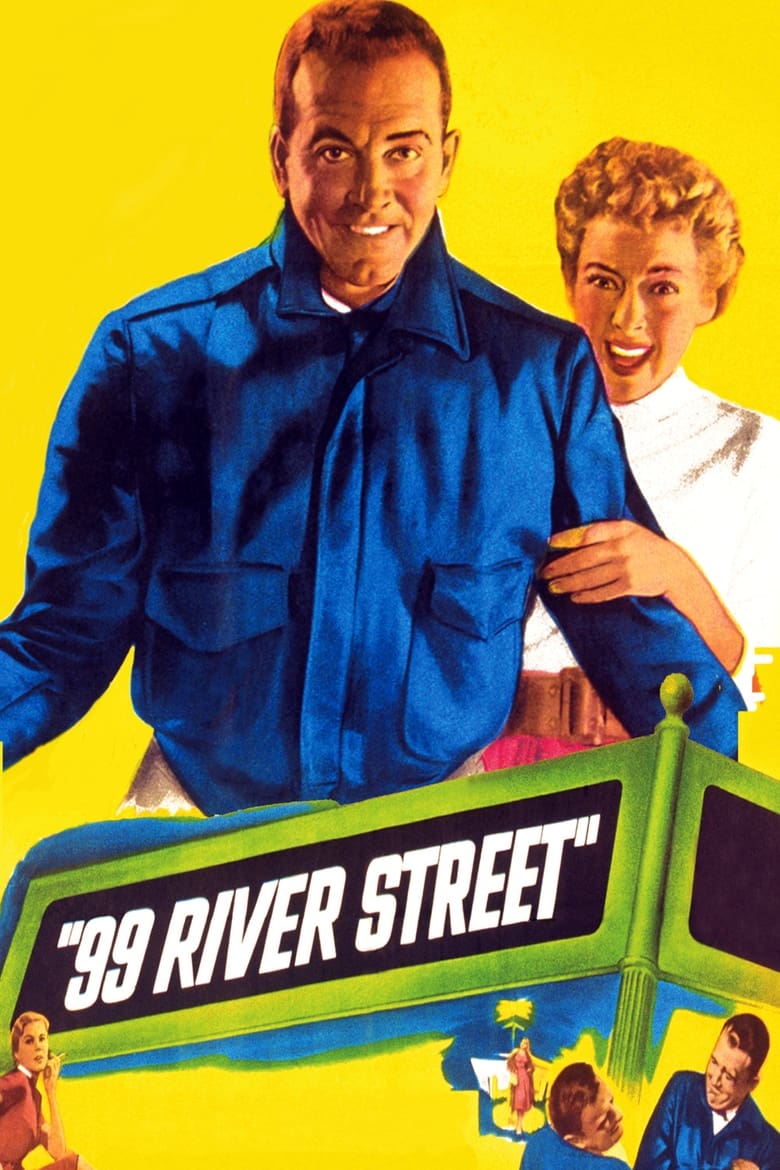
Ernie Driscoll is a former heavyweight contender whose career ended one punch too late, leaving him driving a cab in New York and nursing the quiet bitterness of a man who knows exactly what he lost. His wife Pauline, tired of waiting for a future that never arrived, has taken up with Victor Rawlins, a small-time criminal with ambitions in the diamond trade. When Pauline turns up dead in Ernie's cab, the evidence arranges itself against him with the cold efficiency that noir reserves for the already-defeated.
Linda James, an actress and longtime friend, attempts to shield Ernie by constructing an alibi through an elaborate theatrical ruse – a scheme that briefly implicates her own employer and colleagues before unraveling in ways neither of them anticipated. Rawlins, meanwhile, is moving stolen diamonds through a network that includes the fence Christopher and the enforcer Mickey, men for whom Pauline's death is a business complication rather than a crime. Ernie's search for the truth pulls him deeper into this world, where the line between suspect and avenger dissolves.
99 River Street places its protagonist in the tradition of the postwar male adrift – competent in a world that no longer requires his particular competence, betrayed by domestic life as thoroughly as by fate. Phil Karlson builds the film around that specific combination of physical power and structural helplessness, and the result is a tight, unsentimental procedural that uses the nocturnal geography of New York and New Jersey to map the limits of honest ambition.
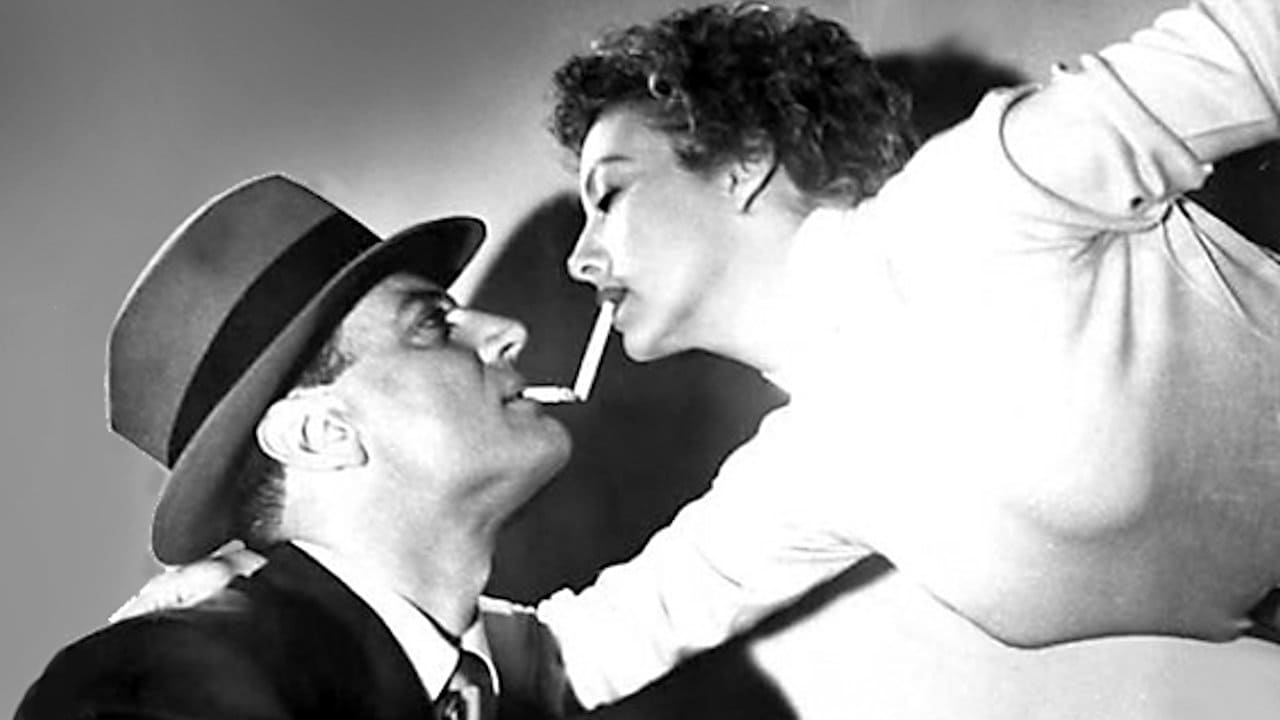
Phil Karlson was one of the more reliable architects of mid-tier noir, and 99 River Street sits among his better work alongside Kansas City Confidential and The Phenix City Story. What the film understands, and what distinguishes it from routine crime pictures of the period, is the particular humiliation of the ex-athlete: Ernie Driscoll is physically capable and morally intact, yet the world has arranged itself so that neither quality confers any advantage. John Payne, often underestimated, carries that contradiction without sentimentality. The film is also notable for a mid-picture sequence in which Linda stages a fake theatrical emergency that functions as a film-within-a-film, briefly rupturing the noir's surface with something closer to farce before snapping back to its darker register. That tonal risk does not entirely resolve, but it demonstrates an ambition beyond the genre minimum. Franz Planer's photography keeps the streets wet and the interiors close, and the 83-minute running time enforces a discipline that longer, more prestigious noirs of the era sometimes lacked.
– Classic Noir
Karlson and Planer frame the climactic pursuit along the waterfront in a series of low, tight compositions that compress the available space until escape seems geometrically impossible. Light arrives from industrial sources – dock lamps, a distant warehouse opening – cutting harsh horizontals across the wet pavement and leaving the upper portions of the frame in near-total darkness. The camera holds on Payne's face at close range during the approach, the shadow work emphasizing the jaw and brow and reducing expression to something more elemental than anger.
The scene crystallizes the film's central argument: that Ernie's physical strength, long treated as both his defining trait and his greatest liability, finally aligns with moral purpose. The world that defeated him in the ring and in marriage offers one last arena where competence and justice briefly coincide. Karlson does not present this as triumph so much as correction – a settling of accounts conducted in the only language available to a man the system has otherwise refused to hear.
Franz Planer, whose career extended from European productions through Hollywood prestige work on Roman Holiday and Champion, brings a controlled economy to 99 River Street that suits its modest budget without calling attention to its constraints. Shooting on a combination of New York location exteriors and studio interiors, Planer maintains visual continuity through consistent low-key lighting setups that favor practical source motivation – streetlamps, neon signage, interior bulbs caught just outside frame. His lens choices favor moderate focal lengths that keep backgrounds in legible but subordinate focus, placing figures against the city rather than isolating them from it. The shadow work is precise rather than decorative: darkness defines boundaries, marks exits, and closes off the frame at moments that correspond to Ernie's diminishing options. The overall visual grammar reinforces the film's moral logic, in which a man of limited means navigates a world lit just well enough to see how thoroughly it is arranged against him.
Tubi has carried 99 River Street as part of its classic noir holdings and is likely the most accessible free option, though availability shifts periodically.
Archive.orgFree (Public Domain)The film has circulated in the public domain and Archive.org offers direct streaming and download, though print quality varies by upload.
Amazon Prime VideoRental / PurchaseA paid rental or purchase through Amazon typically provides a more stable and better-transferred print than public domain sources.