Films People Pull a Fast One Night Beat Reading Room On TV Shop
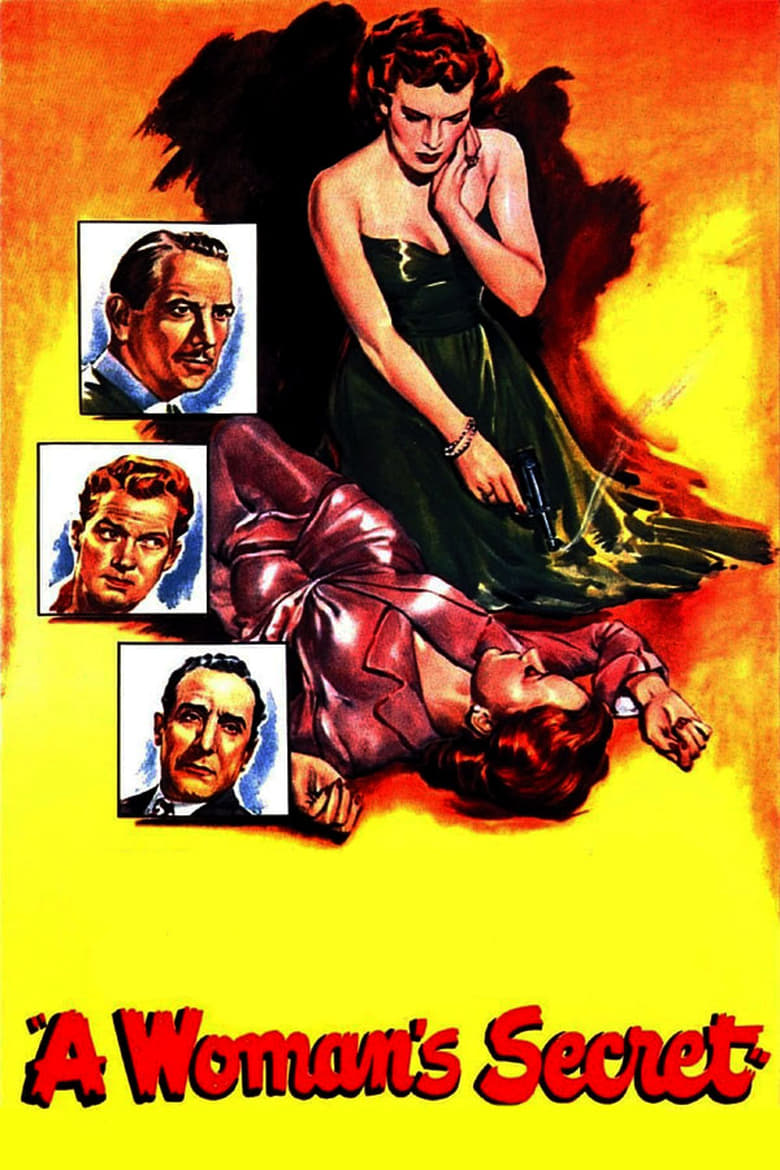
Woman's Secret 1949
1949 RKO Radio Pictures
★★★☆☆ Notable
Film Noir · 84 minutes · Black & White

Woman's Secret

Directed by Nicholas Ray
Year 1949
Runtime 84 min
Studio RKO Radio Pictures
TMDB 5.6 / 10
"A woman confesses to a shooting – but the truth lies somewhere beneath the song she taught her."

Marian Washburn, a former singer turned manager, is found standing over the body of Estrellita – the young protégée she groomed for stardom under the stage name Susan Caldwell. Marian confesses to the shooting almost immediately, and the police, led by Inspector Jim Fowler, have little reason to look further. But Fowler's wife, Mary, is a neighbor of Marian's and refuses to accept the confession at face value, pressing her husband to dig beneath the surface of what appears to be an open-and-shut case.

As Fowler investigates, the story unfolds in extended flashback: Marian discovered Susan in a roadhouse, recognised her raw talent, and rebuilt her into Estrellita. Their relationship is one of genuine devotion shadowed by control – Marian's investment in Susan is professional, maternal, and finally suffocating. Into this charged dynamic steps Luke Jordan, a sardonic songwriter who falls for Susan, and Lee Crenshaw, a wealthy man whose involvement with Susan carries its own quiet menace. Allegiances shift as each character's version of events proves partial at best.

A Woman's Secret operates at the intersection of the backstage melodrama and the flashback-driven noir confession, using the music industry as a milieu in which ambition, dependency, and self-destruction find natural expression. The film is less concerned with whodunit than with the architecture of obsession – how two women's fates become so intertwined that guilt itself becomes impossible to assign cleanly.
Classic Noir

Nicholas Ray made A Woman's Secret the same year he completed They Live by Night, and the contrast is instructive. Where that debut is all kinetic longing, this adaptation of Vicki Baum's novel Mortgage on Life is interior, deliberate, and somewhat detached – qualities that have led critics to underrate it. The flashback structure, narrated by multiple unreliable voices, anticipates the fractured chronologies Ray would refine later in his career, and the casting of Gloria Grahame as Susan – mercurial, self-destructive, unwilling to be saved – gives the film its emotional center despite Maureen O'Hara's technically dominant performance. What the film captures with precision is the particular violence of women's ambitions operating within male-administered industries: the way talent gets owned, shaped, and ultimately discarded. Friedrich Hollaender's score, drawing on his European cabaret roots, lends the nightclub sequences a sourness that straight Hollywood orchestration would have sweetened into sentiment. The film is a minor entry in Ray's canon, but a revealing one.

– Classic Noir
3 ★★★☆☆ Notable
Credits

The Crew

DirectorNicholas Ray
ScreenplayHerman J. Mankiewicz
CinematographyGeorge E. Diskant
MusicFriedrich Hollaender
EditingSherman Todd
Art DirectionAlbert S. D'Agostino
ProducerHerman J. Mankiewicz
Performances

The Cast

Close Reading

The Signature Scene

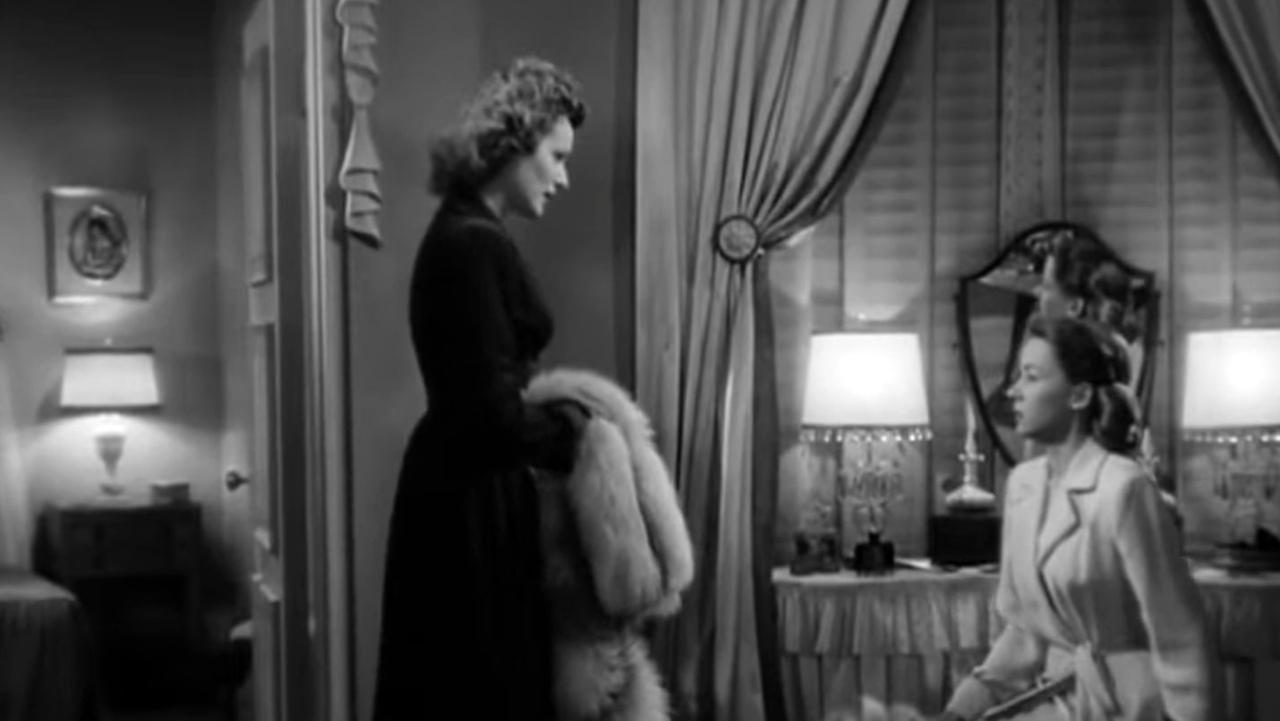
Woman's Secret – scene
The Roadhouse Discovery A Voice in Dim Light

George E. Diskant frames the roadhouse interior with the bar's overhead practicals casting harsh pools on the tables below, leaving the stage in a relative murk from which Susan's face emerges only gradually as Marian moves closer. The camera holds on Marian in medium close-up first, her expression shifting from casual attention to something harder to name – recognition, appetite, calculation – before cutting to Susan in a low-angle shot that isolates her against a wall of indistinct shadow. The staging keeps the two women apart across several cuts before allowing them to occupy the same frame, and the delay makes that shared space feel like a threshold being crossed.

The scene establishes the film's central transaction: one woman's potential being claimed by another's will. Diskant's lighting refuses to glamorise the moment. This is not discovery as liberation but as acquisition, and the shadow work around Susan suggests she is already, in some sense, disappearing into the role Marian is about to construct for her. The scene quietly argues that the relationship, whatever its tenderness, begins as an act of possession.

Visual Language

The Cinematography

🎞️
George E. Diskant – Director of Photography

George E. Diskant, who shot They Live by Night for Ray the same year and would go on to photograph The Narrow Margin in 1952, brings a low-key, institutional sobriety to A Woman's Secret that suits its procedural frame. Working on RKO studio sets, Diskant favors tight, controlled lighting rigs that allow deep shadow without the expressionist excess of earlier noir cycles – the darkness here is functional rather than decorative. His lens choices tend toward moderate focal lengths that flatten backgrounds slightly, pressing characters against their environments in a way that reads as entrapment rather than spectacle. The flashback sequences are not visually differentiated from the present-tense interrogation scenes by any soft-focus convention, a deliberate choice that blurs the line between memory and testimony. Diskant's shadow work is at its most precise in the apartment interiors, where single-source lighting from practical lamps creates asymmetrical compositions that place one character in visibility and another in partial erasure – a consistent visual metaphor for the film's argument about whose story is allowed to be told.

In the Catalogue

Themes & Motifs

Availability

Where to Watch

Also in the Directory

See Also