Films People Pull a Fast One Night Beat Reading Room On TV Shop
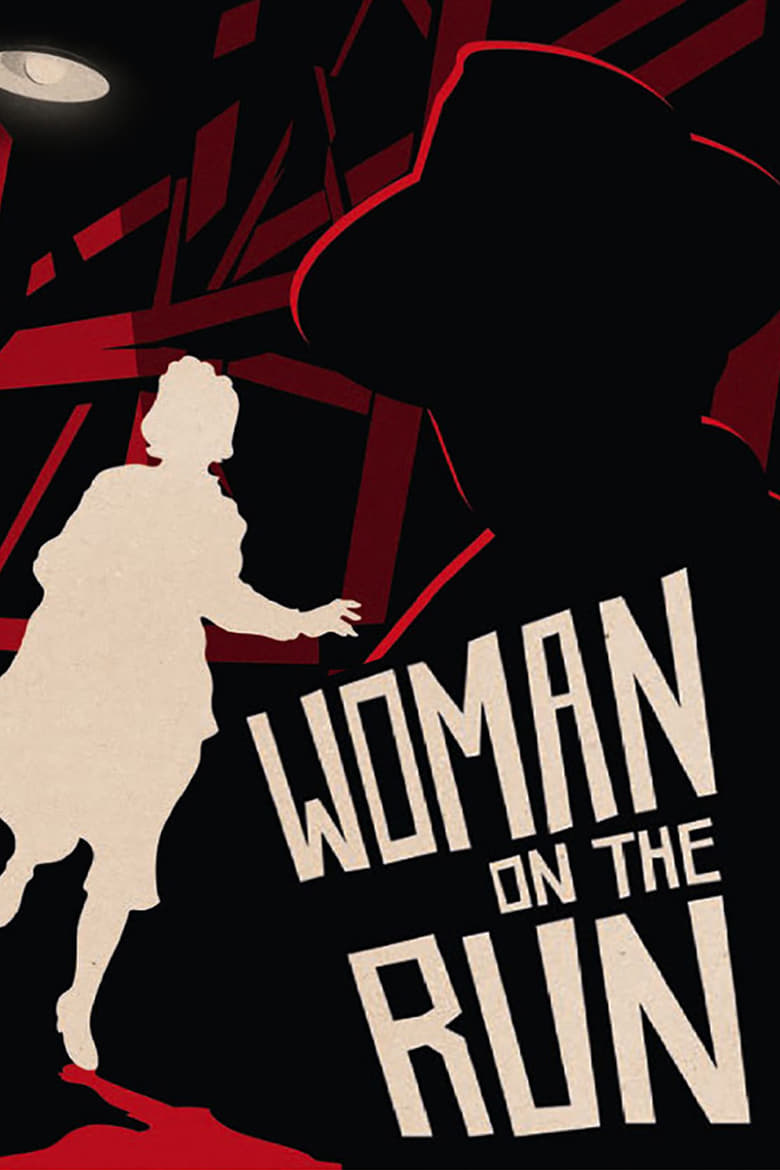
Woman on the Run 1950
1950 Fidelity Pictures Corporation
★★★☆☆ Notable
Film Noir · 77 minutes · Black & White

Woman on the Run

Directed by Norman Foster
Year 1950
Runtime 77 min
Studio Fidelity Pictures Corporation
TMDB 6.8 / 10
"A man vanishes into San Francisco's fog, and the wife who stopped loving him begins to search."

Frank Johnson witnesses a gangland murder on a San Francisco street late at night and, fearing for his life, disappears before police can take him into protective custody. His estranged wife Eleanor, called in by Inspector Martin Ferris to help locate Frank, is a woman of clipped affect and marital disillusionment – she tells the police plainly that she has little interest in saving a marriage already in dissolution. Ferris needs her as bait; she needs, it slowly becomes apparent, to understand what her husband was running from and whether the man she dismissed is worth finding.

Into this arrangement steps Dan Legget, a newspaper reporter who attaches himself to Eleanor under the pretext of a story but whose motives remain opaque long enough to complicate her loyalties. As Eleanor retraces Frank's life through San Francisco's Chinatown, amusement parks, and waterfront margins, she recovers details of a man she had ceased to see clearly. The killer is still at large, still watching, and the film's procedural surface begins to crack open into something more intimate – a reckoning with the distance that can grow between two people sharing a life.

Woman on the Run deploys the pursuit structure common to postwar noir but redirects its energy inward, using the manhunt as a device for marital excavation. The city is less a backdrop than an accumulation of evidence. By the time the film reaches its climax, the question of who Frank Johnson is has become inseparable from the question of who Eleanor has allowed herself to become – and Norman Foster keeps both questions open until the final frames of the roller-coaster finale.
Classic Noir

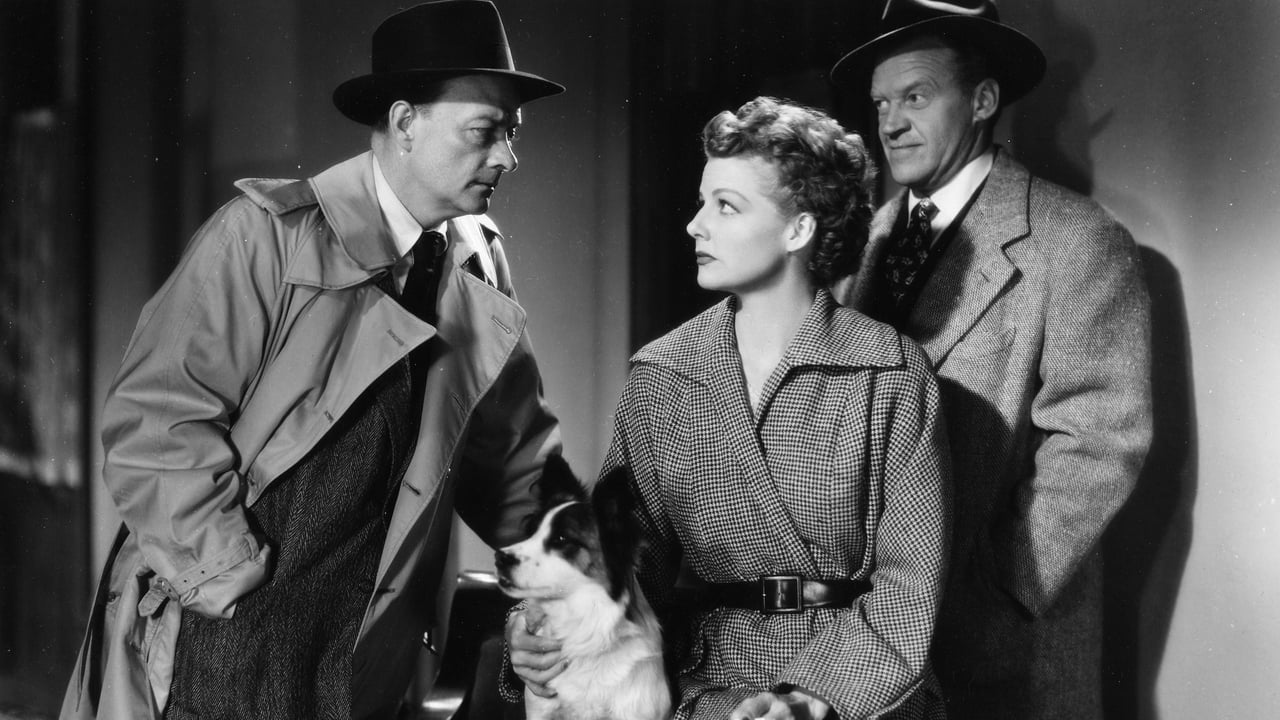
Woman on the Run occupies an underexamined corner of the postwar noir cycle, distinguished less by its crime plot than by the psychological portrait it builds around Ann Sheridan's Eleanor Johnson. The film belongs to a strand of noir in which the female protagonist is neither femme fatale nor passive victim but something more complicated: a woman whose emotional withdrawal has become a form of self-protection she can no longer fully justify. Norman Foster, better known for his work with Orson Welles on Journey into Fear, handles the San Francisco locations with an authenticity unusual for the period, letting the city's actual geography – the amusement park at Playland, the Chinatown alleys, the waterfront – carry moral weight. Hal Mohr's cinematography keeps the lighting functional rather than expressionist, which suits a film more interested in behavior than atmosphere. Dennis O'Keefe's Legget is the one element that dates badly; the reporter-as-romantic-foil was already a worn device by 1950. But Sheridan holds the film together, and the roller-coaster climax earns its tension through accumulated character investment rather than set-piece mechanics.

– Classic Noir
3 ★★★☆☆ Notable
Credits

The Crew

DirectorNorman Foster
ScreenplayAlan Campbell
CinematographyHal Mohr
MusicArthur Lange
EditingOtto Ludwig
Art DirectionBoris Leven
ProducerHoward Welsch
Performances

The Cast

Close Reading

The Signature Scene

Woman on the Run – scene
Playland at the Beach – The Roller Coaster The Ride Above the City

Foster and Mohr cut between ground-level tracking shots and near-vertical angles from the roller-coaster structure itself, the frame tilting as the cars climb and plunge. The night lighting of Playland – carnival bulbs against coastal darkness – creates pools of harsh white light separated by stretches of near-total shadow, so that faces appear and disappear as the ride moves. The editing rhythm accelerates without becoming chaotic; the geography of the space remains legible even as the physical situation grows more precarious.

The sequence works because it externalizes what the film has been building quietly for seventy minutes: Eleanor's recognition that the life she thought she had diagnosed is more dangerous and more worth preserving than she admitted. The kinetic instability of the roller coaster – no solid ground, no controlled speed – is the film's argument made physical. Danger, the scene insists, arrives not in the places you have been watching but in the ones you stopped paying attention to.

Visual Language

The Cinematography

🎞️
Hal Mohr – Director of Photography

Hal Mohr was a studio veteran with deep roots in classical Hollywood lighting, and his work on Woman on the Run reflects a deliberate choice to subordinate expressionist shadow play to location credibility. Shooting extensively on the streets of San Francisco rather than on studio sets, Mohr used available architectural light supplemented by portable fill to preserve the texture of real environments – the reflective wet pavement of Chinatown, the sodium glow of waterfront streets, the diffuse carnival lighting of Playland. The result is a visual register closer to the Italian neorealist documentary impulse than to the high-contrast chiaroscuro associated with studio-bound noir. This is not a film of venetian-blind shadows and ceiling fans; it is a film of faces caught in ordinary light trying to conceal extraordinary things. The choice suits Norman Foster's interest in behavioral observation over stylized menace, and it gives Sheridan's performance room to register in close-up without the distraction of heavy shadow patterning.

In the Catalogue

Themes & Motifs

Availability

Where to Watch

Also in the Directory

See Also