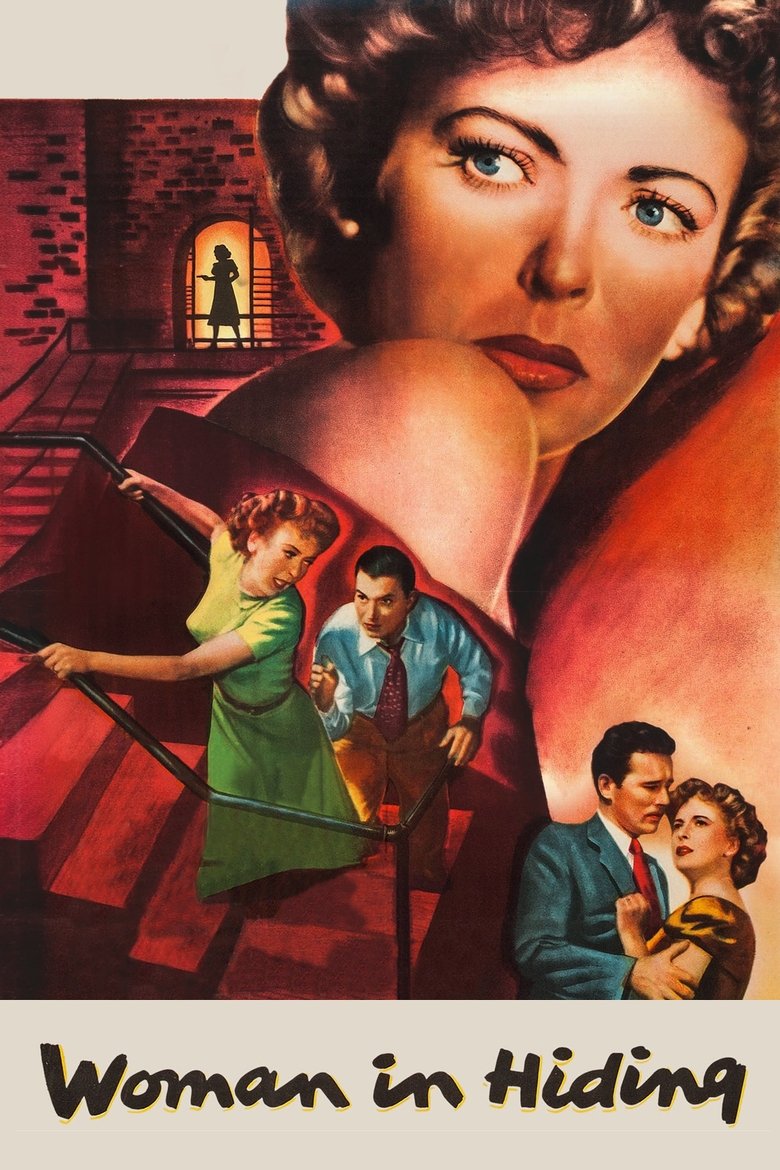
When Deborah Chandler inherits control of her father's mill in a small Southern town, she finds herself married almost immediately to Selden Clark, a charming and calculating man who has spent years positioning himself to take that inheritance for his own. On their wedding night, Selden engineers what is meant to look like an accident – Deborah's car sent over an embankment into a flooding river. She survives. Knowing that no one will believe her, and that Selden's social standing gives him a considerable advantage, she chooses to disappear rather than surface and be killed in a second, more careful attempt.
Living under a false name and working a succession of menial jobs, Deborah crosses paths with Keith Ramsey, a good-natured traveling salesman who stumbles into her predicament and gradually comes to believe her account of events. His involvement complicates her isolation: trust, for a woman in her position, is itself a form of exposure. Meanwhile Selden, projecting the image of a grieving widower, methodically searches for her, and the machinery of small-town respectability continues to operate in his favor.
Woman in Hiding belongs to a strand of postwar noir organized around female flight rather than female fatality – films in which the woman at the center is not destroyed by her desire but endangered by someone else's greed. The suspense turns less on investigation than on endurance, and the film's moral weight rests on what it costs a woman to be disbelieved by the institutions that are supposed to protect her.
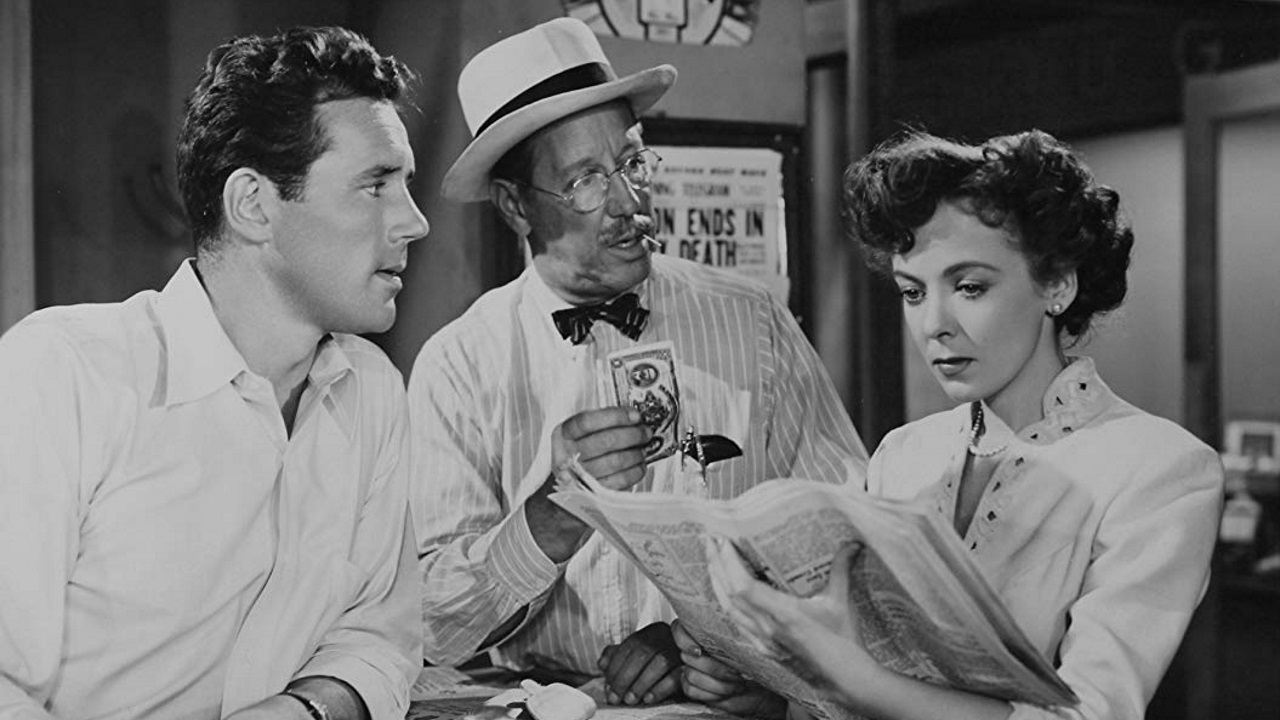
Woman in Hiding arrives at a moment when Universal International was producing a series of modestly budgeted noirs that repaid close attention, and this one earns its place among them largely on the strength of Ida Lupino's performance and the film's structural refusal to make Deborah's situation easily solvable. The villain here is not a figure from the criminal underworld but a man of local standing, and the film is unusually clear-eyed about how that standing functions as a weapon. Stephen McNally plays Selden Clark with a controlled coldness that avoids melodramatic telegraphing – his menace is administrative rather than explosive. Director Michael Gordon, working within the genre's commercial conventions, keeps the procedural elements credible and resists the impulse to inflate the material. What the film ultimately argues is that visibility, for a woman who knows too much, is indistinguishable from danger – a proposition that connects it to the broader postwar anxiety about domestic spaces as sites of threat rather than refuge.
– Classic Noir
William H. Daniels composes the sequence with the mill's industrial architecture pressing in from the frame's edges, its hard verticals reducing the space available to Deborah. The light source is practical and harsh – a single overhead lamp that catches the wet surfaces of the machinery and leaves the peripheral areas in deep shadow. Daniels holds the camera at a slight remove, which paradoxically intensifies the claustrophobia; there is no close perspective that offers safety, only middle distance in which the figures are rendered small against the structure that nominally belongs to Deborah and functionally belongs to her husband.
The scene crystallizes the film's central argument about ownership and exposure. The mill is Deborah's inheritance and the reason Selden married her, and placing the confrontation there transforms the property itself into evidence of her predicament. She cannot claim the space; it has already been absorbed into the logic of his plan. Daniels' framing makes this legible without commentary – the architecture does the work that dialogue might otherwise overstate.
William H. Daniels – whose career spanned silent Stroheim pictures, MGM glamour photography, and the realist location work of The Naked City – brings to Woman in Hiding a disciplined control of industrial and rural locations that keeps the film grounded in physical reality even as its suspense mechanics become schematic. Working with available light supplemented by tight practical setups, Daniels renders the Southern mill town and the anonymous rooming houses of Deborah's flight with a texture that the studio backlot seldom achieved. His shadow work is precise rather than decorative: darkness in this film marks zones of danger rather than atmosphere, and the gradation of light across Lupino's face in her quieter scenes registers emotional states that the script does not always articulate. The cinematography consistently serves the film's moral logic – that a woman without institutional protection occupies an inherently exposed position, even when she is technically in hiding.
Tubi has carried Universal International titles from this period and is the most accessible no-cost option for this film, though print quality varies.
Archive.orgFreePublic domain prints occasionally surface here; confirm current availability before viewing, as uploads can be removed.
Amazon Prime VideoRentalA rental or purchase option typically yields a more stable and better-encoded print than freely available uploads.