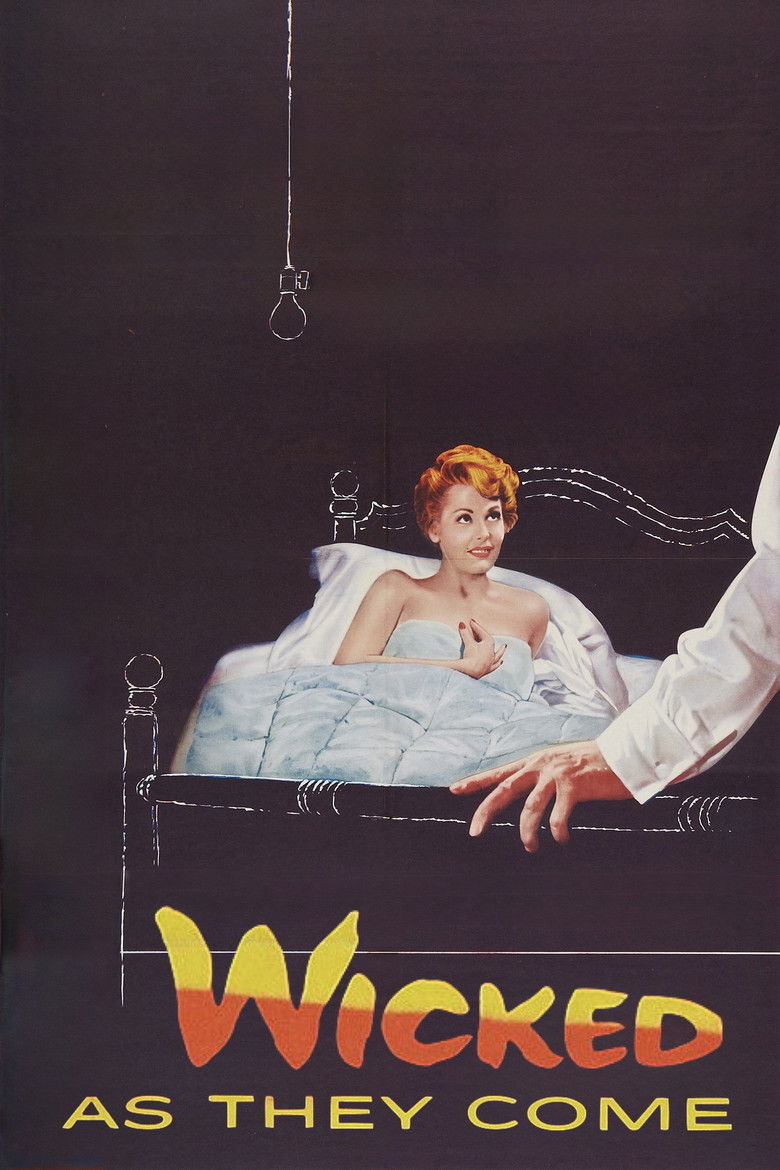
Kathleen Allen, born Kathy Alanborg in a cramped working-class household lorded over by her brutish brother Frank, has learned early that beauty is a currency and that she intends to spend it wisely. When a beauty contest sends her from London's meaner streets into the orbit of wealth, she begins a calculated ascent through a succession of men – each richer, more refined, and more useful than the last. The contest brings her into contact with Stephen Collins, a wealthy older patron whose interest in her is ambiguous, and Tim O'Bannion, an American with enough money and moral flexibility to suit her immediate needs.
As Kathy maneuvers between Collins's quiet influence and O'Bannion's more direct appetites, the film complicates its apparent portrait of a schemer. Larry Buckham, a solicitor who knows where bodies are buried, and Sam Lewis, a businessman with his own designs on Kathy's trajectory, press in from the margins. Allegiances shift with each new rung on the social ladder, and it becomes increasingly unclear whether Kathy is exploiting these men or being passed between them. The film's London and New York settings underscore a transatlantic anxiety about postwar mobility – the sense that old class structures are cracking but have not yet broken.
Wicked as They Come belongs to a cycle of British noirs that borrowed Hollywood's femme fatale template and subjected it to English social realism, producing something cooler and more equivocal than the American model. Director Ken Hughes keeps the moral accounting deliberately unresolved: Kathy's ruthlessness is never fully separable from the conditions that produced it, and the film's final movements resist the punitive logic that Hollywood censorship usually demanded. It is a film less interested in judgment than in observation.
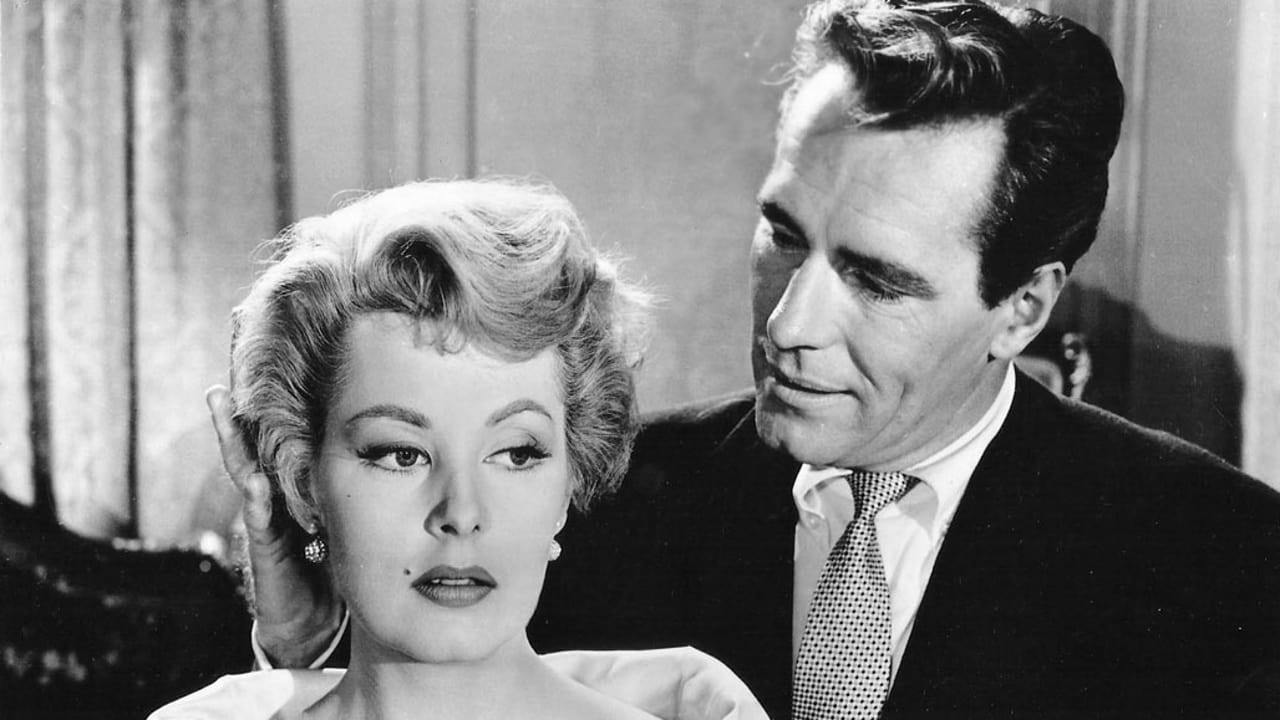
Ken Hughes was a journeyman director with a sharper eye for social texture than his reputation suggests, and Wicked as They Come – released in the United States as Portrait of a Sinner – is among his more considered works. The film participates in a specifically British postwar anxiety about class permeability: Kathy Alanborg is not simply a noir schemer but a product of a system that offers women beauty as their sole negotiable asset, then punishes them for deploying it. Arlene Dahl, an American cast in a role that might have gone to a British actress, brings a slightly alien quality that serves the character's outsider status within English social hierarchies. Herbert Marshall, in one of his later roles, provides the film's moral counterweight with characteristic understatement. Malcolm Arnold's score, more restrained than his work elsewhere, avoids underlining what the screenplay leaves open. The film does not rank among the essential British noirs, but it earns its place in the cycle as a document of gender and class negotiation in an era of contested social mobility.
– Classic Noir
Basil Emmott frames the beauty contest not as spectacle but as transaction. The stage lighting is hard and frontal, designed to expose rather than flatter, and Emmott allows it to do precisely that: Dahl is lit as an object under assessment, the camera holding at a slight distance that refuses to make the audience complicit in the judges' gaze. The peripheral figures – contest officials, spectators, the other contestants held in soft shadow at the frame's edge – are present as economic context rather than crowd color. The composition places Kathy at the center of a system she is entering but does not yet control.
The scene establishes the film's central argument before a word of backstory has been delivered: Kathy's power and her vulnerability are identical. She is winning something and being won, and the frame's cool remove – no swelling score, no glamorizing close-up – insists that the audience hold both readings simultaneously. It is the moment from which all of the film's subsequent moral ambiguity follows.
Basil Emmott, working within the practical constraints of a mid-budget British production, constructs a visual language that favors institutional spaces – contest halls, solicitors' offices, hotel lobbies – and treats them as environments that measure their occupants. His lighting setups tend toward a restrained chiaroscuro: shadow is present but not theatrical, used to segment the frame and isolate characters within their social positions rather than to generate expressionist unease. Studio interiors are dressed with enough location-derived detail to avoid the hermetic quality that dates some British noir of the period. Emmott's lens choices favor a moderate focal length that keeps figures in relation to their surroundings, resisting the tight close-ups that might generate false intimacy with Kathy and instead maintaining the observational distance that Hughes's direction requires. The result is a film that looks credibly like the world it describes – a world of surfaces carefully maintained – rather than a stylized version of it.
Tubi has carried this title in a watchable public-domain-adjacent print; confirm availability as catalogue rotates.
Archive.orgFreeA digitized print has been available here; quality is variable but the film is complete.
Amazon Prime VideoRentalAvailable for digital rental in standard definition through third-party classic film suppliers on the platform; the most reliable paid option.