Films People Pull a Fast One Night Beat Reading Room On TV Shop
Vicki 1953
1953 20th Century Fox
★★★☆☆ Notable
Film Noir · 85 minutes · Black & White

Vicki

Directed by Harry Horner
Year 1953
Runtime 85 min
Studio 20th Century Fox
TMDB 5.5 / 10
"A dead girl's face sells papers, and everyone who knew her has something to hide."

In postwar Los Angeles, small-time model Vicki Lynn is found dead in her apartment, and the case falls to Lt. Ed Cornell, a detective whose obsession with the victim quickly exceeds professional interest. Vicki's older sister Jill, now working a respectable job and engaged to a steady man, is drawn back into the investigation – first as a witness, then as a suspect. Cornell, relentless and increasingly erratic, fixes his suspicion on Steve Christopher, a press agent who had been managing Vicki's climb toward stardom.

The inquiry moves through a network of men who wanted something from Vicki – a nightclub owner, a foreign-born socialite, a tabloid photographer – and none of them accounts cleanly for his time. Cornell's interrogations grow less like police work and more like a private reckoning, exposing the detective's own complicated feelings for a woman he may have loved and cannot let go. Jill watches this unfold and begins to doubt whether Cornell is pursuing justice or something darker, while Steve, squeezed from every direction, struggles to protect himself without understanding what he is being protected against.

Vicki is a remake of I Wake Up Screaming (1941), and it wears that lineage openly – the flashback structure, the detective's pathological grief, the girl who exists mostly as an absence around which men arrange their guilt. Where the 1941 version leaned into theatrical expressionism, Horner's film pushes toward a grittier procedural register, trading atmospheric shadow for fluorescent interrogation rooms and crowded press offices. The film belongs to the strand of early-fifties noir that treats the machinery of celebrity and the machinery of justice as equally indifferent to the truth.
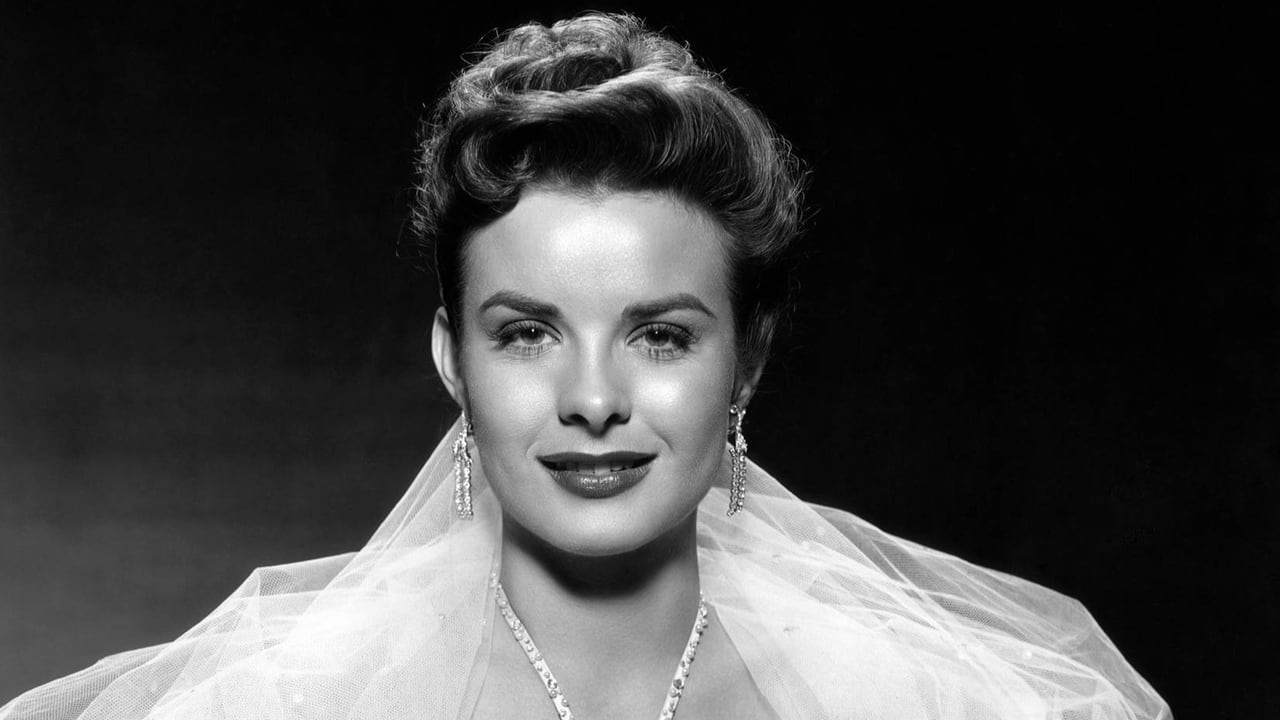
Classic Noir

Vicki arrives at a precise moment in the genre's evolution, when noir was absorbing the procedural rhythms of postwar crime reporting without fully surrendering its psychological undertow. Harry Horner, better known as a production designer, proves attentive to institutional space – the precinct room, the newsroom, the photographer's studio – as arenas of coercion rather than mere setting. Richard Boone's Cornell is the film's most substantial contribution: not a corrupt cop in the conventional sense but a man whose authority is indistinguishable from his pathology, grief calcified into power. Jeanne Crain and Jean Peters are each given less than they deserve, Peters reduced largely to flashback footage of a woman men project onto, Crain required mainly to react. Yet the film uses this economy deliberately, positioning Vicki's absence as the structuring absence of the genre itself. The comparison to I Wake Up Screaming is inescapable and, on balance, instructive: Vicki shows how much noir had shifted from expressionist dread toward institutional critique in the intervening decade.

– Classic Noir
3 ★★★☆☆ Notable
Credits

The Crew

DirectorHarry Horner
ScreenplayDwight Taylor
CinematographyMilton Krasner
MusicLeigh Harline
EditingDorothy Spencer
Art DirectionRichard Irvine
CostumesRenié
ProducerLeonard Goldstein
Performances

The Cast

Close Reading

The Signature Scene

Vicki – scene
The Interrogation Room Cornell Circles the Light

Milton Krasner places a single overhead source above the interrogation table, harsh enough to flatten faces and eliminate the middle tones that allow for sympathy. Cornell moves around the perimeter of the frame while Steve sits fixed at center, and Krasner's camera holds that geometry strictly – the standing man in soft edge-darkness, the seated man pinned in white. When Cornell leans into the light to make a point, his face briefly resolves into full detail before he withdraws again, denying the viewer any stable read on his expression.

The scene argues that the interrogation is not an information-gathering exercise but a ritual of dominance, and that Cornell's authority derives less from evidence than from his control of the physical space. Steve cannot move; Cornell will not stop moving. The composition encodes the film's broader claim: that in this world, guilt and innocence are less legal categories than positions in a room, and the man who controls the light controls the verdict.

Visual Language

The Cinematography

🎞️
Milton Krasner – Director of Photography

Milton Krasner, who had already shot Scarlet Street and The Dark Mirror for Universal, brings to Vicki a harder, more institutional eye than his expressionist work of the mid-forties. Shooting on Fox soundstages with occasional location inserts, Krasner favors wide-angle lenses that exaggerate the depth of institutional corridors and press offices, making spaces feel both capacious and inescapable. His lighting setups resist the romantic chiaroscuro associated with classic noir: shadows here are less atmospheric than architectural, falling along walls and doorframes to define territory rather than mood. The effect is a visual world where beauty has been processed out – Vicki herself appears in flashback sequences lit more warmly, almost as if preserved in a different film stock, emphasizing her distance from the procedural present. Krasner's work consistently aligns the film's moral logic with its visual grammar: clarity is not innocence, and the most harshly lit spaces are also the most corrupt.

In the Catalogue

Themes & Motifs

Availability

Where to Watch

Also in the Directory

See Also