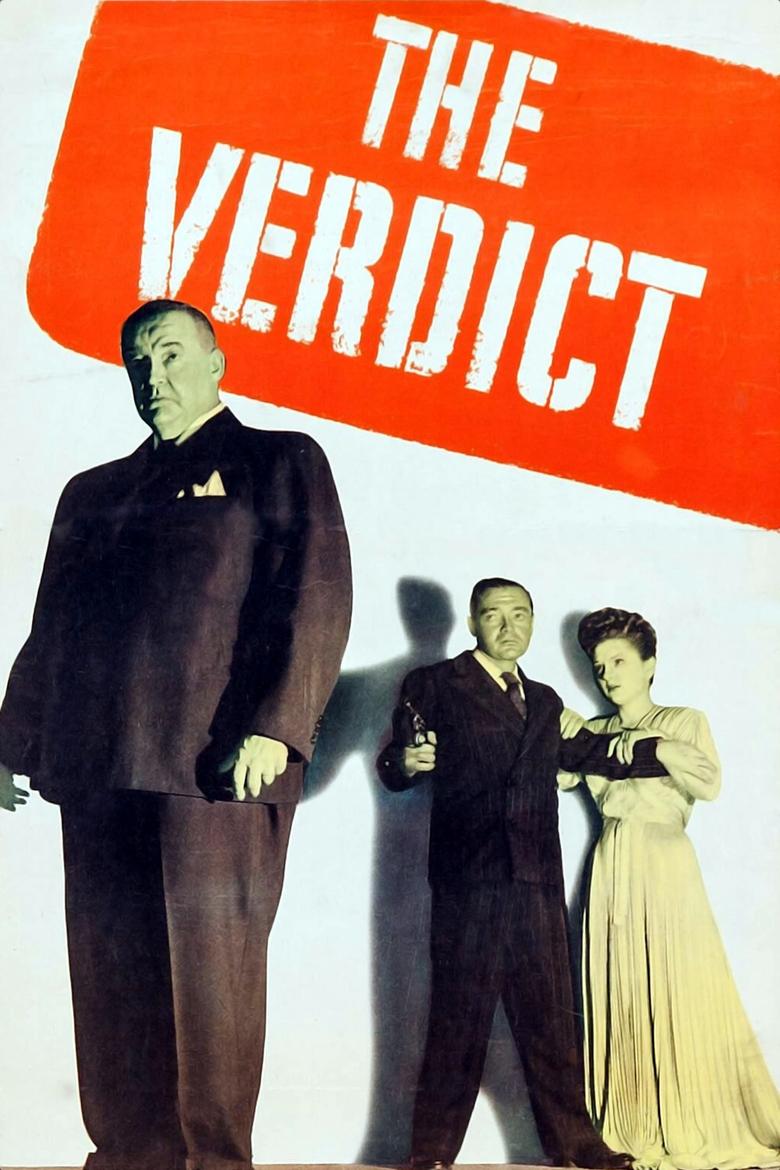
London, the 1890s. Superintendent George Edward Grodman (Sydney Greenstreet) has built a career on certainty – the certainty of guilt, the certainty of the law's mechanisms, and his own infallibility as its instrument. When a man he convicted is hanged and subsequently proved innocent, Grodman absorbs the blow privately, retires from Scotland Yard, and settles into a life of apparent respectability in his Soho lodgings. His new neighbour, the dissolute Arthur Kendall (Morton Lowry), becomes an irritant that sharpens into something darker, while Grodman's old acquaintance Victor Emmric (Peter Lorre) drifts in and out of the picture, watchful and unreliable in equal measure.
When Kendall is found murdered, Grodman's successor at the Yard, the ambitious Superintendent Buckley (George Coulouris), presses the investigation with an eye toward professional advantage. The lodging-house keeper Mrs. Benson (Rosalind Ivan) and her ward Lottie Rawson (Joan Lorring) are drawn into the inquiry, their testimony capable of damning or exonerating any number of suspects. Emmric, whose loyalties shift with the available light, occupies an ambiguous position between witness and accomplice. Grodman, ostensibly helping the investigation, is in fact steering it – his old authority and new detachment giving him cover that Buckley is too eager to see through.
Verdict works the territory between the procedural and the psychological study, using the apparatus of a Victorian murder inquiry to examine what happens when the machinery of justice is operated by a man who no longer believes in its outcomes. The film's moral weight rests not on the question of who killed Kendall, but on whether a man can administer justice for a wrong the law itself committed against him – and whether that constitutes justice at all.
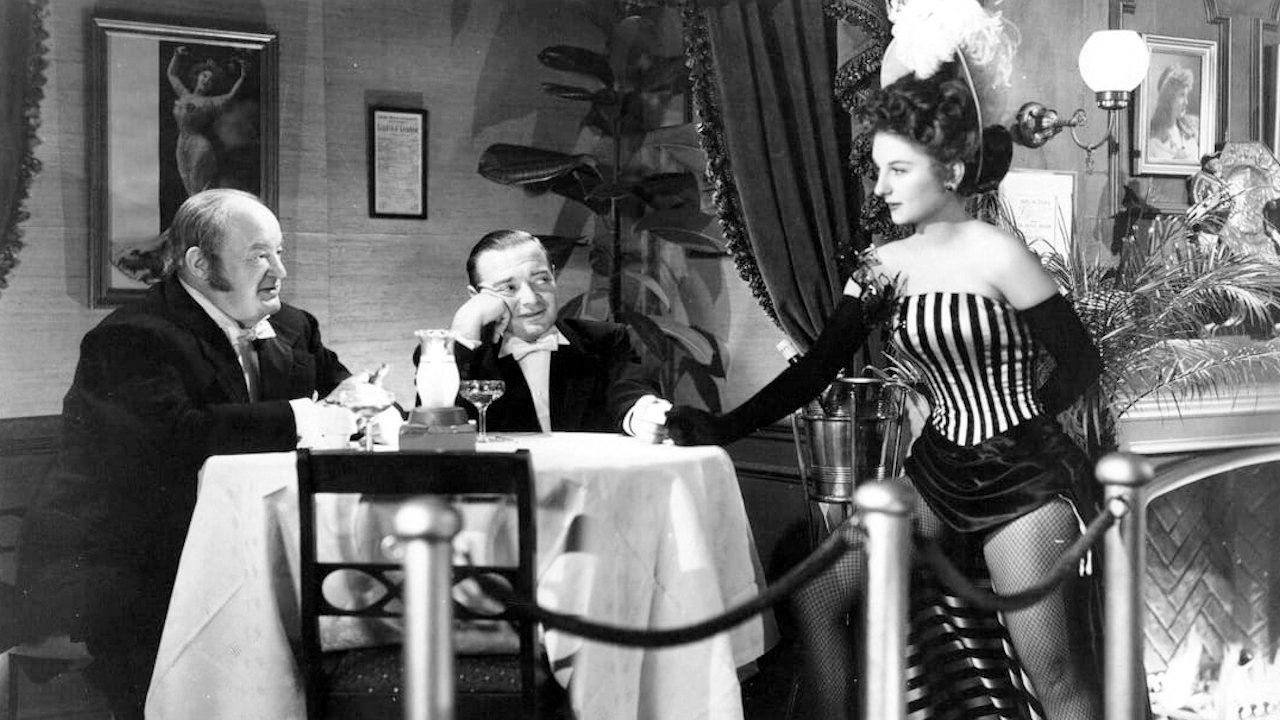
Don Siegel's Verdict – his second feature – arrives at an early point in a career that would eventually produce Invasion of the Body Snatchers and Dirty Harry, and it already shows the directorial instinct for moral ambiguity within genre mechanics. Adapted from Israel Zangwill's 1892 novel The Big Bow Mystery, the film is less a whodunit than an anatomy of institutional guilt. Sydney Greenstreet dominates every frame he occupies, using physical stillness to convey a man whose internal calculations are constant and invisible. Peter Lorre, working again with Greenstreet for what would be nearly the last time, is deployed with more restraint than the Maltese Falcon pairings allowed, and the effect is unnerving rather than theatrical. The Victorian setting gives the production a remove that permits questions about judicial error and personal vengeance to breathe without the immediate postwar pressures felt in contemporaneous noirs. It is not the decade's sharpest film, but it is a precise and underexamined one, and its argument – that a man sufficiently wronged by the law may become its most dangerous instrument – remains coherent and cold.
– Classic Noir
Ernest Haller positions his camera at a slight remove from Greenstreet's Grodman, seated in his armchair with a lamp burning low to his left. The light carves one side of his face into clarity and leaves the other in gradated shadow, a bisection that is not incidental – the frame insists on duality as a physical condition. The background recedes into dark wood and indistinct shelving, keeping all spatial depth compressed around the seated figure. When Lorre's Emmric enters, Haller does not cut to a reaction shot immediately; the camera holds on Greenstreet long enough that the stillness becomes its own form of pressure.
The scene crystallises the film's central argument: Grodman's power is not diminished by retirement or guilt, but concentrated. He has learned to use inaction as a form of control, and the composition enforces this – he is always the fixed point around which other characters arrange themselves. What the scene reveals is that his guilt over the wrongful hanging has not produced remorse so much as resolve, and that the distance between those two states is where the film's moral danger lives.
Ernest Haller, who shot Gone with the Wind and would later work on Mildred Pierce, brings to Verdict a lighting grammar that is architectural in its precision. Working on Warner Bros. studio sets dressed to approximate Victorian London interiors, Haller favours single-source practical lamps supplemented by hard side-lighting that produces deep, directional shadows without the expressionist excess that weaker noir cinematography courts. The result is shadow work that reads as psychologically motivated rather than decorative – darkness pools where moral uncertainty is greatest, and the few well-lit scenes carry an ironic weight, comfort and openness signalling danger rather than safety. Haller keeps his lens choices conservative, avoiding wide-angle distortion in favour of a flatter, more suffocating image plane that traps characters within the frame rather than exaggerating their environment. This restraint suits Siegel's material: a story about a man whose crimes are committed calmly, in well-furnished rooms, in perfectly good light.
TCM holds an extensive Warner Bros. pre-1950s catalogue and is the most reliable broadcast source for this film; checking the schedule or the TCM app is advised.
Archive.orgFreeA public domain print is available on Archive.org; image quality varies by upload, but it provides free access without registration.
Amazon Prime VideoRental / PurchaseRental or purchase of a cleaned-up digital transfer is available via Prime Video and offers a more stable viewing experience than archive prints.