Films People Pull a Fast One Night Beat Reading Room On TV Shop
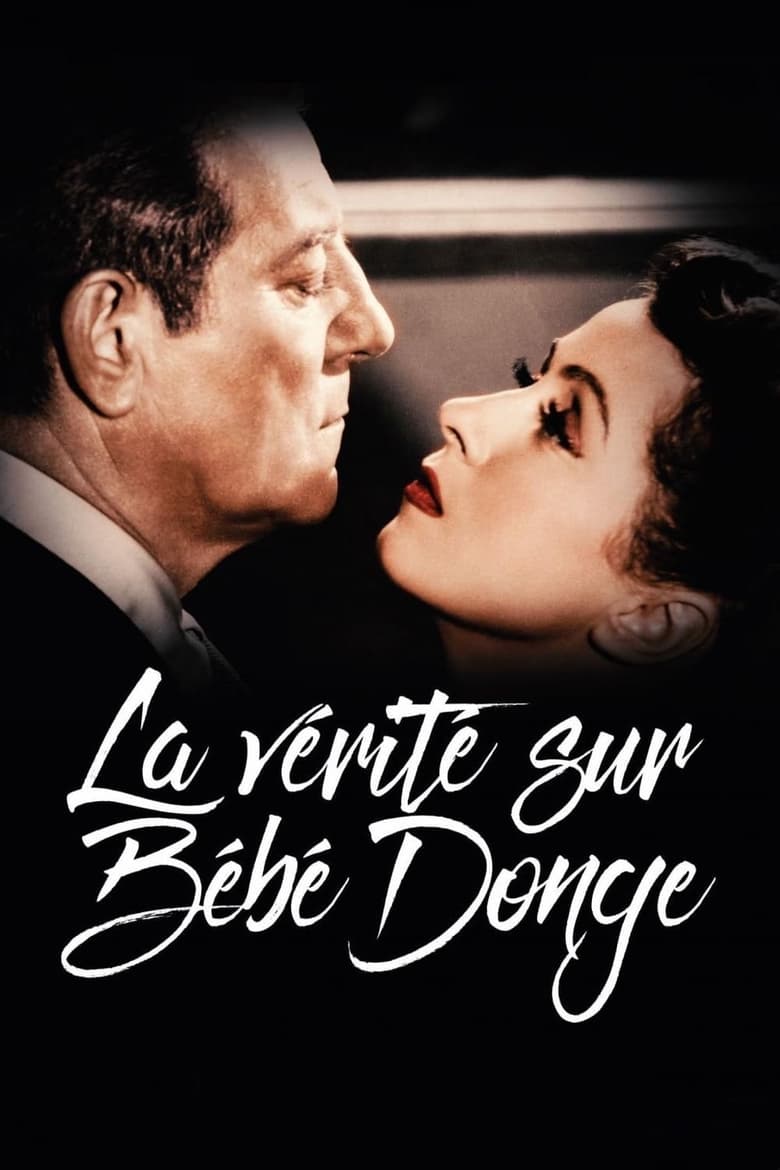
Vérité sur Bébé Donge 1952
1952 UGC Films
★★★☆☆ Notable
Film Noir · 110 minutes · Black & White

Vérité sur Bébé Donge

Directed by Henri Decoin
Year 1952
Runtime 110 min
Studio UGC Films
TMDB 6.9 / 10
"A wife keeps her silence; a husband waits to learn what he has made her."

In a provincial French town, François Donge – prosperous, self-satisfied businessman – is hospitalised after a bout of arsenic poisoning. Police suspicion falls immediately on his wife, Elisabeth, known to all as Bébé, a woman of cold composure who does nothing to deny the charge. The narrative unfolds across two interlocking timeframes: the judicial investigation of the present and a sustained flashback that reconstructs the marriage from its beginning, tracing how two temperamentally incompatible people arrived at this particular impasse.

The flashback reveals a union built on François's proprietorial confidence and Bébé's slow suffocation within it. She is neither villain nor victim in any straightforward sense: the household of the Donges, populated by a possessive mother-in-law and circling relatives, functions as a system of quiet domination dressed in bourgeois respectability. A late-arriving attachment – to Doctor Jalabert – gives Bébé a name for what she has been denied, but it arrives too late and resolves too little. Allegiances among the supporting figures shift as the investigation proceeds, each character recalibrating their loyalty to François now that his mortality is apparent.

Vérité sur Bébé Donge belongs to the strand of French noir most concerned with domestic entrapment rather than criminal adventure. Its procedural frame is less interested in suspense than in moral archaeology – the patient excavation of a crime whose causes are as damning as the act itself. The film asks its audience to hold two judgements simultaneously: the legal fact of what Bébé did and the social fact of what was done to her.
Classic Noir

Henri Decoin's adaptation of Georges Simenon's novel occupies an instructive position in postwar European noir: it is a film more interested in diagnosis than in thriller mechanics. Where American noir of the period tends to organise guilt around fate and sexual danger, Vérité sur Bébé Donge situates its crime inside the institution of bourgeois marriage – the drawing room, not the back alley. Jean Gabin's François is a quietly devastating portrait of a man whose cruelty is entirely unconscious, which makes him more disturbing than a scheming antagonist would be. Danielle Darrieux matches him with a performance of deliberate opacity; Bébé's stillness is not passivity but the residue of years of unanswered interiority. The dual-timeline structure, handled with notable economy, allows Decoin to present the crime and its context as inseparable – the poisoning is not an aberration but a logical terminus. The film's refusal to deliver either exoneration or simple condemnation places it in an uncomfortable moral register that remains largely unresolved by the final frame.

– Classic Noir
3 ★★★☆☆ Notable
Credits

The Crew

DirectorHenri Decoin
ScreenplayMaurice Aubergé
CinematographyLéonce-Henri Burel
MusicJean-Jacques Grünenwald
EditingAnnick Millet
Art DirectionJean-Paul Coutan-Laboureur
ProducerAndré Halley des Fontaines
Performances

The Cast

Close Reading

The Signature Scene

Vérité sur Bébé Donge – scene
The Hospital Bedside Silence Across the Sheets

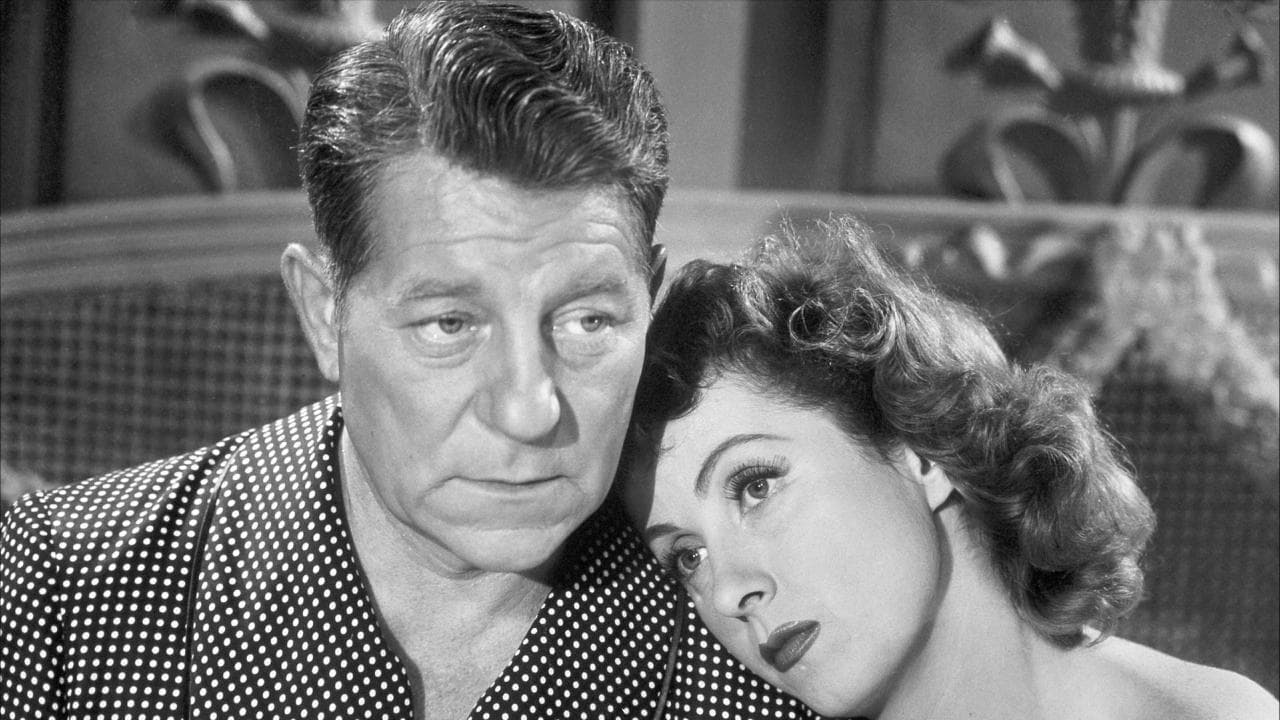
Burel frames the scene with François propped against white hospital linen, the light falling from a high side-angle that accentuates the pallor of his skin while leaving his face partially in shadow. Bébé sits at the mid-distance – neither close enough to suggest intimacy nor far enough to suggest flight. The camera holds on a two-shot of uncommon stillness; there are no reaction cuts, no softening close-ups. The composition places both figures within the same plane of focus, granting each equal visual weight while the white of the room functions as a kind of institutional verdict.

The scene's power lies in what neither character says. François speaks in the measured cadences of a man accustomed to filling rooms with his own authority, not yet fully comprehending that authority has been revoked. Bébé answers in monosyllables or not at all, and the camera never privileges her interiority through the conventional apparatus of the close-up. The effect is not mystery but exposure: we understand that the silence between them is not new and that the arsenic has only formalised it.

Visual Language

The Cinematography

🎞️
Léonce-Henri Burel – Director of Photography

Léonce-Henri Burel, whose long career stretched back to silent-era collaborations with Abel Gance, brings to Vérité sur Bébé Donge a rigorously controlled studio aesthetic that resists expressionist excess in favour of something colder and more precise. His lighting setups favour high-key interiors punctuated by concentrated pools of shadow – not the deep-focus chiaroscuro of American noir but a flatter, more clinical luminosity that suits a film set largely in domestic and institutional spaces. The hospital sequences are rendered in a near-bleached palette that emphasises isolation. The flashback interiors use a warmer but still constrained light to depict bourgeois comfort as mild oppression, the rooms always slightly too composed, too finished. Burel's lens choices suppress spatial depth within the household, making ceilings and walls feel closer than they are – a subtle but effective rendering of enclosure that supports the film's argument about marriage as confinement. The cinematography never announces itself; it works in the service of moral logic.

In the Catalogue

Themes & Motifs

Availability

Where to Watch

Also in the Directory

See Also