Films People Pull a Fast One Night Beat Reading Room On TV Shop
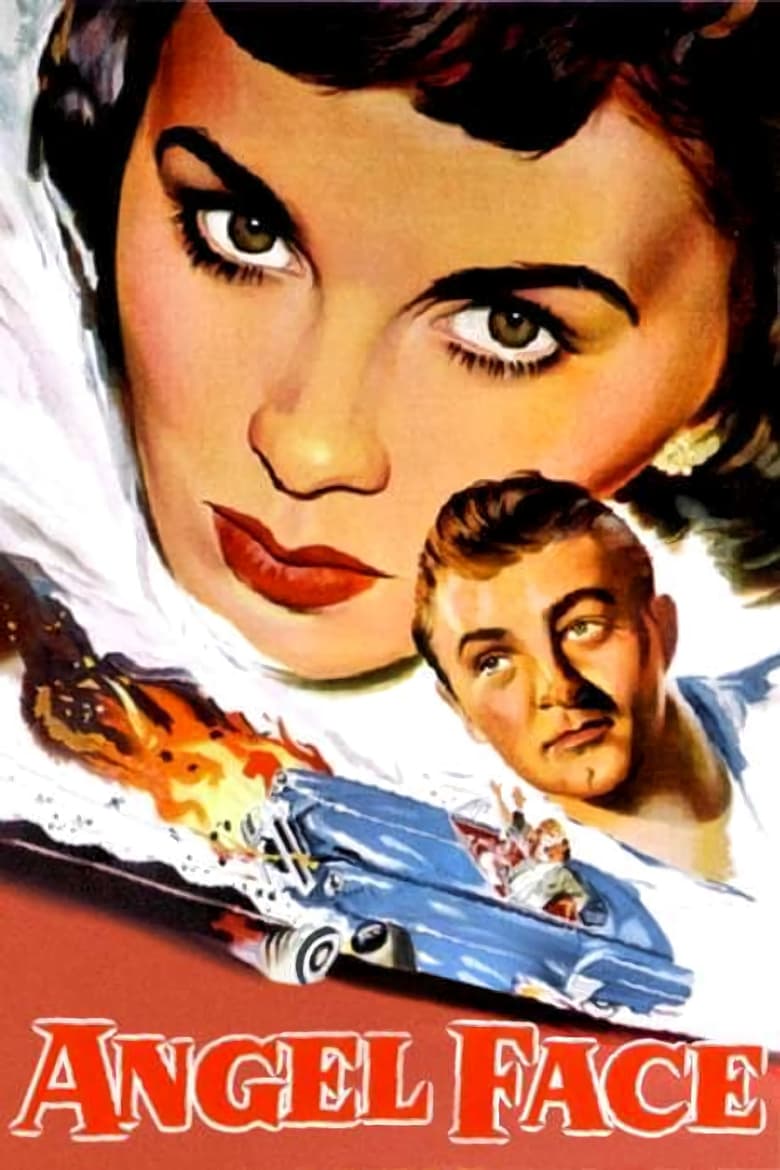
Angel Face 1953
1953 RKO Radio Pictures
★★★☆☆ Notable
Film Noir · 91 minutes · Black & White

Angel Face

Directed by Otto Preminger
Year 1953
Runtime 91 min
Studio RKO Radio Pictures
TMDB 7.1 / 10
"A man with nothing to lose is the easiest kind to destroy."

Frank Jessup is an ambulance driver in Los Angeles with modest ambitions and a steady girlfriend, Mary Wilton. A late-night call to a Bel Air estate introduces him to Diane Tremayne, the beautiful and disturbed stepdaughter of a wealthy novelist, Charles Tremayne. When Diane's mother, Catherine, is nearly killed by carbon monoxide fumes in what may or may not be an accident, Frank finds himself drawn into a household already dense with grievance and barely concealed contempt.

Diane pursues Frank with a quiet, relentless intensity that he mistakes for passion and she may believe is love. She engineers his dismissal from the ambulance service, finances his entry into racing car mechanics, and maneuvers him away from Mary and into marriage. The Tremayne house functions less as a home than as a closed circuit of resentment – Catherine's control of the family fortune is the fault line along which every relationship fractures, and Diane's devotion to her father obscures motives that grow harder to read the longer Frank stays.

Angel Face belongs to a strain of noir in which the femme fatale is not cynical but genuinely unwell – a figure whose danger comes not from calculation but from a psychology warped past ordinary motive. The film uses the machinery of the crime picture, including a murder trial and its aftermath, to ask what culpability means when one of the principals may not fully inhabit the same moral world as everyone else. Preminger refuses comfortable resolution, and the film's final sequence remains one of the genre's most discussed and deliberately brutal conclusions.
Classic Noir

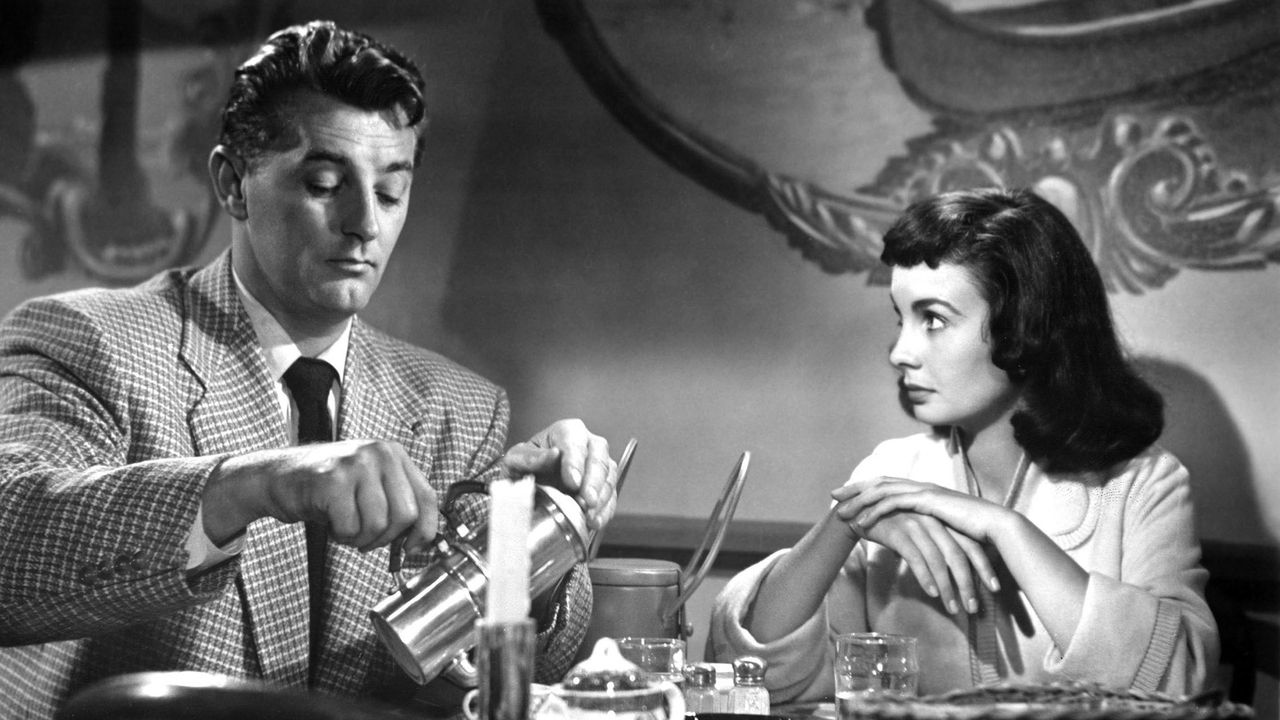
Angel Face arrives near the end of RKO's productive noir cycle and sits somewhat apart from the genre's mainstream. Preminger, working from a script by Frank Nugent and Oscar Millard, is less interested in criminal procedure than in psychological architecture. Jean Simmons's Diane is not the knowing seductress of Double Indemnity or Out of the Past; she is something more unsettling – a young woman whose attachment to her father has curdled into a need to possess and, when thwarted, to annihilate. Robert Mitchum plays Frank with his characteristic flat affect, which here becomes a formal choice: his passivity is not weakness but a kind of moral vacancy that makes him available to Diane's designs. The film's treatment of female psychology reflects the Freudian idiom fashionable in postwar Hollywood, and the limitations of that framework are visible from the present distance. What survives the era is Preminger's refusal of sentimentality and his precision in staging domestic spaces as theaters of concealed violence.

– Classic Noir
3 ★★★☆☆ Notable
Credits

The Crew

DirectorOtto Preminger
ScreenplayOscar Millard
CinematographyHarry Stradling Sr.
MusicDimitri Tiomkin
EditingFrederic Knudtson
Art DirectionAlbert S. D'Agostino
CostumesMichael Woulfe
ProducerOtto Preminger
Performances

The Cast

Close Reading

The Signature Scene

Angel Face – scene
The Driveway – Final Sequence The Car Clears the Drive

Preminger holds the camera at a middle distance, positioned slightly below the level of the driveway so that the vehicle and the figures beside it are framed against the neutral California sky. Harry Stradling's lighting is flat and functional here – deliberately so, withholding the expressionist shadow work that has marked earlier interiors. The frame is almost compositionally calm, which is the point. There is no telegraphing of violence through chiaroscuro or canted angles; the geometry is orderly, domestic, sunlit.

The refusal of visual melodrama in this moment is Preminger's sharpest statement about the film's argument. The darkness in Angel Face has never resided in shadow patterns or rain-slicked streets but in the unremarkable surface of ordinary life – a house, a driveway, a car. The sudden, mechanical finality of what occurs confirms that Diane's world has no room in it for Frank's continued independent existence, and that her logic, once engaged, cannot be interrupted by appeal to reason or feeling. The banal setting makes the conclusion feel not shocking but inevitable, which is considerably more disturbing.

Visual Language

The Cinematography

🎞️
Harry Stradling Sr. – Director of Photography

Harry Stradling Sr. shoots Angel Face in a high-key studio register that distinguishes it from the low-key chiaroscuro of canonical noir, and the choice is precise rather than arbitrary. The Tremayne estate is rendered in clean, well-lit interiors where shadows gather selectively – at the corners of Diane's eyes, in the recesses of staircases – rather than flooding the frame. Stradling uses medium focal lengths that keep faces in proportional relation to their surroundings, denying the distortions that would externalize psychological disorder. The effect is to locate pathology within the normal-looking, which is Preminger's consistent moral argument across his noir work. Close-ups of Simmons are lit with a softness that preserves her surface legibility while leaving her interiority opaque; the camera looks at Diane without claiming to see through her. This restraint – light used to describe rather than to editorialize – gives the film an uncommon structural integrity.

In the Catalogue

Themes & Motifs

Availability

Where to Watch

Also in the Directory

See Also